Credible Theories Sign in
The Americas · José de Acosta, The Natural and Moral History of the Indies 1.20 (1590)

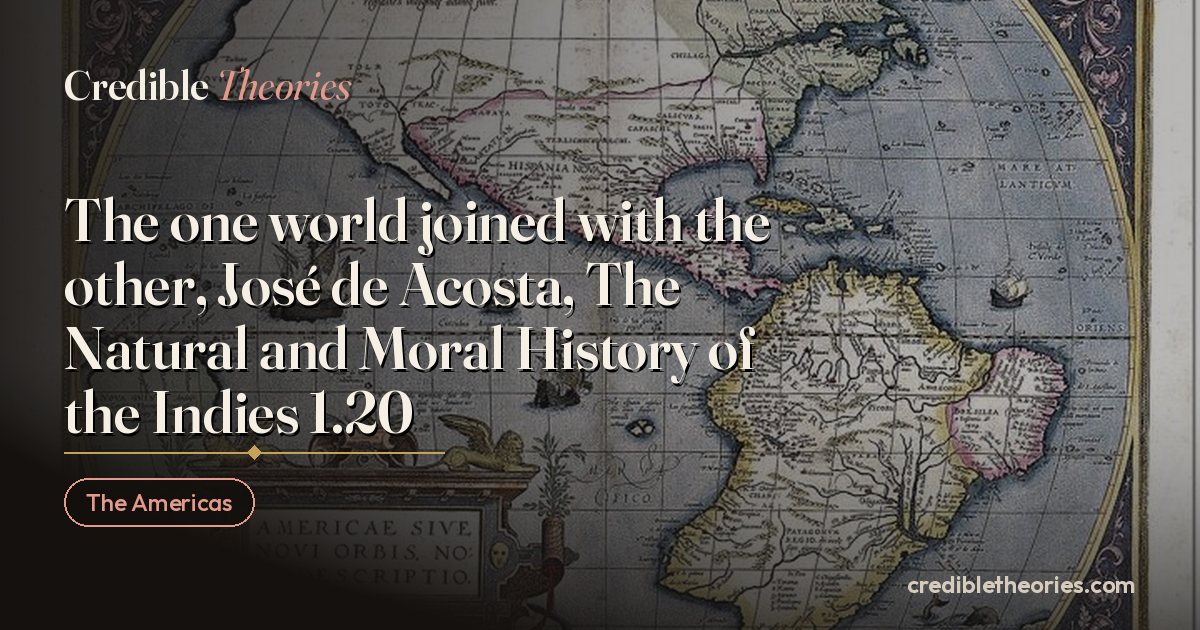
The one world joined with the other, José de Acosta, The Natural and Moral History of the Indies 1.20

Share

In plain words

Acosta concludes that the New World is not completely cut off from the Old. He says he has long believed the two are joined somewhere, or at least come very close to each other.

ReferenceJosé de Acosta, The Natural and Moral History of the Indies 1.20 (1590)
WrittenWritten by José de Acosta, a Spanish Jesuit who had lived in Peru; published at Seville in 1590
SetThe puzzle of how wild beasts and the first people reached the Americas
I coniecture then, by the discourse I have made, that the new world, which we call Indies, is not altogether severed and disioyned from the other world; and to speake my opinion, I have long beleeved that the one and the other world are ioyned and continued one with another in some part, or at the least are very neere.

Documented · Early modern text, 1590 Translation: Edward Grimston, 1604

Read it literally

A Jesuit reasons from wolves and foxes to a land link no European had seen. The Beringia file shows what geologists found under the Bering Strait three centuries later.

What scholars say

Acosta wrote after years in Peru; no one then knew how far north the two continents ran.

Themes Strange time
People and places hereJosé de Acosta
Questions people ask about José de Acosta, The Natural and Moral History of the Indies 1.20

Why did Acosta rule out a sea crossing for animals?

He said no one would take the trouble to carry wolves and foxes on a long voyage, and that beasts could swim only short straits, not the open ocean.

Where did he think the lands might meet?

He noted that no one knew how far the land ran toward the North Pole, and that many held that above Florida the land stretched far to the north.

Used on these files

  • Beringia, the Bering land bridge DocumentedA vanished plain a thousand miles wide that once joined Asia and America, guessed at by a Jesuit in 1590, when no one knew how far north the land ran.

Where this comes from

EvidenceDocumented

Comes from José de Acosta, José de Acosta, The Natural and Moral History of the Indies 1.20 (1590). Internet Archive: A nonprofit digital library in San Francisco, founded in 1996, that holds millions of scanned books, papers and recordings. A scan there shows the pages of a real printed book or document.

What this means

The text exists and is quoted from a published translation. What it describes is a separate question.

Primary records exist: an original document, a published text, an official file or a dated report. We link to them. This level says the record exists and what it says, not that every claim in it is true.

See all five labels

Sources

  1. Internet ArchiveA nonprofit digital library in San Francisco, founded in 1996, that holds millions of scanned books, papers and recordings. A scan there shows the pages of a real printed book or document.José de Acosta, The Natural and Moral History of the Indies, trans. Edward Grimston (1604), ed. Clements R. Markham, vol. 1 (London: Hakluyt Society, 1880)Primary text
  2. Internet ArchiveJosé de Acosta, The Natural and Moral History of the Indies (Seville, 1590), book 1, chapter 20, trans. Edward Grimston (1604), ed. Clements R. Markham, vol. 1 (London: Hakluyt Society, 1880)Primary text

Scholarly dates are rounded. The wording follows the named public-domain translation.

More from The Americas

Two more stories, and what each shares with The one world joined with the other.

Photo credits
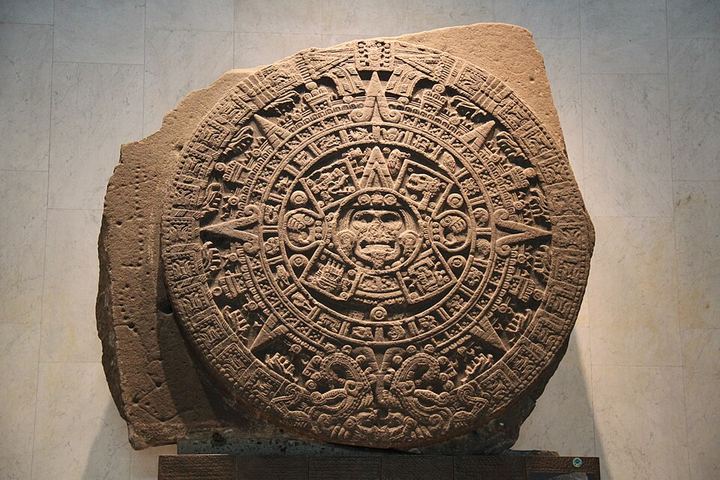
RelatedFour worlds destroyed, humans made from old bonesLegend of the Suns (Leyenda de los Soles)

It says four earlier worlds ended by jaguars, wind, a rain of fire and a flood.

Same theme: Strange time
Photo credits
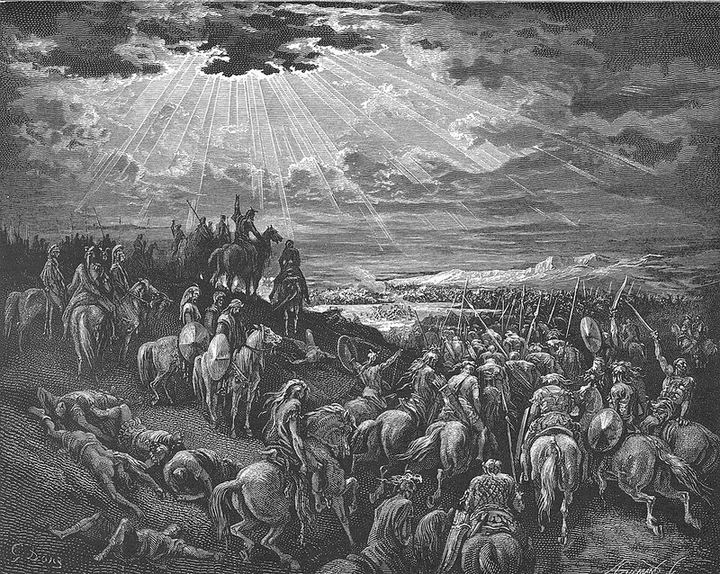
RelatedThe sun stands stillJoshua 10:11–13

During a battle, the text says God threw great stones from the sky on the enemy.

Same theme: Strange time

Updated

Discussion