The record
I coniecture then, by the discourse I have made, that the new world, which we call Indies, is not altogether severed and disioyned from the other world; and to speake my opinion, I have long beleeved that the one and the other world are ioyned and continued one with another in some part, or at the least are very neere.
José de Acosta, The Natural and Moral History of the Indies 1.20 (1590) · The Americas
Translation: José de Acosta, The Natural and Moral History of the Indies, trans. Edward Grimston (1604), ed. Clements R. Markham, vol. 1 (London: Hakluyt Society, 1880) · Public domain
In 1590 the Jesuit José de Acosta faced a puzzle. Wolves, foxes and other wild beasts lived in the Americas, and no one would have carried them across the ocean on purpose. Who woould likewise say that they have carried Tygers and Lyons? Truely it were a thing worthy the laughing at to thinke so.
His answer was that the one and the other world are ioyned and continued one with another in some part, or at the least are very neere
, and that the first people came by land.
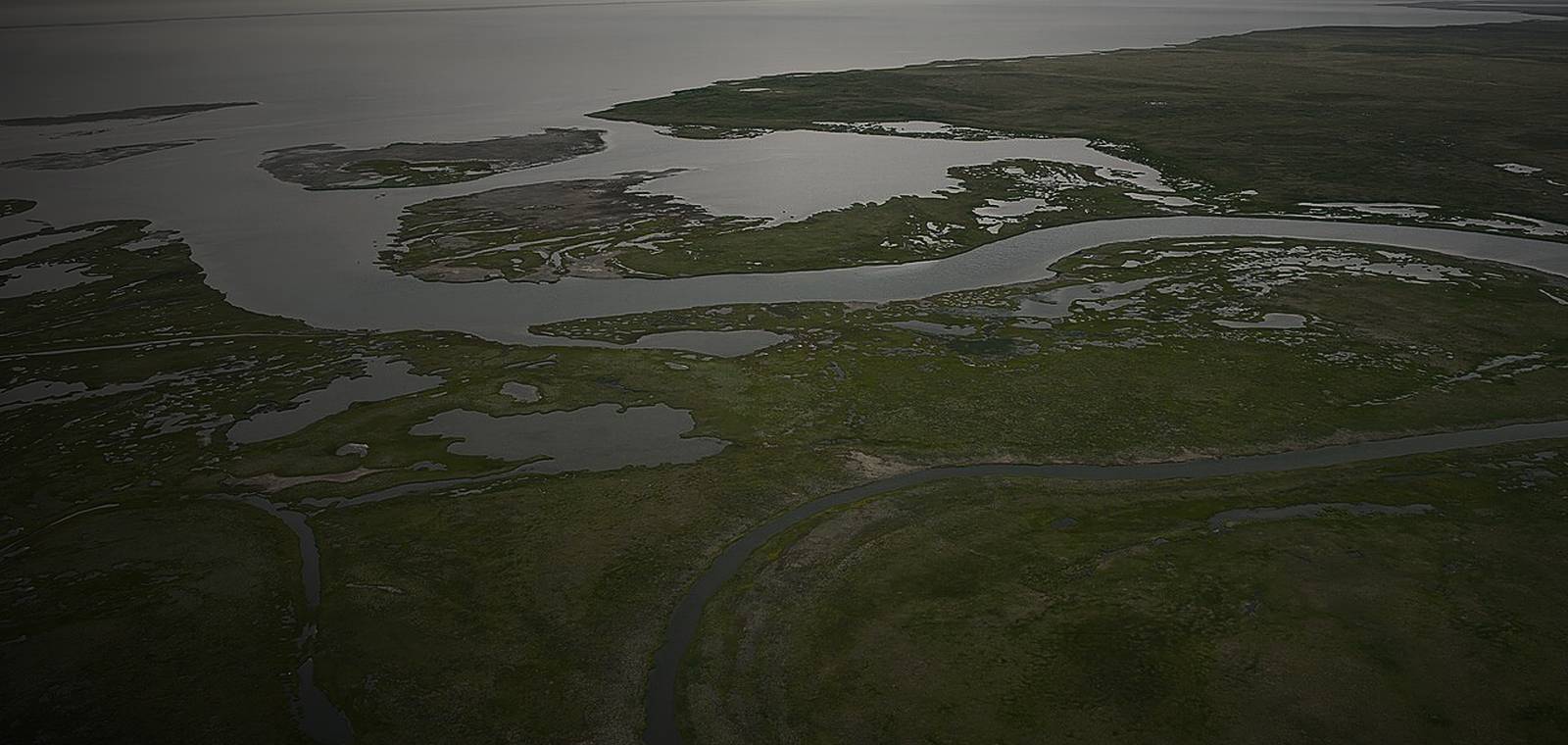
The National Park Service, which runs Bering Land Bridge National Preserve in Alaska, describes what geologists later found. Late in the Ice Age so much water was locked in glaciers that sea level dropped up to 300 feet, and the floor of the Bering Strait became a flat grassy treeless plain
connecting Asia to North America, stretching a thousand miles from north to south. Plants, animals and people crossed it.
The name came in 1937, when Eric Hultén called the region Beringia after the explorer Vitus Bering. The paleontologist C. R. Harington, writing in 2005, reported mammoth bones from Banks Island in the Canadian Arctic dated to about 21,000 radiocarbon years ago and proposed that Beringia reached at least that far east. A 2007 genetic study of 623 complete mitochondrial genomes found that the ancestors of Native Americans paused when they reached Beringia
before a swift move south.