Credible Theories Sign in
Hebrew Bible · Joshua 10:11–13

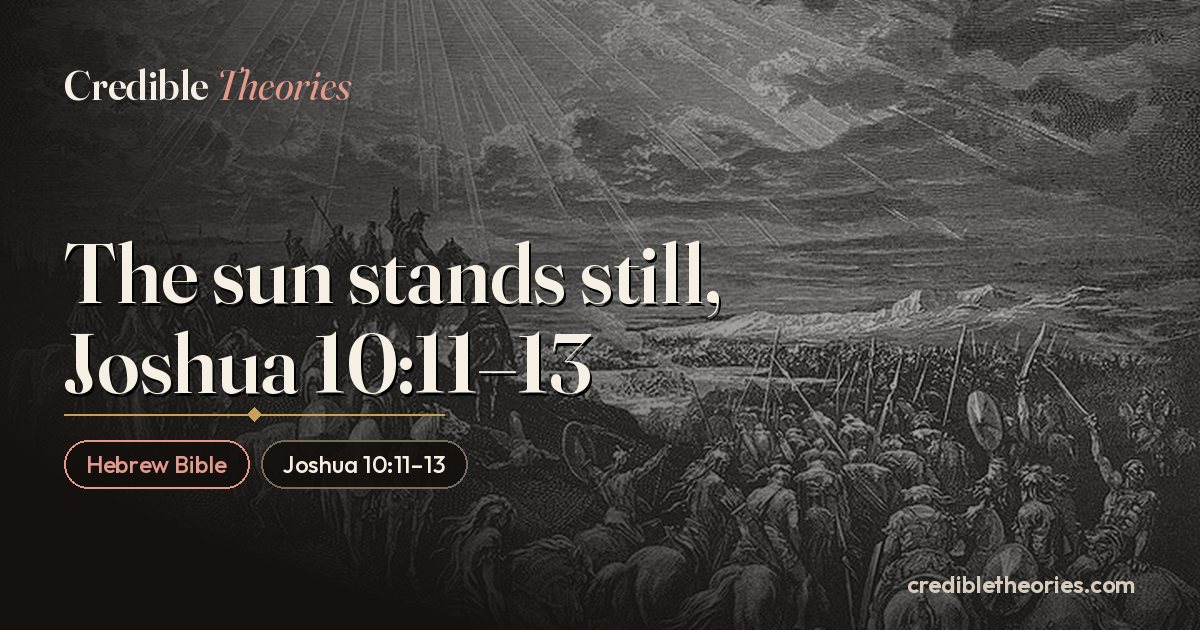
The sun stands still, Joshua 10:11–13

Share

In plain words

This is a short passage from Joshua, the sixth book of the Bible, written around 650 to 550 BCE, about the Israelites entering Canaan. During a battle, the text says God threw great stones from the sky on the enemy. Then the sun is told to stand still, and the text says the sun and moon stopped. The line is quoted from an older lost poem, the book of Jasher.

ReferenceJoshua 10:11–13
Writtenc. 650–550 BCE
SetConquest of Canaan
The LORD cast down great stones from heaven upon them… Sun, stand thou still upon Gibeon; and thou, Moon, in the valley of Ajalon. And the sun stood still, and the moon stayed.

Documented · Ancient text, c. 650–550 BCE Translation: KJV

Read it literally

A bombardment from the sky followed by a whole day of light. Either an eclipse misunderstood, or something above the battlefield lighting it.

What scholars say

The line is quoted from an older lost poem, 'the book of Jasher'.

Themes From the sky Strange time
People and places hereGibeon

The same story, told elsewhere

Shared story · Signs and numbers

The Sun Stands Still: Joshua, Hezekiah, Athena and Maui

A general shouts at the sun to stop, and it stops. A goddess holds back the dawn, a hero lassoes the sun, and a wife's curse keeps it from rising at all.

Joshua 10 (the battle at Gibeon) is one telling. The same story is told 8 more times, in 7 parts of the world. Follow it:

  1. GreekIthaca · c. 750-650 BCE · Ancient text
  2. Hebrew BibleCanaan · c. 650-550 BCE · Ancient textTied to this page
  3. Hebrew BibleJerusalem · c. 600-550 BCE · Ancient text
  4. Egyptian, reported in GreekEgypt · c. 430 BCE · Ancient text
  5. GreekThebes, Greece · 1st or 2nd century CE · Ancient text
  6. ChineseChina · c. 80 CE · Ancient text
  7. Hindu (Puranic)India · c. 250-500 CE · Ancient text
  8. Ojibwe (North America)Great Lakes region, North America · 1820 · Recorded folklore
  9. Maori (New Zealand)Aotearoa · 1840 · Recorded folklore

The open question: When ancient writers say the sun stood still, are they remembering something people really saw in the sky, or using the boldest picture they could find for a god's power over time? Join the debate

Questions people ask about Joshua 10:11–13

What battle was Joshua fighting?

Five Amorite kings, from Jerusalem, Hebron, Jarmuth, Lachish and Eglon, attacked the city of Gibeon because it had made peace with Israel. The Gibeonites sent for help, and Joshua marched all night from Gilgal to surprise the attackers. Adoni-zedek, king of Jerusalem, led the alliance, and all five kings were later captured hiding in a cave at Makkedah.

Why did this verse matter to Galileo?

Opponents of Copernicus argued that if Joshua told the sun to stop, the sun must normally move around the earth. In his 1615 Letter to the Grand Duchess Christina, Galileo argued that the Bible speaks in everyday language and is not meant to teach astronomy. He also tried to show the verse could fit a sun-centered system.

How do Jewish and Christian readers explain the long day?

Readings vary. Many take it as a true miracle in which God lengthened the day. Others note the Hebrew word for 'stand still' can also mean 'be silent' or 'stop', and suggest the poem may describe the sun's heat easing, or light being given at the right moment. Verse 14 stresses that no day before or after was like it.

Used on these files

  • Book of Jasher: Is It the Lost Book the Bible Mentions? DocumentedThe Bible twice cites a lost book of Jasher, and in 1625 a book by that name was printed in Venice. It claims to be rescued from Jerusalem's ruins, yet scholars date it to the medieval period. Here Nimrod's hunting power comes from Adam's own garments, which made animals kneel to whoever wore them. What else is in it?

Where this comes from

EvidenceDocumented

Comes from The Book of Joshua, Joshua 10:11–13, read here in the King James Version. The sixth book of the Bible, telling how Joshua led the Israelites into Canaan, including the fall of Jericho and the day the sun stood still. Scholars think it was written down long after the events, probably in the 600s to 500s BC, and archaeologists debate how much of it is history.

What this means

The text exists and is quoted from a published translation. What it describes is a separate question.

Primary records exist: an original document, a published text, an official file or a dated report. We link to them. This level says the record exists and what it says, not that every claim in it is true.

See all five labels

Sources

  1. The King James BibleThe English Bible made for King James I and first printed in 1611; the wording most people know comes from a 1769 update. It is out of copyright, which is why we quote it. The 1611 printing also had the Apocrypha, extra books kept in Catholic and Orthodox Bibles.King James Version (1611; standard 1769 text), with ApocryphaPrimary text Archived copy, 2026-10-03
  2. The Book of Jasher (1840 English edition)A Hebrew book that retells Bible history from Adam to the Judges, adding many Jewish legends. It was first printed in Venice in 1625. It is not the lost 'Book of Jasher' the Bible mentions; scholars think it was written in the Middle Ages or later. An English translation came out in New York in 1840.The Book of Jasher (1887 edition of the 1840 translation)Primary text Archived copy, 2026-10-03

Scholarly dates are rounded. The wording follows the named public-domain translation.

More from Hebrew Bible

Two more stories, and what each shares with The sun stands still.

Photo credits
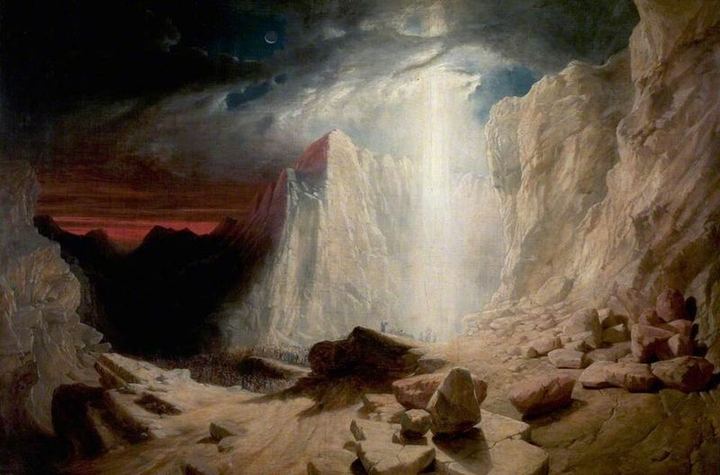
RelatedPillar of cloud, pillar of fireExodus 13:21–22

The text says God went ahead of the people as a pillar of cloud by day and a pillar of fire by night, to show the way and give light.

Also about Ancient IsraelSame theme: From the sky
Photo credits
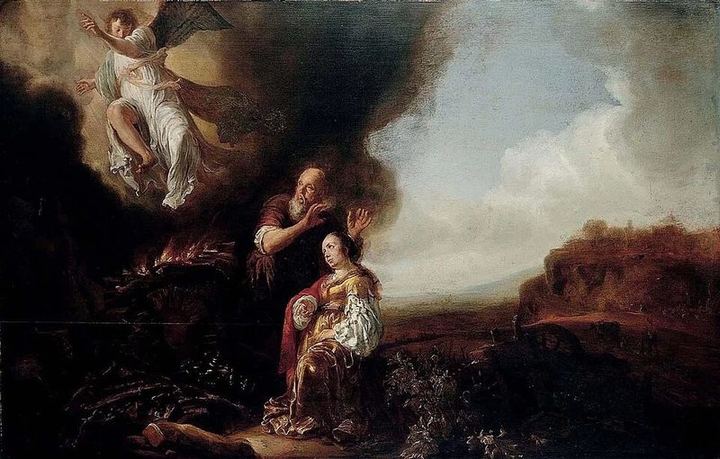
Next ›The angel who rose in the flameJudges 13:6, 18–20

Before the strongman Samson is born, a visitor called the angel of the LORD appears.

Also about Ancient IsraelSame theme: From the sky

Updated

Discussion