How the rabbit hole works. Start with anything that grabs you, say UFOs. Every person, place and document a page mentions links to its own page, so a UFO file leads to a witness, the witness leads to the people who investigated the case, and it keeps going.
The path you take shows in the bar under the top menu on every page, so you can step back any time or climb out and start again.
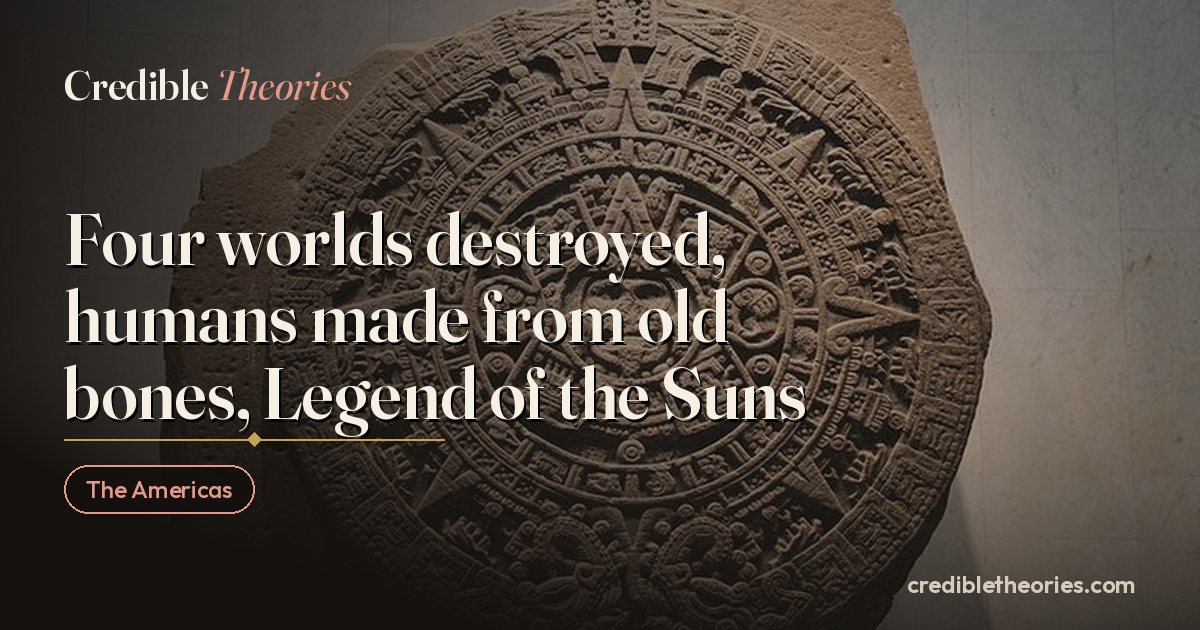
This is a summary from the Legend of the Suns, an Aztec text written in 1558 in Nahuatl, the Aztec language. It says four earlier worlds ended by jaguars, wind, a rain of fire and a flood. Quetzalcoatl goes to the underworld, takes the bones of the last humans and grinds them, and the gods bleed onto the powder to make the people of the present age.
ReferenceLegend of the Suns (Leyenda de los Soles)
Written1558 CE, Nahuatl, from older Aztec tradition
SetThe ages before this one
Four earlier worlds ended by jaguars, wind, a rain of fire, and a flood. Quetzalcoatl goes down to the underworld, takes the bones of the last humans, grinds them, and the gods bleed onto the powder to make the people of the Fifth Sun.
Documented · Retold in English, 1558 CE Summary by the editors. Translation: Summary in my own words
AdvertisementAd space
Read it literally
Recycled human material plus divine blood, the same formula as Atrahasis on the other side of the world. Our world is the fifth attempt, like Hesiod's fifth race.
What scholars say
Written down after the Spanish conquest.
Themes Looks like technology Strange time Council of gods
A god warns one good man, a boat is built, the world drowns and birds are sent out to find land. The same story turns up from Iraq to India to Greece, with cousins in China, Scandinavia and Guatemala.
Popol Vuh (the wooden people) is one telling. The same story is told 9 more times, in 6 parts of the world. Follow it:
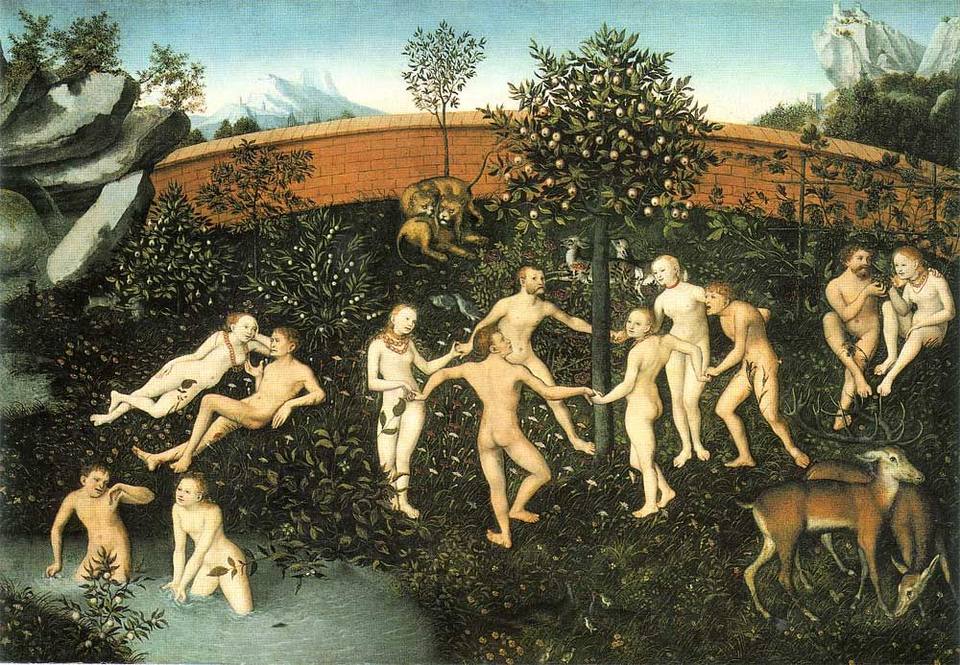
Gold, silver, bronze, iron: Greece, Persia and the Book of Daniel all count the ages of the world in metals, India counts four yugas, and the Norse and Maya see whole worlds destroyed and remade.
Popol Vuh (the failed creations) is one telling. The same story is told 9 more times, in 6 parts of the world. Follow it:
The open question: Why do so many traditions believe the past was better and the world is running down? Memory, or human nature? Join the debate
Questions people ask about Legend of the Suns
Where does the Legend of the Suns come from?
It is a Nahuatl text that forms the last part of the Codex Chimalpopoca, together with the Annals of Cuauhtitlan and a short Spanish account of Aztec gods. The original manuscript disappeared in the mid-twentieth century, possibly in 1949. Scholars now study it from a 1945 photographic copy and earlier transcriptions.
What are the five suns in Aztec belief?
Each world age had its own sun, named after the day it ended: 4 Jaguar, 4 Wind, 4 Rain and 4 Water. People today live under the Fifth Sun, called 4 Movement, or Nahui Ollin. Aztec tradition said this age would also end, through great earthquakes. The famous Aztec Sun Stone shows the five suns.
How does Quetzalcoatl get the bones from the underworld?
Mictlantecuhtli, lord of the dead, sets a trick: Quetzalcoatl must blow a conch shell that has no holes. Worms drill holes and bees fly inside to make it sound. As Quetzalcoatl escapes, he trips, scattering and breaking the bones, which tradition says is why people are different sizes. The goddess Cihuacoatl grinds the bones before the gods give their blood.
Used on these files
Atrahasis: The Epic Where Gods Made Humans, Then Sent the FloodDocumentedAccording to the Babylonian epic Atrahasis, the first humans were made partly from the flesh and blood of a god who was killed because he had intelligence. Overworked junior gods had gone on strike, and humans were the fix; then people grew too noisy, and the Flood followed. What went wrong with the plan?
Legend of the Suns: The Aztec Story of Four Destroyed WorldsDocumentedThe Aztec account says four earlier worlds ended in jaguars, wind, fiery rain and flood, and the people turned into monkeys, turkeys or fish. To make us, Quetzalcoatl fetched the old humans' bones from the underworld, the bones were ground like maize, and the gods bled on the meal. Why did the Fifth Sun get such an ending?
Where this comes from
EvidenceDocumented
Comes fromThe Legend of the Suns (Leyenda de los Soles), Legend of the Suns (Leyenda de los Soles). An Aztec text written in 1558 in Nahuatl, the Aztec language, telling how the world was made and destroyed four times before the present age, the Fifth Sun. It was kept in a manuscript called the Codex Chimalpopoca, which has since been lost.
What this means
The text exists and is quoted from a published translation. What it describes is a separate question.
Primary records exist: an original document, a published text, an official file or a dated report. We link to them. This level says the record exists and what it says, not that every claim in it is true.
The Atrahasis EpicA Babylonian poem in which the gods make humans to do their work, then try to wipe them out with a great flood; the wise Atrahasis survives in a boat. The best copy was written about 1640 BC. W. G. Lambert and A. R. Millard published the standard English edition in 1969.Atra-hasis, ed. and trans. W. G. Lambert and A. R. Millard, Atra-hasis: The Babylonian Story of the Flood (Oxford, 1969)Primary text
The Legend of the Suns (Leyenda de los Soles)An Aztec text written in 1558 in Nahuatl, the Aztec language, telling how the world was made and destroyed four times before the present age, the Fifth Sun. It was kept in a manuscript called the Codex Chimalpopoca, which has since been lost. John Bierhorst's English version came out in 1992.Legend of the Suns (Codex Chimalpopoca, 1558), trans. John Bierhorst, History and Mythology of the Aztecs (University of Arizona Press, 1992)Primary text
Scholarly dates are rounded. The wording follows the named public-domain translation.
More from The Americas
Two more stories, and what each shares with Four worlds destroyed, humans made from old bones.













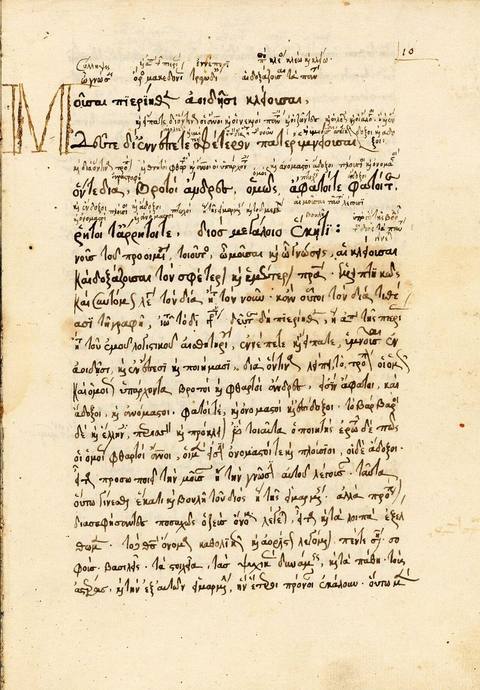 Hesiod