The record
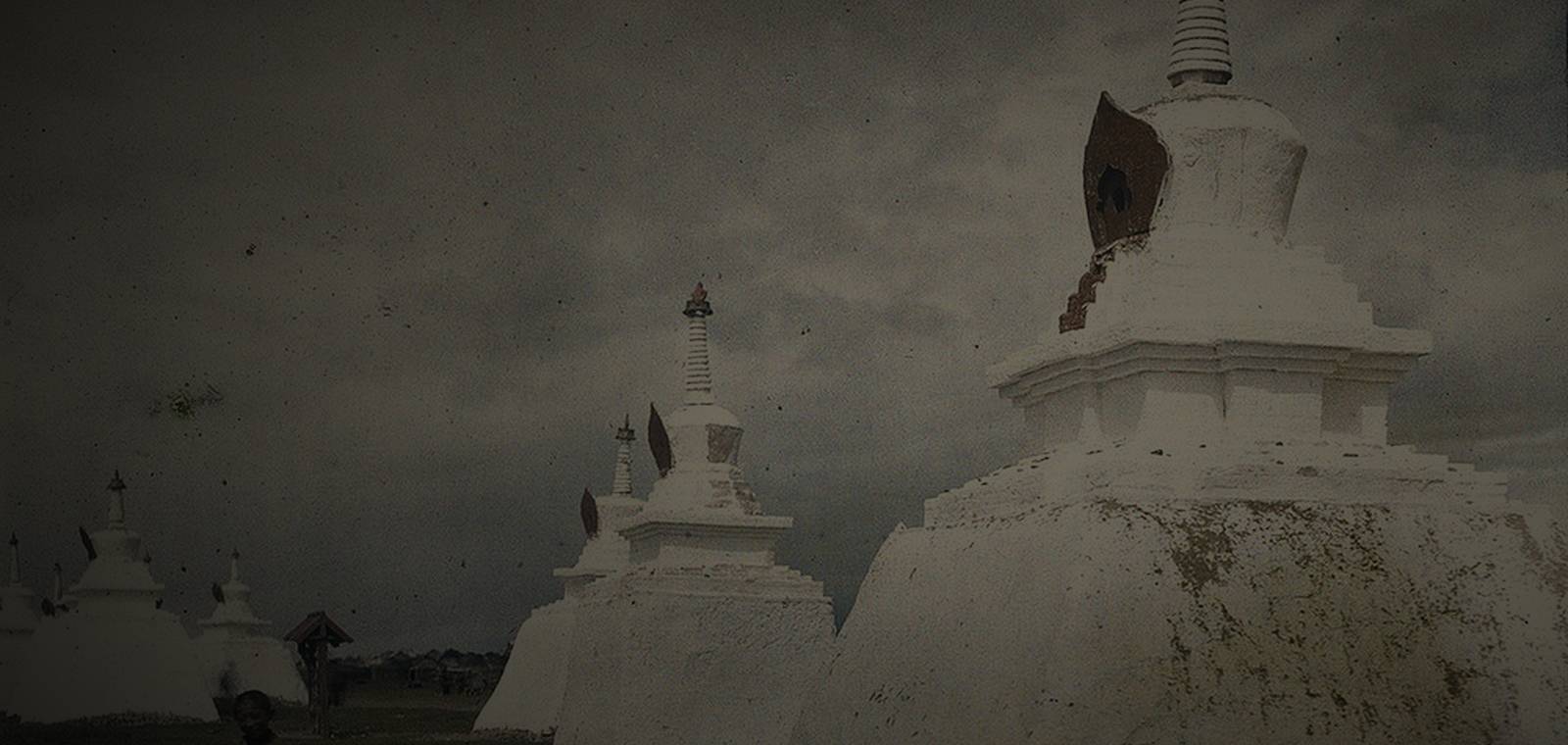
The old people on the shore of the River Amyl related to me an ancient legend to the effect that a certain Mongolian tribe in their escape from the demands of Jenghiz Khan hid themselves in a subterranean country. Afterwards a Soyot from near the Lake of Nogan Kul showed me the smoking gate that serves as the entrance to the “Kingdom of Agharti.”
Ferdinand Ossendowski, Beasts, Men and Gods (1922), part 5 · Other traditions
Translation: Ferdinand Ossendowski, Beasts, Men and Gods (New York: E. P. Dutton, 1922) · Public domain
The name first appears, spelled Asgartha, in Louis Jacolliot's Les Fils de Dieu (1873). He describes it as la ville du soleil
, the city of the sun, the capital of the Brahmatma and seat of Brahmin power, which he calls the ancestor of Thebes, Babylon and Nineveh, and tells of its capture by rebel warriors in remote antiquity.
Alexandre Saint-Yves d'Alveydre turned it into a living, hidden kingdom. In Mission de l'Inde en Europe he describes the Agarttha as a sacred land whose true extent reaches à la surface et dans les entrailles de la terre
, on the surface and in the bowels of the earth, and he refuses to say where it is. His followers printed the book in 1910 from what they called the only existing copy, a work that ne devait pas voir le jour
in its author's lifetime. Their preface says he reached its secret sanctuaries through experiences of leaving his body.
In 1922 Ferdinand Ossendowski published Beasts, Men and Gods, an account of his travels through Siberia and Mongolia from 1920. He says lamas and princes told him of the Kingdom of Agharti
, reached by tunnels that run under the whole world, whose ruler, the King of the World, knows all the forces of the world and reads all the souls of humankind
. A Soyot hunter, he writes, showed him its smoking gate.