Credible Theories Sign in
Other traditions · Ferdinand Ossendowski, Beasts, Men and Gods (1922), part 5

The smoking gate of Agharti, Ferdinand Ossendowski, Beasts, Men and Gods

Share

In plain words

Old people by the River Amyl told Ossendowski that a Mongolian tribe once escaped Genghis Khan by hiding in a country under the ground. Later a Soyot man showed him a smoking gate that he said was the way into the Kingdom of Agharti.

ReferenceFerdinand Ossendowski, Beasts, Men and Gods (1922), part 5
WrittenWritten by Ferdinand Ossendowski about his travels through Siberia and Mongolia from 1920; published in New York in 1922
SetThe country around the River Amyl and Lake Nogan Kul, on the edge of Mongolia
The old people on the shore of the River Amyl related to me an ancient legend to the effect that a certain Mongolian tribe in their escape from the demands of Jenghiz Khan hid themselves in a subterranean country. Afterwards a Soyot from near the Lake of Nogan Kul showed me the smoking gate that serves as the entrance to the “Kingdom of Agharti.”

Documented · Modern book, 1920 Translation: Ferdinand Ossendowski with Lewis Stanton Palen, 1922

Read it literally

A traveller hears of a tribe that escaped Genghis Khan by going underground and is shown the gate they used. The Agartha file traces the kingdom back through two French writers.

What scholars say

Ossendowski reports what local people and lamas told him; he gives no way to check it.

Themes Spirits and jinn
Questions people ask about Ferdinand Ossendowski, Beasts, Men and Gods

What happened to the hunter who went in?

He began to tell what he had seen, so the lamas cut out his tongue; in old age he went back to the cave and vanished into the kingdom.

What did Ossendowski think was behind the story?

He wrote that whether it was hypnosis or mass vision, it hid a powerful force able to sway the political life of Asia.

Used on these files

  • Agartha (Agharti) SpeculationA hidden kingdom under Asia ruled by a King of the World, described by three European writers who each said they had the story from the East.

Where this comes from

EvidenceDocumented

Comes from Ferdinand Ossendowski, Ferdinand Ossendowski, Beasts, Men and Gods (1922), part 5. Project Gutenberg: The oldest digital library, started in 1971, with more than 70,000 free e-books whose copyright has run out. Volunteers type and check the texts against printed editions.

What this means

The text exists and is quoted from a published translation. What it describes is a separate question.

Primary records exist: an original document, a published text, an official file or a dated report. We link to them. This level says the record exists and what it says, not that every claim in it is true.

See all five labels

Sources

  1. Project GutenbergThe oldest digital library, started in 1971, with more than 70,000 free e-books whose copyright has run out. Volunteers type and check the texts against printed editions.Ferdinand Ossendowski, Beasts, Men and Gods (New York: E. P. Dutton, 1922)Primary text
  2. Internet ArchiveA nonprofit digital library in San Francisco, founded in 1996, that holds millions of scanned books, papers and recordings. A scan there shows the pages of a real printed book or document.Louis Jacolliot, Les Fils de Dieu (Paris: A. Lacroix, 1873), part 3, chapter 1, "Prise d'Asgartha"Primary text

Scholarly dates are rounded. The wording follows the named public-domain translation.

More from Other traditions

Two more stories, and what each shares with The smoking gate of Agharti.

Photo credits
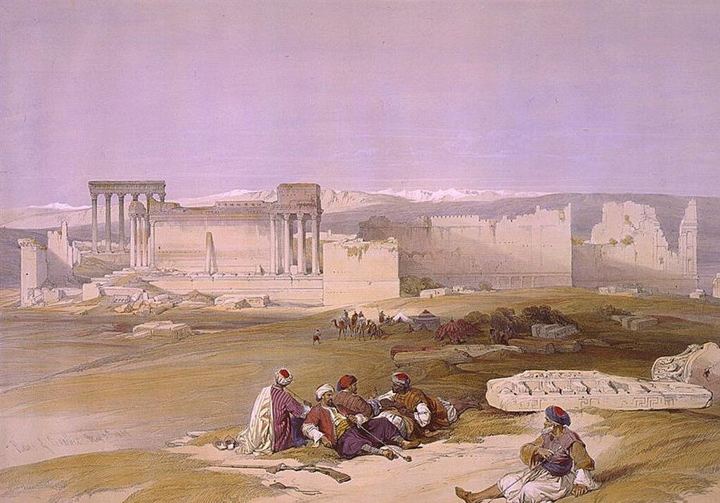
RelatedStones only a demon could liftBenjamin of Tudela, Itinerary, on Baalbek

Benjamin of Tudela, a traveler of the 1100s, passed through Baalbek.

Same theme: Spirits and jinn
Photo credits
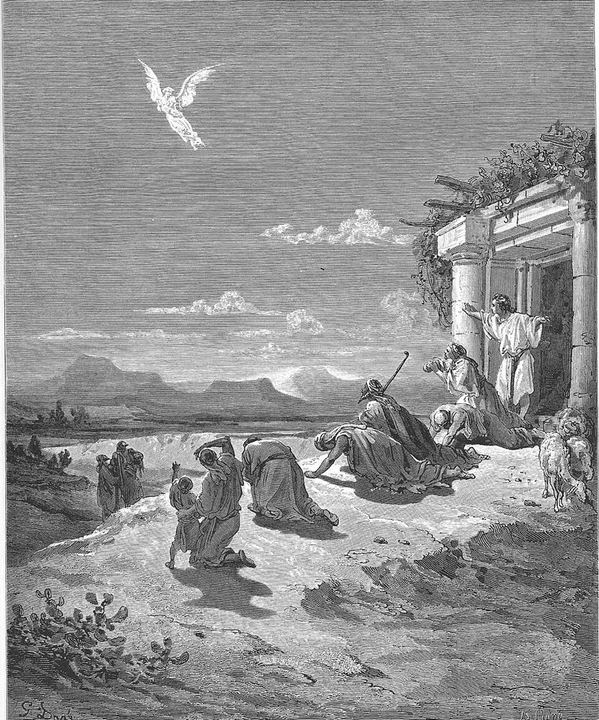
RelatedRaphael: 'ye did see a vision'Tobit 12:15, 19

Here Raphael reveals that he is one of seven holy angels.

Same theme: Spirits and jinn

Updated

Discussion