Credible Theories Sign in

The record

From the text
This is the city, which is mentioned in scripture as Ba'alath in the valley of Lebanon, which Sh'lomo built for the daughter of Pharao. The palace is constructed of stones of enormous size, measuring twenty spans in length and twelve in breadth; no binding material holds these stones together and people pretend, that the building could have been erected only by the help of Ashmedai.
Documented · Medieval text, 1100
Benjamin of Tudela, Itinerary, on Baalbek · Other traditions
Translation: A. Asher, The Itinerary of Rabbi Benjamin of Tudela, vol. 1 (London and Berlin, 1840) · Public domain

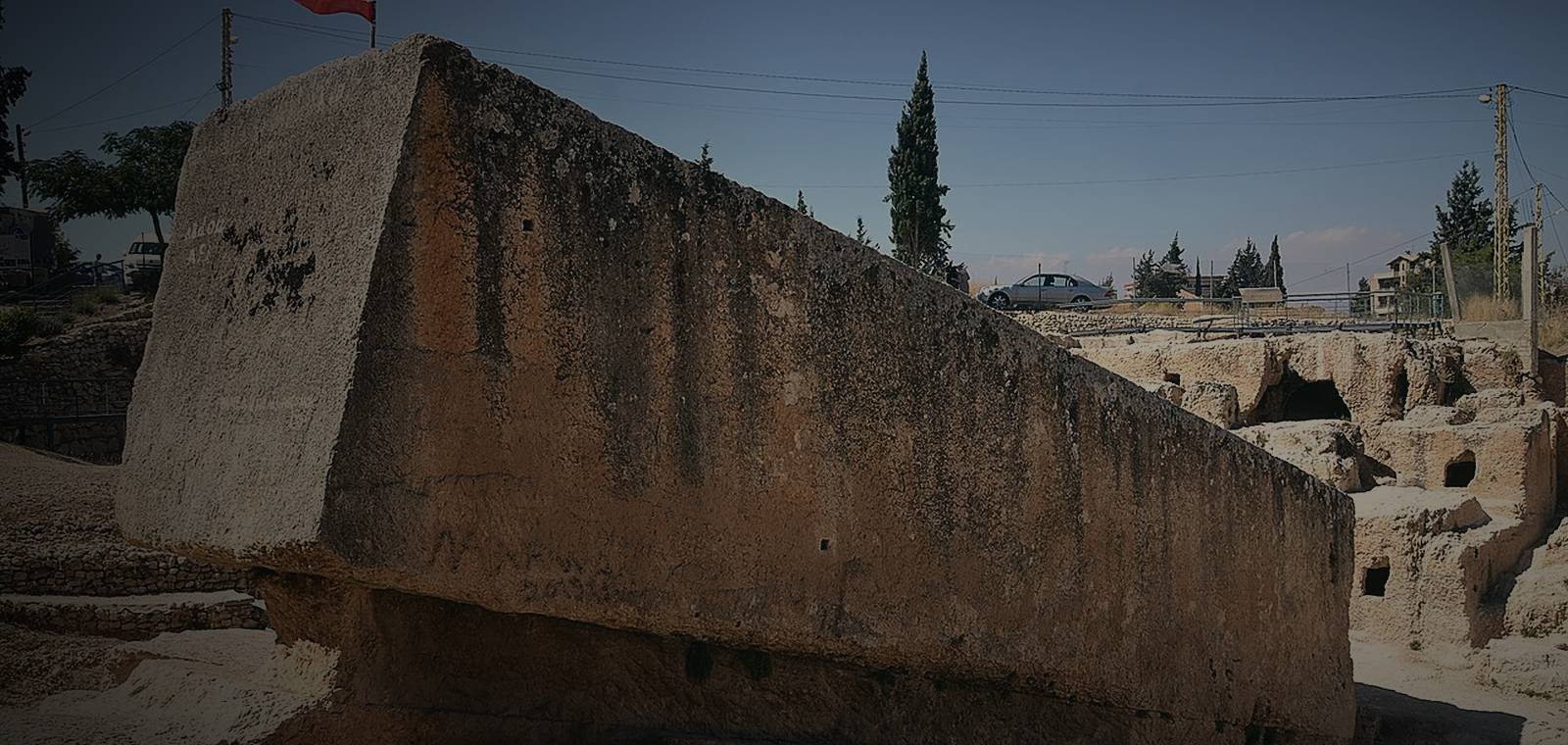
Baalbek is a town in the Bekaa Valley of Lebanon, home to what DigVentures calls one of the grandest sanctuaries of the Roman empire. UNESCO says it began as a Phoenician center of worship, was called Heliopolis during the Hellenistic period, and that its temples, with columns about 20 meters tall, were raised over more than two centuries. What draws people to Baalbek, though, is the size of its stones. DigVentures, quoting the German Archaeological Institute, says blocks up to 20 meters long and 4 meters by 4 meters make up what is left of the podium of the Temple of Jupiter.

Even bigger blocks never left the quarry. One, known as Hajjar al-Hibla, the Stone of the Pregnant Woman, weighs about 1,000 tons and is thought to have been cut about 2,000 years ago. In 2014 the German Archaeological Institute found another beside and under it, about 19.6 meters long, 6 meters wide and at least 5.5 meters high, estimated at 1,650 tons. This is the biggest boulder known from antiquity, the institute said.

The stones puzzled visitors long before anyone weighed them. The Jewish traveler Benjamin of Tudela came through in the 1100s and linked the town with a city in the Bible that Solomon built for Pharaoh's daughter. In A. Asher's 1840 translation he wrote: The palace is constructed of stones of enormous size, measuring twenty spans in length and twelve in breadth; no binding material holds these stones together and people pretend, that the building could have been erected only by the help of Ashmedai, the king of the demons in Jewish lore. How the largest blocks were to be moved, and why some were left behind, is still asked.
Questions people ask about Baalbek and its giant stones

Was the giant Baalbek block meant to be cut smaller?

The German Archaeological Institute said its smooth finish shows it was meant to be moved and used whole. Why it never left the quarry is not known.

What else did Benjamin of Tudela see at Baalbek?

He described a great spring at the upper side of the town whose water rushed through like a river, turning several mills inside the walls and watering many gardens and orchards.

Where does the Bible mention Baalath?

Asher's notes point to 1 Kings 9:18 and 2 Chronicles 8:6, which list Baalath among the towns Solomon built. The link to Baalbek and to Pharaoh's daughter is Benjamin's own.

The open question

Still strange: The biggest stone of the ancient world.

A traveler in the 1100s heard that only the king of the demons could have set Baalbek's stones.

Seal of Solomon: How Did King Solomon's Ring Control Demons? →
  1. Step 1 of 4 · This fileBaalbek and its giant stones
  2. Step 2 of 4 · The passageStones only a demon could lift, Benjamin of Tudela, Itinerary, on Baalbek
  3. Step 3 of 4 · Next fileSeal of Solomon: How Did King Solomon's Ring Control Demons?
  4. Step 4 of 4 · Next fileTestament of Solomon: How Did Solomon Command Demons?
About these videos

Found by a YouTube search for this topic, not checked by us. The player loads from YouTube only when you press play.

Where it turns up

Where this comes from

EvidenceDocumented

Comes from Benjamin of Tudela, The Itinerary of Rabbi Benjamin of Tudela, trans. A. Asher, vol. 1…. Internet Archive: A nonprofit digital library in San Francisco, founded in 1996, that holds millions of scanned books, papers and recordings. A scan there shows the pages of a real printed book or document.

What this means

Records exist and are linked below. This page says what the records say.

For Baalbek and its giant stones, the original record exists and is linked: Benjamin of Tudela, The Itinerary of Rabbi Benjamin of Tudela, trans. A. Asher, vol. 1…. That tells you the record is real and what it says. It does not mean every claim in it is true.

Primary records exist: an original document, a published text, an official file or a dated report. We link to them. This level says the record exists and what it says, not that every claim in it is true.

See all five labels

Sources

  1. Internet ArchiveA nonprofit digital library in San Francisco, founded in 1996, that holds millions of scanned books, papers and recordings. A scan there shows the pages of a real printed book or document.Benjamin of Tudela, The Itinerary of Rabbi Benjamin of Tudela, trans. A. Asher, vol. 1 (London and Berlin, 1840), pp. 86-87Primary text
  2. UNESCO World Heritage CentreThe official website of the World Heritage list kept by UNESCO, the United Nations agency for education, science and culture. Each place's page gives an expert-checked description of the site and why it matters.UNESCO World Heritage Centre, "Baalbek" (site 294)
  3. "Archaeologists discover biggest ancient stone block ever carved by people", DigVentures (December 2014), quoting the German Archaeological Institute

Quotations come from public-domain translations. A book in our Library links to its Library page; other links open the free online copy or the reference page.

Updated

Credible or not?

Tap one to see how other readers voted.

Discussion