The record
The houses were underground structures with an aperture like the mouth of a well by which to enter, but they were broad and spacious below. The entrance for the beasts of burden was dug out, but the human occupants descended by a ladder. In these dwellings were to be found goats and sheep and cattle, and cocks and hens, with their various progeny.
Xenophon, Anabasis 4.5.25–26 · Greece and Rome
Translation: H. G. Dakyns, The Works of Xenophon: Anabasis (Project Gutenberg) · Public domain
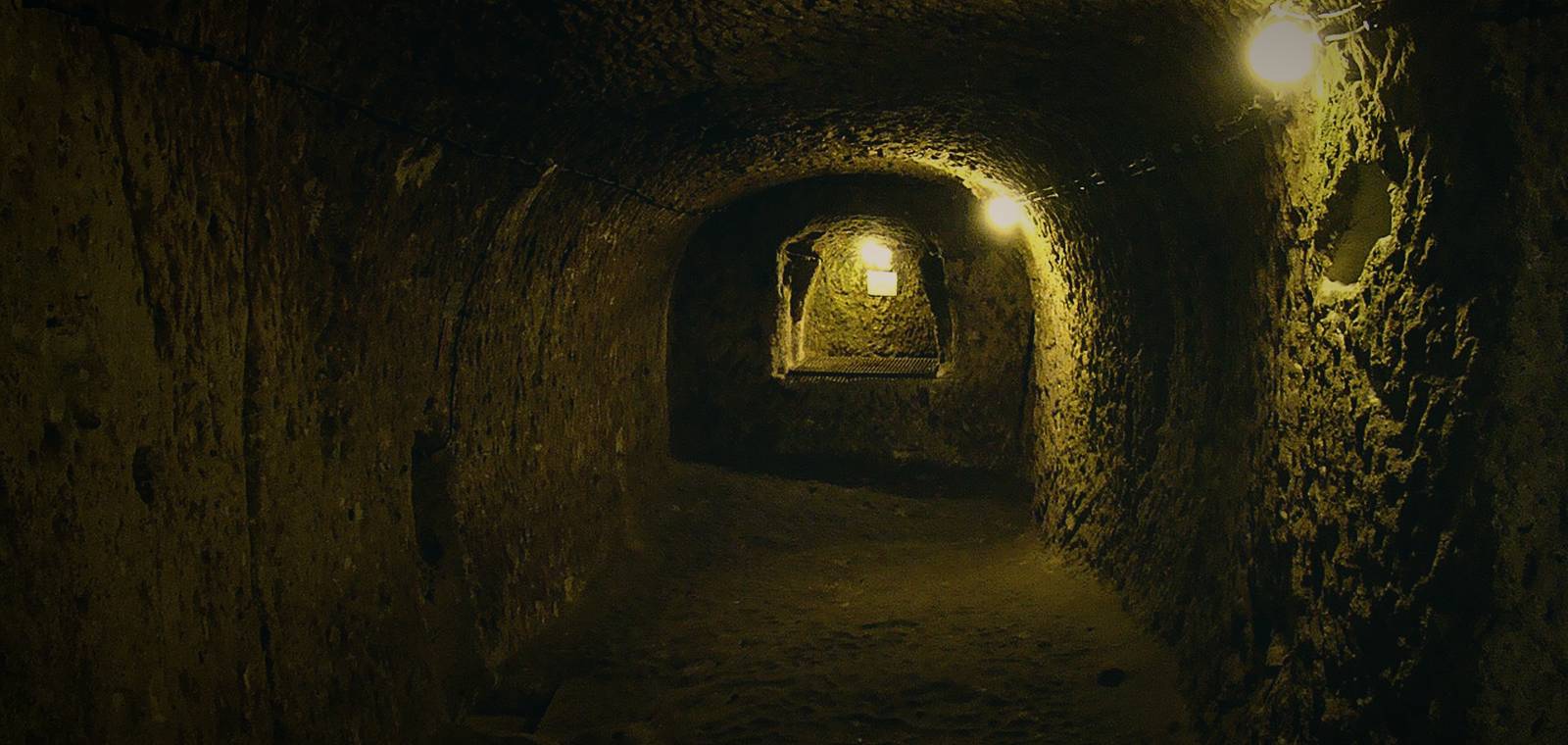
Derinkuyu is a town in the Cappadocia region of central Turkey, and beneath it lies one of the largest of the region's underground cities. Turkey's Ministry of Culture and Tourism says the underground city is about 85 meters deep and that it opened to visitors in 1965. Only about ten percent of it can be visited today. UNESCO lists Derinkuyu, with the nearby underground city of Kaymakli, as part of its World Heritage site Goreme National Park and the Rock Sites of Cappadocia.
The city goes down level after level, a maze of rooms and tunnels dug into the rock. The ministry lists stables, cellars, a church and kitchens among its rooms, and a deep ventilation shaft that also served as a well. Turkish science writers say residents found it by chance in 1963, and that its digging is believed to have begun as early as the Phrygian period, long before the Romans, and that archaeologists have finished work on only some of its levels.
Underground living in this part of the world was noticed by outsiders long ago. Around 400 BCE the Greek soldier Xenophon described villages in Armenia, east of Cappadocia, where the houses were underground structures with an aperture like the mouth of a well by which to enter, but they were broad and spacious below.
His villages were not Derinkuyu, but they show people in the region sheltering animals, stores and families below ground. Who first started Derinkuyu, how many people it held, and exactly when it was used most are still open questions.