Credible Theories Sign in

The record

Sanxingdui is a site at Guanghan, about 40 kilometers north of Chengdu in Sichuan, southwest China. Archaeologists had worked there since 1980, but the find that made it famous came in July 1986. As the art historian Robert Bagley wrote in Arts Asiatiques in 1988, brickyard workers digging for clay came upon a number of archaic jades, stopped, and reported them. The jades lay in the corner of a pit, and when that pit was finished a month later, a second and still richer pit was discovered nearby.

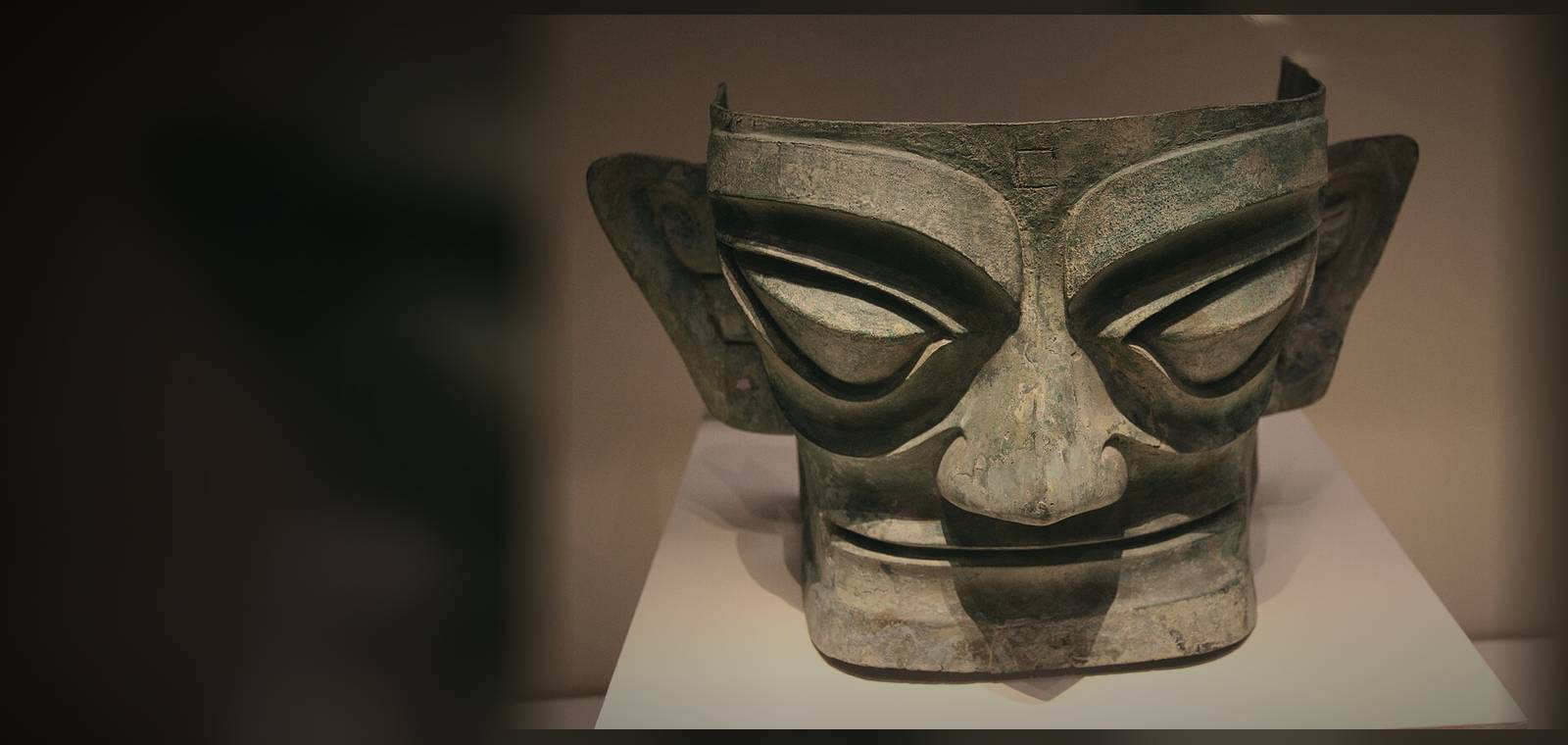
Bagley describes Pit no. 1 as about 4.6 meters long and 1.6 meters deep. It held more than 300 objects of gold, bronze, jade, stone and pottery, cowry shells, 13 elephant tusks and more than three cubic meters of burnt animal bones, and all the objects showed signs of burning. Some jades had been broken and their pieces scattered through the pit. The finds from the pits include bronze heads and masks, some covered with gold, gold masks, and, from Pit no. 2, a bronze standing man 2.62 meters tall. Bagley wrote that many of the artifacts would be astonishing in any context and that the Sichuan basin had held a sophisticated bronze-using culture far earlier than anyone had assumed.

Six more pits were dug between 2020 and 2022. Reported by China Daily in June 2022, Ran Honglin of the Sichuan provincial archaeology institute said carbon dating of about 200 relics put them between 1131 and 1012 BC, and that the new finds mixed local styles with those of the Shang heartland on the Central Plains. In September 2025 the institute and Peking University reported that pits 3, 4, 6 and 8 have a 95.4 percent probability of burial between 1201 and 1012 BC, and that broken pieces of the same objects turned up in different pits, which ties them to one burial.

Why the objects were smashed, burned and buried is not settled. A 2023 study in Heritage Science notes that archaeologists still cannot confirm whether the pits were for sacrificial rituals or just used as trash pits to hastily bury damaged sacrificial artifacts caused by wars or other causes. The people who made the masks are known mainly through what they buried.
Questions people ask about Sanxingdui

How old is Sanxingdui?

The pits were buried in the late Shang period. A 2025 radiocarbon study by Sichuan archaeologists and Peking University puts pits 3, 4, 6 and 8 between 1201 and 1012 BC, and earlier reported dates were 1131 to 1012 BC.

What was found at Sanxingdui?

Pit no. 1 alone held more than 300 objects of gold, bronze, jade, stone and pottery, elephant tusks and burnt animal bones. The pits also held bronze heads and masks and a standing bronze figure 2.62 meters tall.

Why were the Sanxingdui objects buried?

No one knows for sure. They were broken and burned before burial, which suggests a ritual, but researchers have not ruled out a hasty burial of objects damaged by war or another upheaval.

The open question

Still strange: A Bronze Age people in Sichuan made bronze faces in a style no one had seen before and a figure over two and a half meters tall, then broke, burned and buried them, around the same time as the late Shang kings.

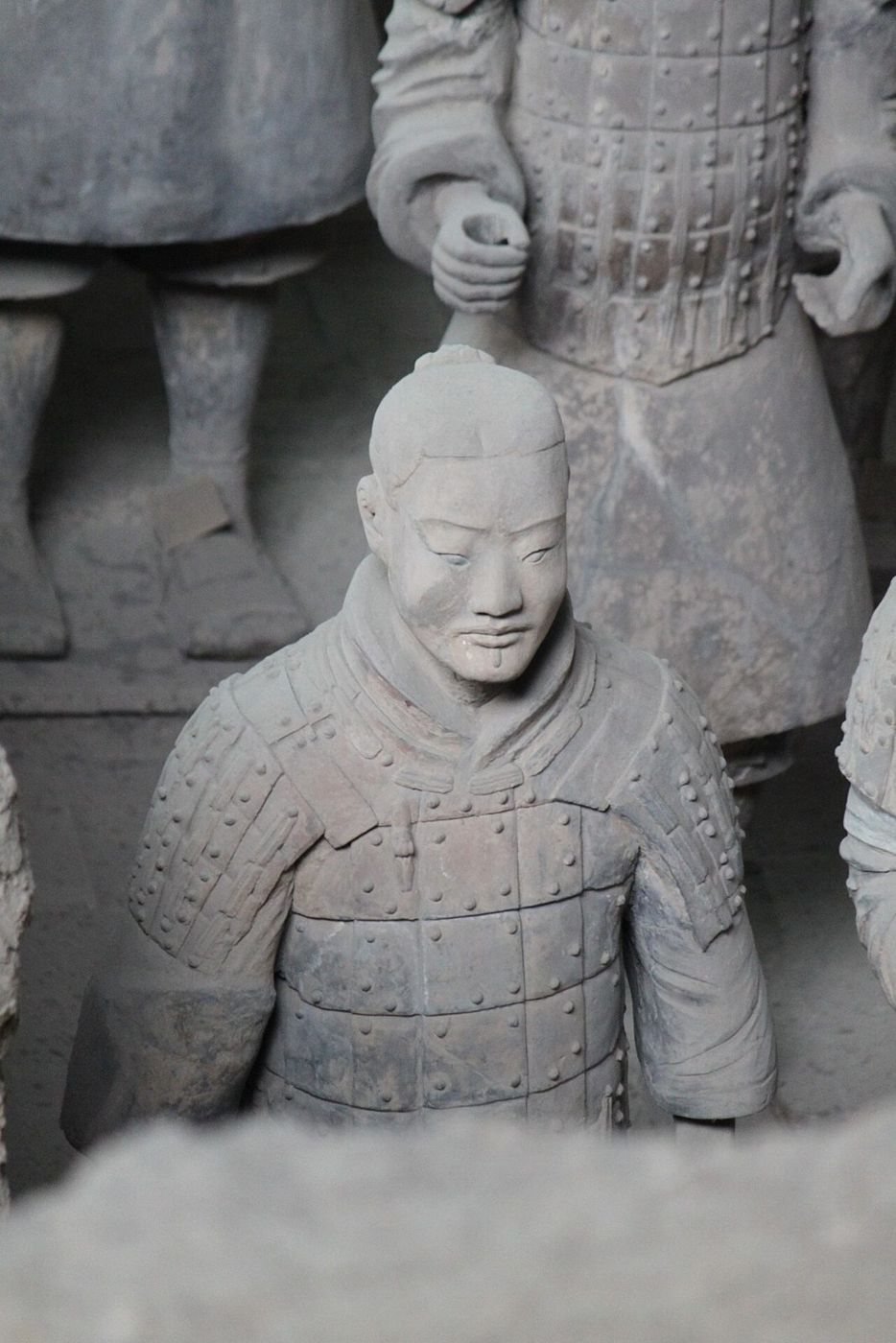
The Terracotta Army and the First Emperor's Tomb →
  1. Step 1 of 4 · This fileSanxingdui
  2. Step 2 of 4 · Next fileThe Terracotta Army and the First Emperor's Tomb
  3. Step 3 of 4 · Next fileThe Longyou Caves: Who Carved Them, and Why?
  4. Step 4 of 4 · Next fileGöbekli Tepe: Who Built It 11,000 Years Ago, and Why?
About these videos

Found by a YouTube search for this topic, not checked by us. The player loads from YouTube only when you press play.

Where this comes from

EvidenceDocumented

Comes from Robert W. Bagley, "Sacrificial pits of the Shang period at Sanxingdui in Guanghan…. Persée: A free French public website that puts back issues of scholarly journals online, such as the archaeology journal Paléorient.

What this means

The pits, objects and radiocarbon dates are published; why the objects were destroyed and buried is not on record.

For Sanxingdui, the original record exists and is linked: Robert W. Bagley, "Sacrificial pits of the Shang period at Sanxingdui in Guanghan…. That tells you the record is real and what it says. It does not mean every claim in it is true.

Primary records exist: an original document, a published text, an official file or a dated report. We link to them. This level says the record exists and what it says, not that every claim in it is true.

See all five labels

Sources

  1. PerséeA free French public website that puts back issues of scholarly journals online, such as the archaeology journal Paléorient.Robert W. Bagley, "Sacrificial pits of the Shang period at Sanxingdui in Guanghan county, Sichuan Province", Arts Asiatiques 43 (1988), pp. 78-86, PerséePrimary text
  2. A research articleAn article written by a researcher and published in a scholarly journal or book. Most such journals have other experts check a paper before it is printed, so it carries more weight than a news story, though later studies can still change the picture.Guo, Xiang, Ran, Xie and others, "The sacrificial record in burial pits of the late Shang Dynasty: evidences from the chroma and magnetic properties of the Sanxingdui site", Heritage Science 11 (2023)Primary text
  3. China DailyChina Daily is China's state-owned English-language daily newspaper. Its culture pages report interviews with Chinese archaeologists.Wang Kaihao, "Sanxingdui relics offer glimpse of early Chinese civilization", China Daily (14 June 2022)
  4. CGTNCGTN (China Global Television Network) is China's state-owned international broadcaster. It reports official announcements, such as new dates from Chinese excavations.CGTN, "Exact dating of the sacrificial pits at Sanxingdui site officially released" (27 September 2025)

Quotations come from public-domain translations. A book in our Library links to its Library page; other links open the free online copy or the reference page.

Updated

Credible or not?

Tap one to see how other readers voted.

Discussion