The record
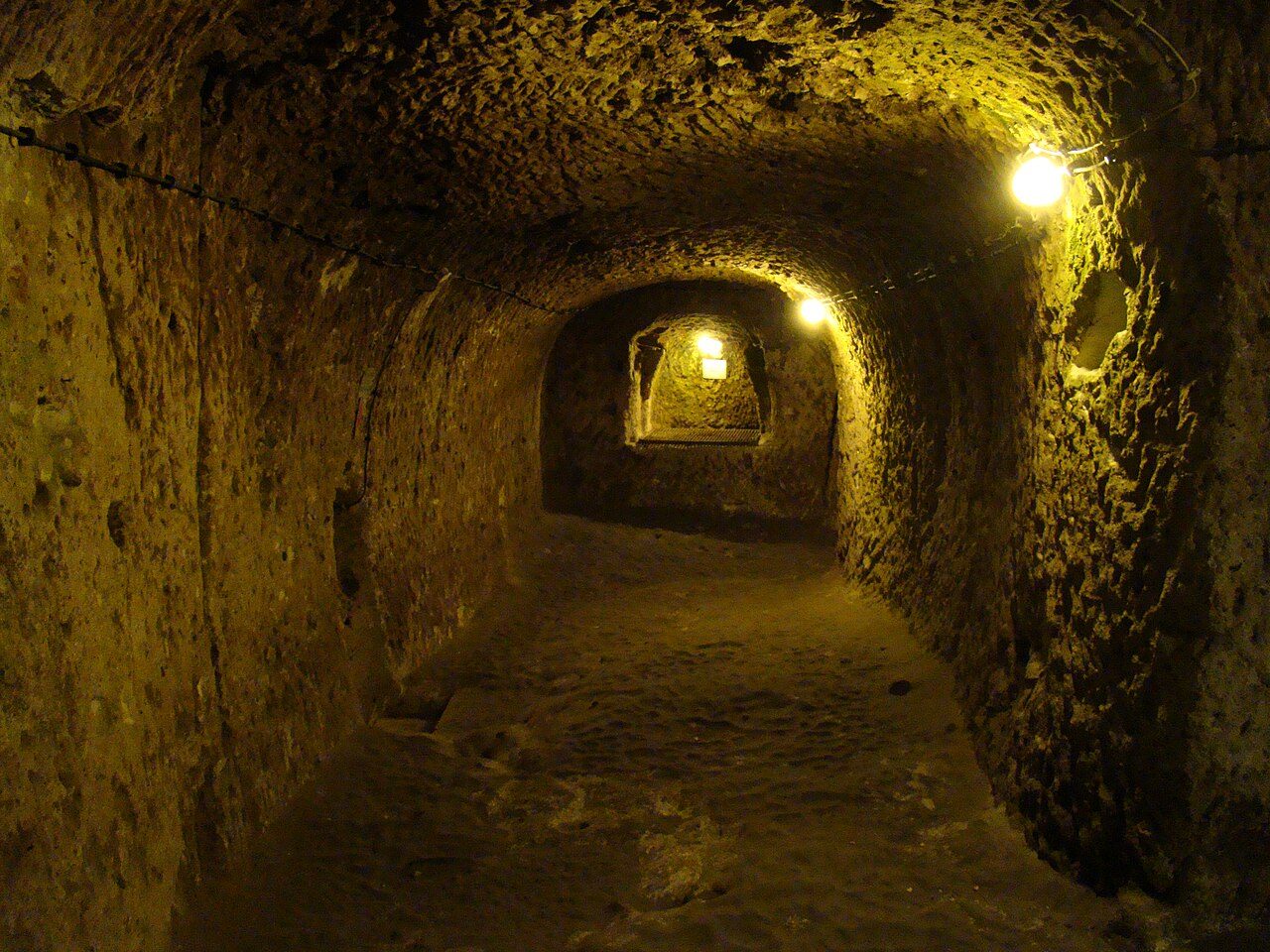
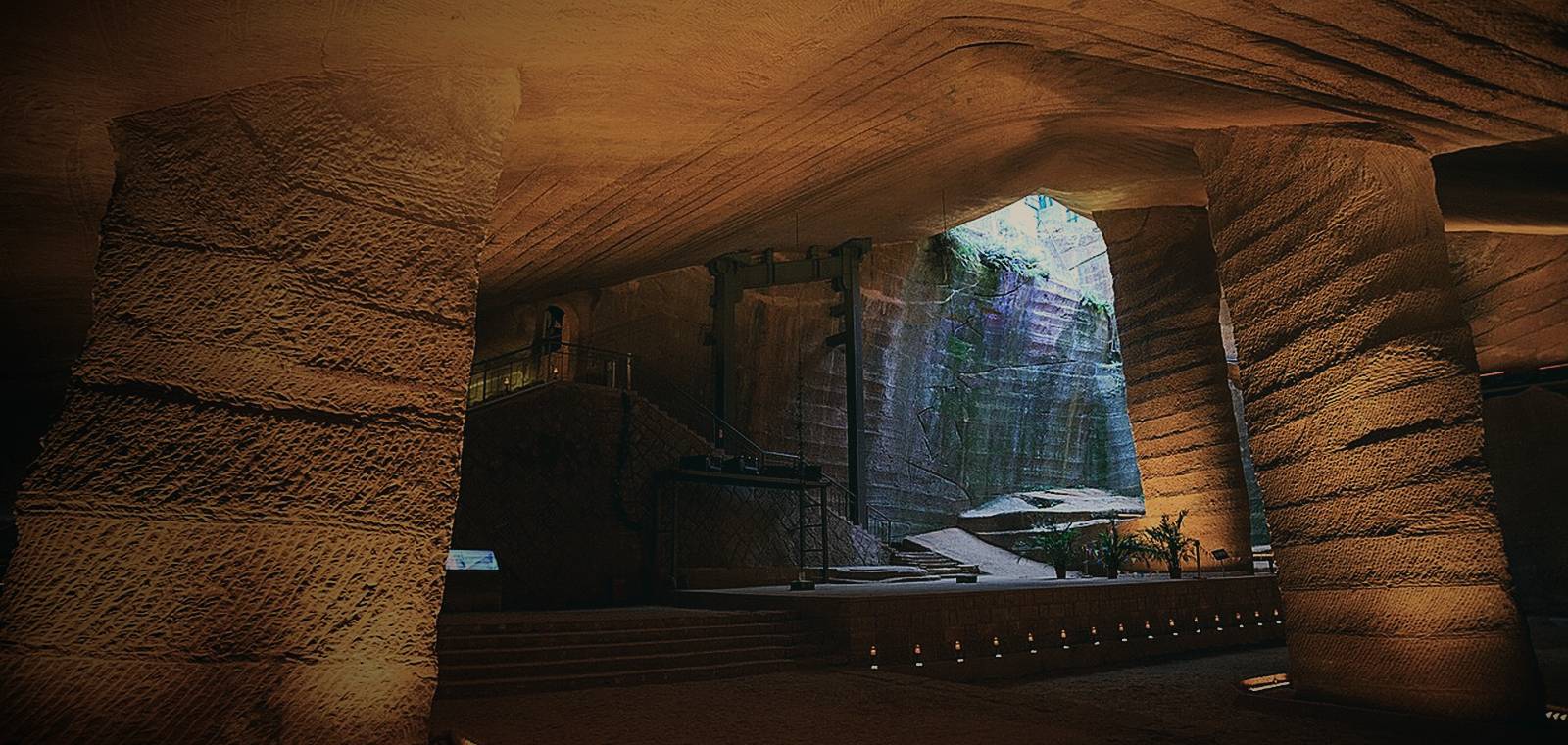
In June 1992, villagers near Longyou in Zhejiang Province, eastern China, pumped the water out of some ponds and found that the ponds were the flooded openings of enormous rooms cut into the rock. Five large caverns came out whole. More were found later; the science writer Tom Hale, summing up a 2009 engineering study, counts 24 at the site, from 18 to 34 meters wide and 8 to 18 meters high. The rooms have sloping ceilings, tall slender pillars of rock left standing to hold up the roof, stairs cut into the walls, and parallel chisel marks over every surface.
Most of what is known about them comes from engineering geologists rather than historians. In 2011 Zhifa Yang, Zhongqi Yue and Lihui Li summed up twelve years of work on the site in the Journal of Rock Mechanics and Geotechnical Engineering. They list the large spans, the portals, how shallow the rooms sit under the ground, the chisel imprints, drainage gutters, inclined ceilings and walls, the pillars and the rock staircases, and use them to work out how the builders planned and dug. A 2016 paper led by Lihui Li adds that the rock is argillaceous siltstone of Cretaceous age, a soft mudstone that can be carved with iron tools.
The same 2016 paper found several short test tunnels that were started and then abandoned where the diggers hit thin layers of clay, which make a roof weak. The completed caverns sit where those clay layers are fewer and thinner. The authors write: This is probably the earliest known use of geological exploration by adit methods, an approach now widely used.
Why the rooms lasted is its own puzzle. A 2010 study by Zhong Qi Yue and colleagues reports that when the caves were first drained their inner walls were free of old cracks, and that cracks have spread since the water came out. They proposed that the siltstone heals small cracks while it sits in weakly acid water, growing new calcite in them. The 2011 summary warns that a full roof collapse is possible in each of the five drained caverns.
No ancient text names the caves or says who dug them. Ideas include a quarry, tombs, storehouses and a hidden barracks; Hale reports that the archaeologist Yang Hongxun suggested in 2014 that King Goujian of Yue hid troops there around 494 BC. Other large ancient quarry caverns are known in Zhejiang, such as those on Shepan Island, described in the same 2015 conference volume on ancient underground openings that covers Longyou.