












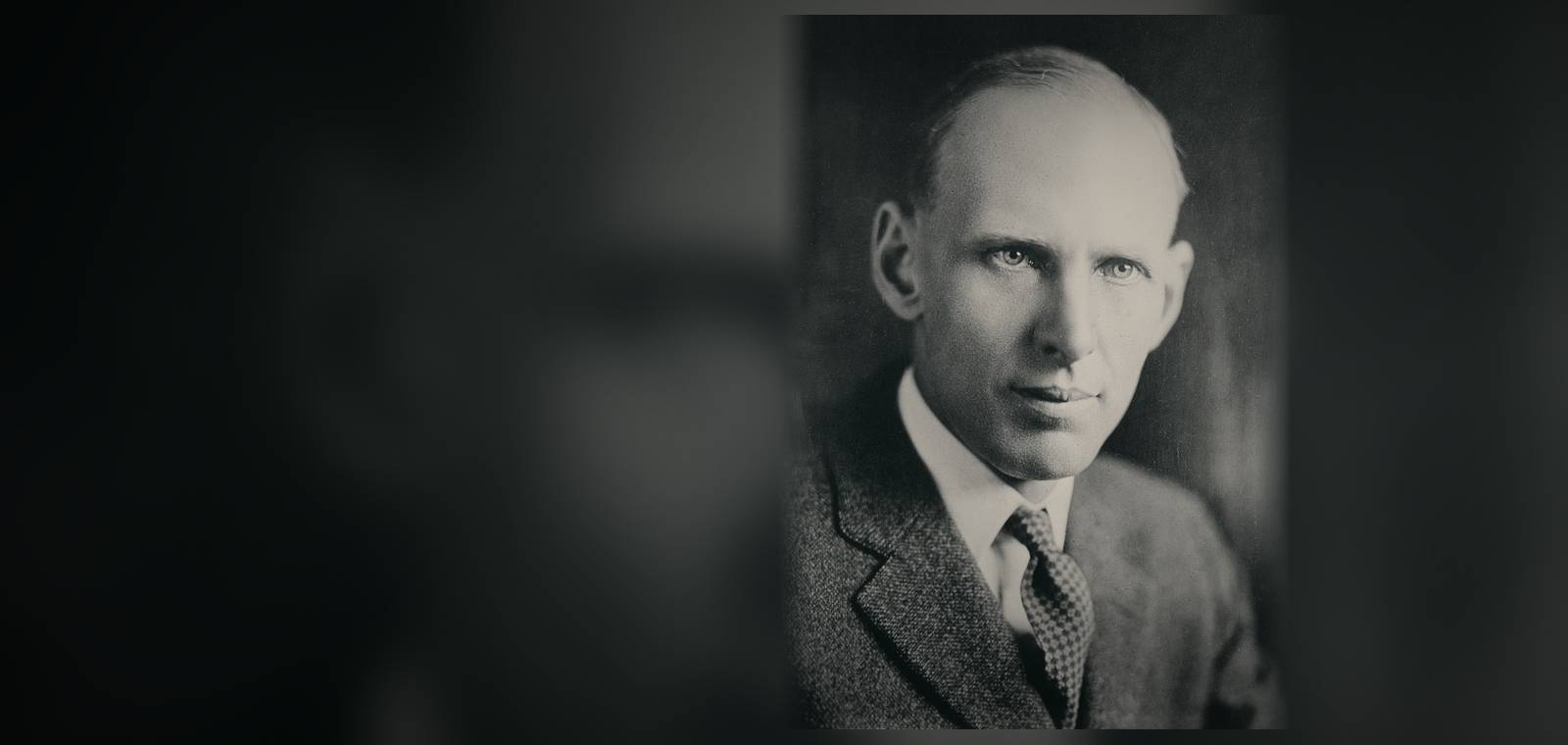
What is Henry Adams Bellows known for?
Henry Adams Bellows was an American writer and businessman. He earned a PhD in comparative literature at Harvard in 1910 with a dissertation on prose and verse in Old Norse literature, then worked as an editor of The Bellman, a music critic, and manager of the Minneapolis radio station WCCO. He was an early member of the Federal Radio Commission in 1927, a vice president of CBS, and later head of public relations at General Mills.
Alongside this career he translated the Poetic Edda for the American-Scandinavian Foundation (1923). The Poetic Edda is a collection of Old Norse poems about gods and heroes preserved mainly in the Codex Regius, an Icelandic manuscript of the 13th century. It includes the Voluspa, a seeress's account of the creation and destruction of the world.
His translation keeps the alliterative rhythm of the original and is now public domain, which is why it is the version most often quoted online.
Titles and honors
- Offices held
- Member, Federal Radio Commission 1927
- Vice President, Columbia Broadcasting System 1930-1934
- Ranks
- Major, Minnesota Home Guard World War I
The same story, told elsewhere
Shared story · Beginnings
Creation from the Primeval Waters and the Cosmic Egg
Before anything existed there was dark water. Or an egg. Babylon, Genesis, the Rig Veda, Egypt, Finland and the Quran all start the world in almost the same place.
Poetic Edda, Voluspa is one telling. The same story is told 9 more times, in 5 parts of the world. Follow it:
- BabylonianBabylon, Mesopotamia · c. 1700-1100 BCE · Ancient text
- Vedic IndiaNorthwest India · c. 1200-1000 BCE · Ancient text
- GreekBoeotia, Greece · c. 700 BCE · Ancient text
- Hebrew BibleJudah / Babylon · c. 600-400 BCE · Ancient text
- EgyptianThebes, Egypt · c. 310 BCE · Ancient text
- Babylonian, retold in GreekBabylon · c. 280 BCE · Ancient text
- Hindu law codeIndia · c. 200 BCE · Ancient text
- IslamArabia · 7th century CE · Medieval text
- NorseIceland · c. 1000 CE · Medieval textTied to this page
- FinnishFinland and Karelia · 1820 · Recorded folklore
The open question: Why would people who never met all start the world in dark water? A shared idea, or the most natural guess anyone would make? Join the debate
Shared story · Beginnings
The Lost Golden Age and the Ages of the World
Gold, silver, bronze, iron: Greece, Persia and the Book of Daniel all count the ages of the world in metals, India counts four yugas, and the Norse and Maya see whole worlds destroyed and remade.
Poetic Edda, Voluspa (Ragnarok and the new earth) is one telling. The same story is told 9 more times, in 6 parts of the world. Follow it:
- GreekBoeotia, Greece · c. 700 BCE · Ancient text
- Greek (Plato)Athens · c. 360 BCE · Ancient text
- Greek, about EgyptAthens, telling an Egyptian story · c. 360 BCE · Ancient text
- Hindu law codeIndia · c. 200 BCE · Ancient text
- Hebrew BibleJudea · c. 165 BCE · Ancient text
- RomanRome · c. 8 CE · Ancient text
- Zoroastrian (Persian)Iran · 9th to 13th centuries CE · Medieval text
- Zoroastrian (Persian)Iran · 9th century CE · Medieval text
- NorseIceland · c. 1000 CE · Medieval textTied to this page
- K'iche' MayaHighland Guatemala · c. 1554-1558 · Retold in English
The open question: Why do so many traditions believe the past was better and the world is running down? Memory, or human nature? Join the debate
Linked people and places
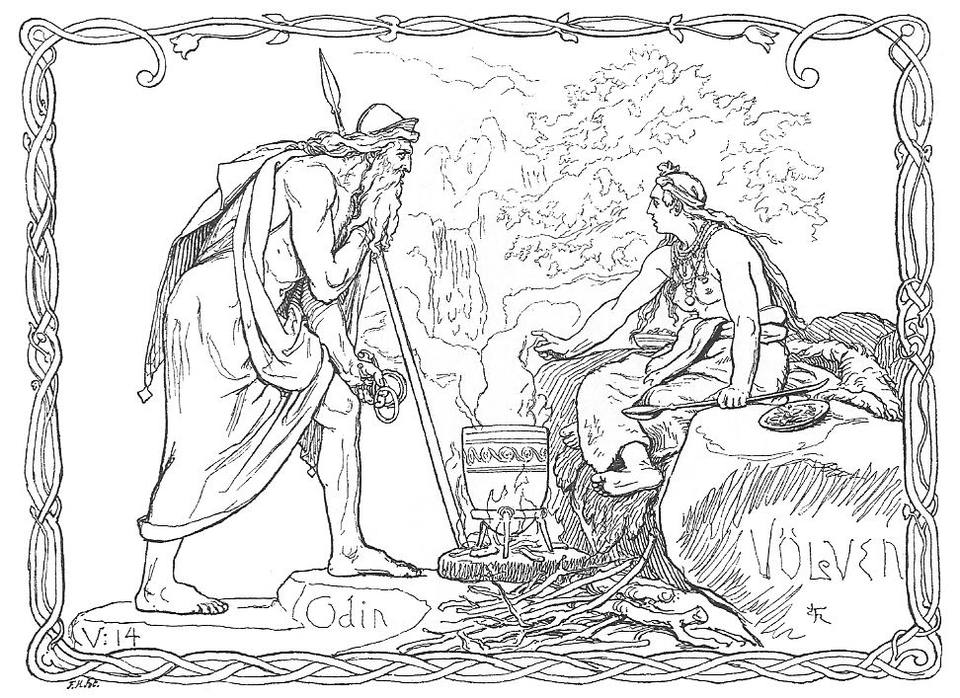
Where this comes from
Comes from Internet Sacred Text Archive, 'The Poetic Edda', tr. Henry Adams Bellows. A collection of Old Norse poems about gods such as Odin and Thor and about the world's beginning and end. The poems are older, but they survive mainly in one Icelandic manuscript of about 1270, found in 1643 and now in Reykjavik.
What this means
A real person with records. Sources are listed below.
For Henry Adams Bellows, the original record exists and is linked: Internet Sacred Text Archive, 'The Poetic Edda', tr. Henry Adams Bellows. That tells you the record is real and what it says. It does not mean every claim in it is true.
Primary records exist: an original document, a published text, an official file or a dated report. We link to them. This level says the record exists and what it says, not that every claim in it is true.
Sources
- The Poetic EddaA collection of Old Norse poems about gods such as Odin and Thor and about the world's beginning and end. The poems are older, but they survive mainly in one Icelandic manuscript of about 1270, found in 1643 and now in Reykjavik. Henry Adams Bellows's English version came out in 1923.Internet Sacred Text Archive, 'The Poetic Edda', tr. Henry Adams Bellows Online copyPrimary text Archived copy, 2026-08-20
- WikipediaA free online encyclopedia written and edited by volunteers. It is a good starting point and usually lists its own sources, but anyone can change it, so we treat it as a guide to better sources, not the final word.Wikipedia, 'Henry Adams Bellows (businessman)'Reference Archived copy, 2026-09-09
No public-domain picture of this person yet. We do not show drawn or generated likenesses.