Credible Theories Sign in

The record

From the text
And there went out a champion out of the camp of the Philistines, named Goliath, of Gath, whose height was six cubits and a span.
Documented · Ancient text, c. 600–500 BCE
1 Samuel 17:4 · Hebrew Bible
Translation: King James Version (1611; standard 1769 text), with Apocrypha · Public domain

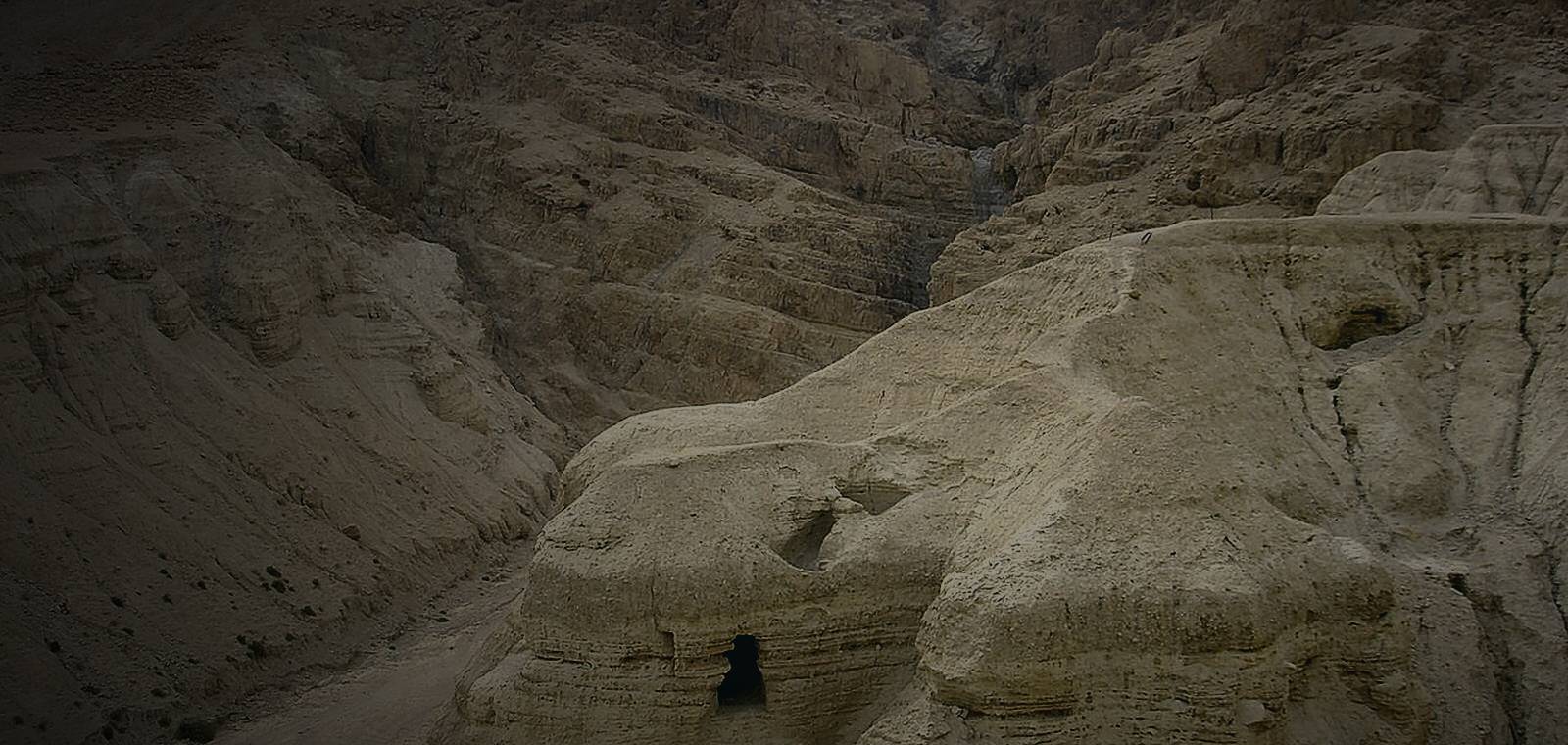
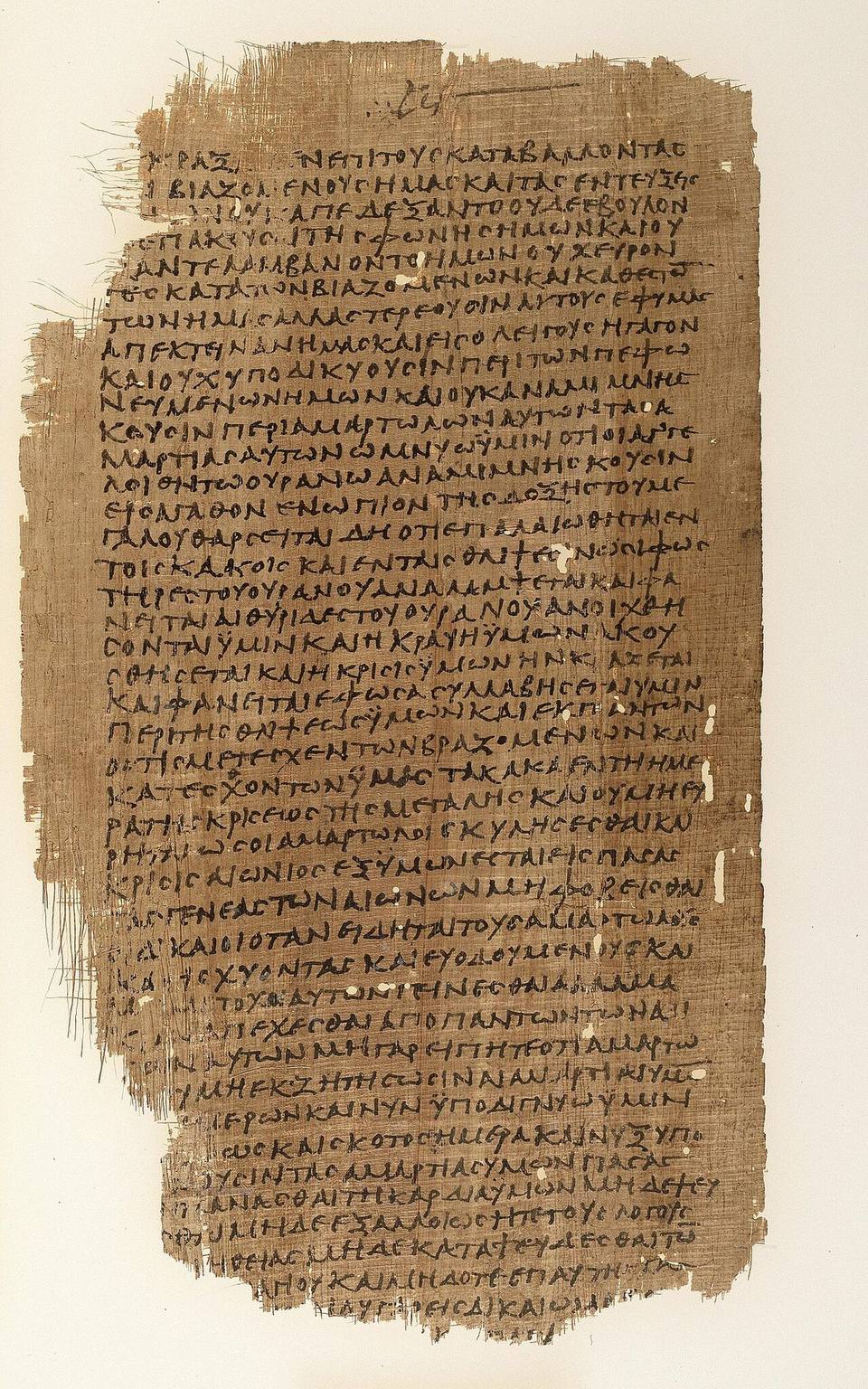
In the winter of 1946–47, Bedouin shepherds entered a cave near Qumran, on the northwest shore of the Dead Sea, and found jars holding ancient scrolls. Over the next decade, eleven caves yielded the remains of roughly nine hundred to a thousand manuscripts, most in Hebrew, some in Aramaic and Greek. They were copied between about 250 BCE and 68 CE, when the Romans destroyed the nearby settlement.

About a quarter are books of the Hebrew Bible, a thousand years older than the previous oldest Hebrew copies. The Great Isaiah Scroll is almost complete. Others are community rules and legal texts, hymns, commentaries and apocalyptic texts about a final war between the Sons of Light and the Sons of Darkness.

For the story of the Watchers, the scrolls were revolutionary. They contained Aramaic fragments of 1 Enoch, showing the book was centuries older than many had thought; many copies of Jubilees; the Book of Giants, lost for a millennium; and the Genesis Apocryphon. One Deuteronomy scroll preserved the older reading "sons of God" in Deuteronomy 32:8. The Copper Scroll, engraved on metal, lists dozens of hiding places of gold and silver. Whether real or symbolic, none of its treasure has been found. The scrolls are now held mainly by the Israel Museum and the Israel Antiquities Authority, which has photographed them for public viewing online.
The same story, told elsewhere

Shared story · Heroes and trials

The Dragon Slayer: Marduk, Indra, Thor and Saint George

A god or a hero faces a giant serpent that blocks the waters, eats the young or threatens the whole world, and cuts it down. The same fight is told in Babylon, India, Greece, Egypt, Iceland, Japan and medieval Europe.

Isaiah 27 (Leviathan), with Psalm 74 is one telling. The same story is told 7 more times, in 6 parts of the world. Follow it:

  1. Vedic IndiaNorthwest India · c. 1500-1200 BCE · Ancient text
  2. Babylonian (Akkadian)Babylon · c. 1200-1100 BCE · Ancient text
  3. GreekBoeotia, Greece · c. 700 BCE · Ancient text
  4. EgyptianThebes, Egypt · c. 312 BCE · Ancient text
  5. Hebrew BibleJudah · 24 to 27 BCE · Ancient textTied to this page
  6. Japanese (Shinto)Izumo, Japan · 712 CE · Medieval text
  7. NorseIceland · c. 1220 CE · Medieval text
  8. Medieval Christian (Europe)Written in northern Italy · c. 1260 CE · Medieval text

The open question: Did one ancient story of a hero and a serpent spread across the world, or do people everywhere turn their fears into dragons on their own? Join the debate

Shared story · Heroes and trials

A Child Offered Up: Abraham, Jephthah, Agamemnon and Harishchandra

A father is told, or promises, that he must give up his own child. Sometimes an animal is found in time and sometimes no one stops the knife, and the story is told in the Bible, the Quran, Greece, India and Viking-age Sweden.

Genesis 22 (the binding of Isaac) is one telling. The same story is told 8 more times, in 4 parts of the world. Follow it:

  1. Hebrew Bible (about Moab)Kir-hareseth, Moab · c. 850 BCE · Ancient text
  2. Vedic IndiaNorthern India · c. 800-600 BCE · Ancient text
  3. Hebrew BibleGilead, east of the Jordan · c. 7th-6th century BCE · Ancient text
  4. Hebrew BibleJudah / Israel · 1st millennium BCE · Ancient textTied to this page
  5. GreekAthens, Greece · 458 BCE · Ancient text
  6. Phoenician (in Greek)Byblos, Lebanon · c. 100 CE · Ancient text
  7. IslamArabia · 7th century CE · Medieval text
  8. Norse (Swedish legend)Uppsala, Sweden · c. 1225 CE · Medieval text
  9. French (Greek legend)France · 1699 · Recorded folklore

The open question: Do these stories remember a time when people really gave up their children, or were they told to teach that it must never happen? Join the debate

Questions people ask about Dead Sea Scrolls (Qumran)

What books are in the Dead Sea Scrolls?

Roughly one in four manuscripts is a book of the Hebrew Bible, and every book of that Bible except Esther shows up in at least a fragment. The Great Isaiah Scroll survives nearly whole. The rest include rules for a religious community, hymns, Bible commentaries, Enoch and Jubilees, and war texts about the end of days.

Are any Dead Sea Scroll fragments fake?

Yes, some sold on the antiquities market since 2002 have turned out to be forgeries. In 2018 the Museum of the Bible in Washington, D.C. said five of its fragments were modern fakes, and a 2020 report found that all sixteen of its pieces were forged. The scrolls found by archaeologists in the caves are not in doubt.

Where can you see the Dead Sea Scrolls in person?

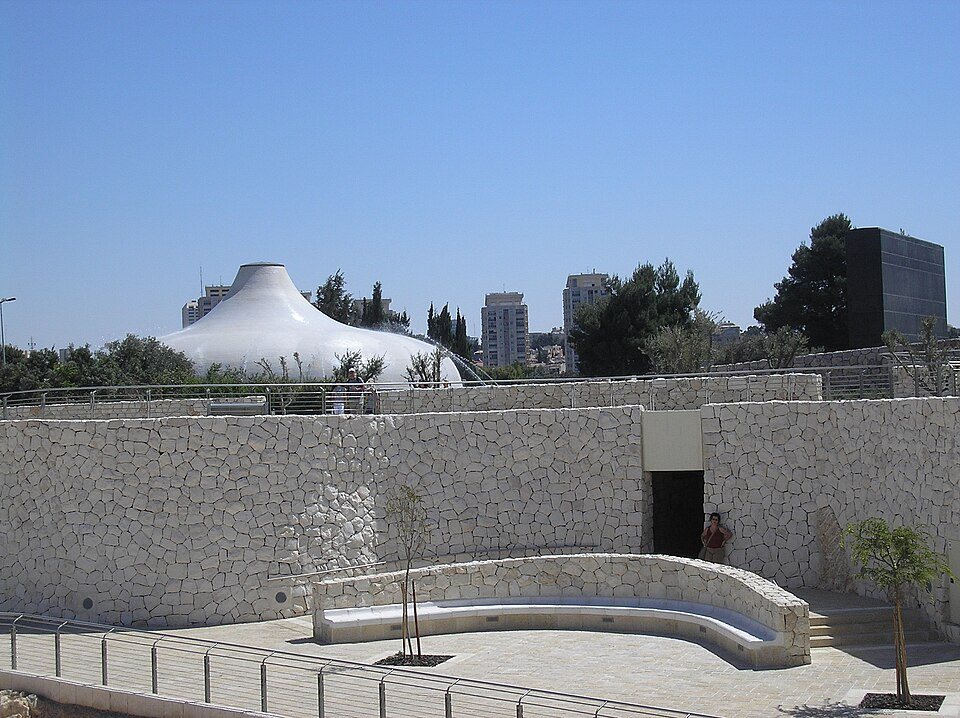
The best known place is the Shrine of the Book, a building at the Israel Museum in Jerusalem that opened in 1965. Its white dome was designed to look like the lids of the jars that held the first scrolls. A full-size copy of the Great Isaiah Scroll stands on display, while fragile originals go on display in rotation to limit light damage.

The open question

Still strange: Some scrolls describe a final war between the Sons of Light and the Sons of Darkness.

The Book of Enoch: What Is It, and Why Isn't It in Most Bibles? →
  1. Step 1 of 4 · This fileDead Sea Scrolls
  2. Step 2 of 4 · The passageGoliath, 1 Samuel 17:4
  3. Step 3 of 4 · Next fileThe Book of Enoch: What Is It, and Why Isn't It in Most Bibles?
  4. Step 4 of 4 · Next fileThe Book of Giants: The Nephilim Story Told by the Giants
About these videos

Found by a YouTube search for this topic, not checked by us. The player loads from YouTube only when you press play.

Where it turns up

Where this comes from

EvidenceDocumented

Comes from The Leon Levy Dead Sea Scrolls Digital Library, Israel Antiquities Authority. The official online collection of the Israel Antiquities Authority, the Israeli government body that looks after the Dead Sea Scrolls. It shows detailed photos of thousands of scroll pieces, with notes on each.

What this means

The text exists and is quoted from a published translation. What it describes is a separate question.

For Dead Sea Scrolls, the original record exists and is linked: The Leon Levy Dead Sea Scrolls Digital Library, Israel Antiquities Authority. That tells you the record is real and what it says. It does not mean every claim in it is true.

Primary records exist: an original document, a published text, an official file or a dated report. We link to them. This level says the record exists and what it says, not that every claim in it is true.

See all five labels

Sources

  1. Leon Levy Dead Sea Scrolls Digital LibraryThe official online collection of the Israel Antiquities Authority, the Israeli government body that looks after the Dead Sea Scrolls. It shows detailed photos of thousands of scroll pieces, with notes on each.The Leon Levy Dead Sea Scrolls Digital Library, Israel Antiquities AuthorityPrimary text Archived copy, 2026-09-30
  2. Encyclopaedia BritannicaAn encyclopedia first published in Scotland in 1768 and now online. Its articles are written and checked by named experts and editors, which makes it a reliable source for basic facts.Encyclopaedia Britannica, "Dead Sea Scrolls"Reference Archived copy, 2026-09-22
  3. WikipediaA free online encyclopedia written and edited by volunteers. It is a good starting point and usually lists its own sources, but anyone can change it, so we treat it as a guide to better sources, not the final word.Wikipedia, "Dead Sea Scrolls"Reference Archived copy, 2026-10-02

Quotations come from public-domain translations. A book in our Library links to its Library page; other links open the free online copy or the reference page.

Updated

Credible or not?

Tap one to see how other readers voted.

Discussion