












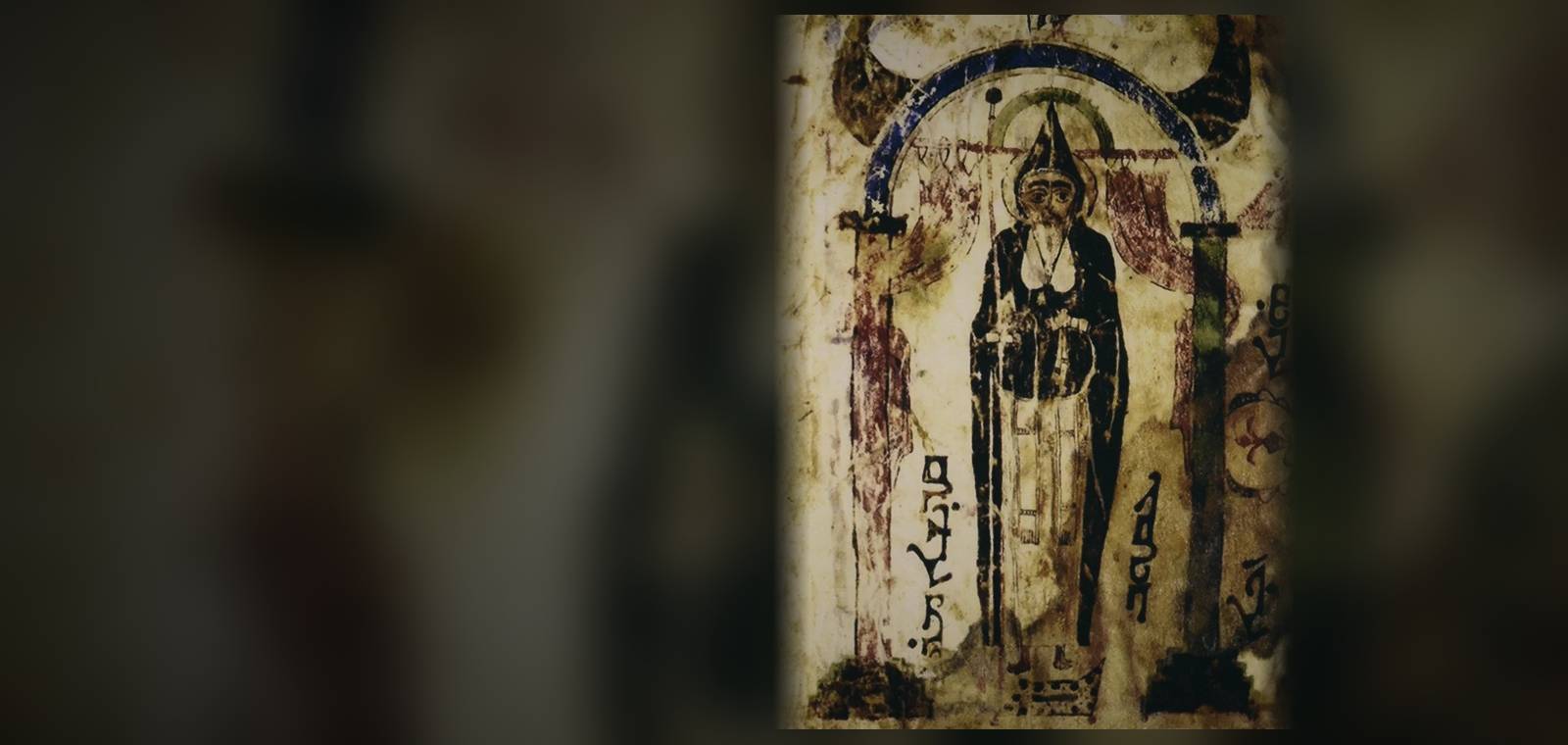
What is Jacob of Serugh known for?
Jacob of Serugh was a Syriac Christian poet born around 451 in the region of the upper Euphrates. He spent most of his life as a churchman and writer, and in 519, already elderly, was made bishop of Batnan in the district of Serugh. He died in 521.
He is famous for his metrical homilies, or memre, long sermons in verse on biblical and religious themes. The 13th-century writer Bar Hebraeus credited him with 760 of them; about 400 survive.
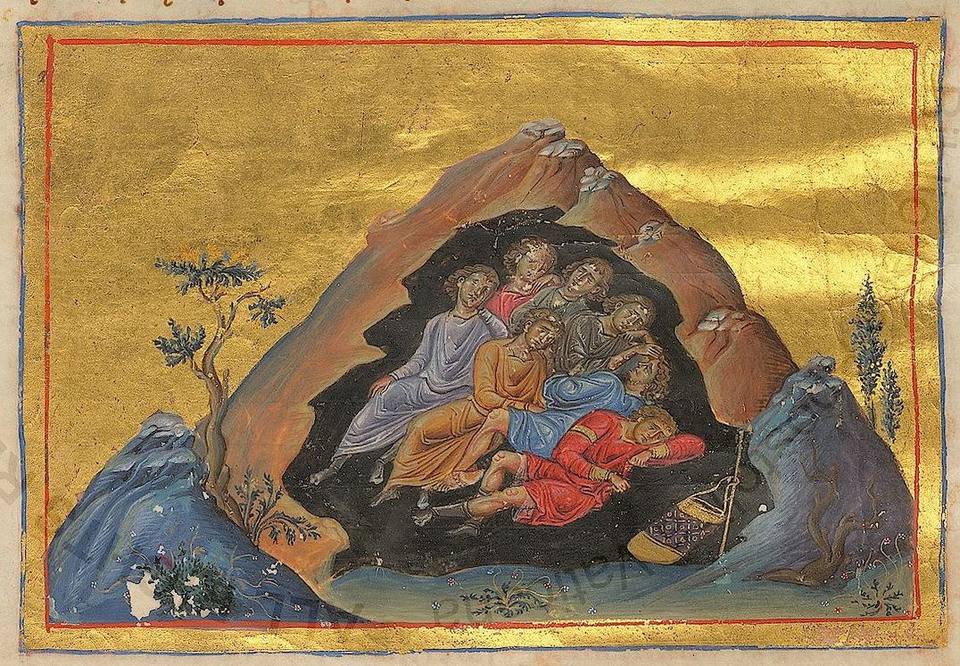
One of his homilies tells the story of the Seven Sleepers of Ephesus, young Christians who hide in a cave during the persecution of the emperor Decius, fall asleep, and wake in the reign of Theodosius II as proof of the resurrection. It is among the earliest known versions of the legend, which spread west through Gregory of Tours and appears in the Quran as the People of the Cave.
Titles and honors
- Titles
- Saint (Catholic, Oriental Orthodox)
- Offices held
- Bishop of Batnan 519
The same story, told elsewhere
Shared story · Death and return
Sleepers Who Wake Years Later: Epimenides, Honi, the Seven Sleepers and Rip Van Winkle
A man lies down for a nap and wakes to find his brother old, his village gone and his coins worth nothing. The same story is told in Crete, Judea, Ephesus, Arabia, India, Japan, Ireland and New York.
Golden Legend, The Seven Sleepers is one telling. The same story is told 8 more times, in 6 parts of the world. Follow it:
- GreekCrete · c. 200-250 CE · Ancient text
- Hindu (Puranic)India · c. 300-500 CE · Ancient text
- Jewish (Babylonian Talmud)Judea · c. 500-600 CE · Medieval text
- Christian (Seven Sleepers of Ephesus)Ephesus · c. 500 CE · Medieval textTied to this page
- IslamArabia · 7th century CE · Medieval text
- IslamArabia · 7th century CE · Medieval text
- JapaneseJapan · c. 759 CE · Medieval text
- IrishIreland · c. 1750 · Early modern text
- AmericanCatskill Mountains, New York · 1819 · Recorded folklore
The open question: Is the long sleep a story people passed along from Crete to Ephesus to New York, or does every culture invent it because everyone fears coming home to a world that has moved on? Join the debate
Mentioned on these pages
Linked people and places
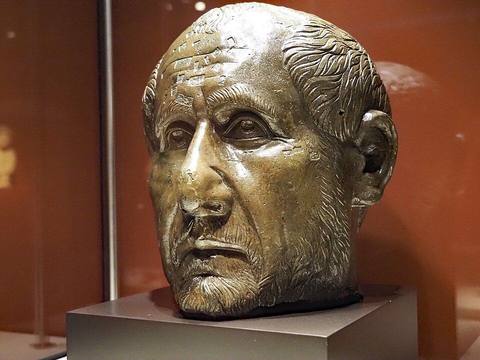
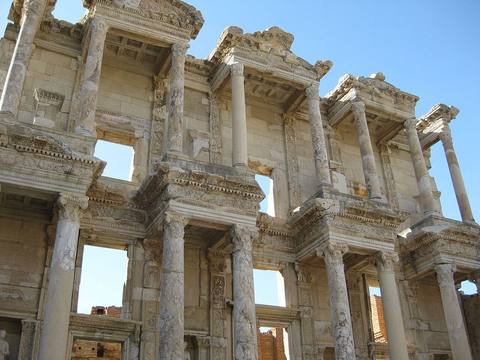
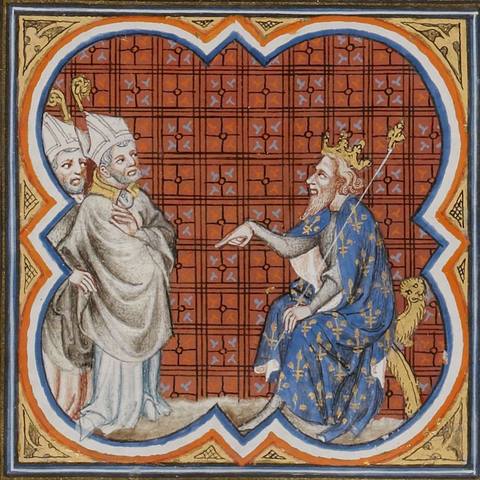
Where this comes from
Comes from Wikipedia, 'Jacob of Serugh'. A free online encyclopedia written and edited by volunteers. It is a good starting point and usually lists its own sources, but anyone can change it, so we treat it as a guide to better sources, not the final word.
What this means
A real person with records. Sources are listed below.
For Jacob of Serugh, the original record exists and is linked: Wikipedia, 'Jacob of Serugh'. That tells you the record is real and what it says. It does not mean every claim in it is true.
Primary records exist: an original document, a published text, an official file or a dated report. We link to them. This level says the record exists and what it says, not that every claim in it is true.
Sources
- WikipediaA free online encyclopedia written and edited by volunteers. It is a good starting point and usually lists its own sources, but anyone can change it, so we treat it as a guide to better sources, not the final word.Wikipedia, 'Jacob of Serugh'Reference Archived copy, 2026-09-25
- Encyclopaedia BritannicaAn encyclopedia first published in Scotland in 1768 and now online. Its articles are written and checked by named experts and editors, which makes it a reliable source for basic facts.Encyclopaedia Britannica, 'Seven Sleepers of Ephesus'Reference
No public-domain picture of this person yet. We do not show drawn or generated likenesses.