Credible Theories Sign in
Ireland · Edward Lhwyd, letter from Sligo, 12 March 1699/1700

A mount all the work of hands, Edward Lhwyd, letter from Sligo, 12 March 1699/1700

Share

In plain words

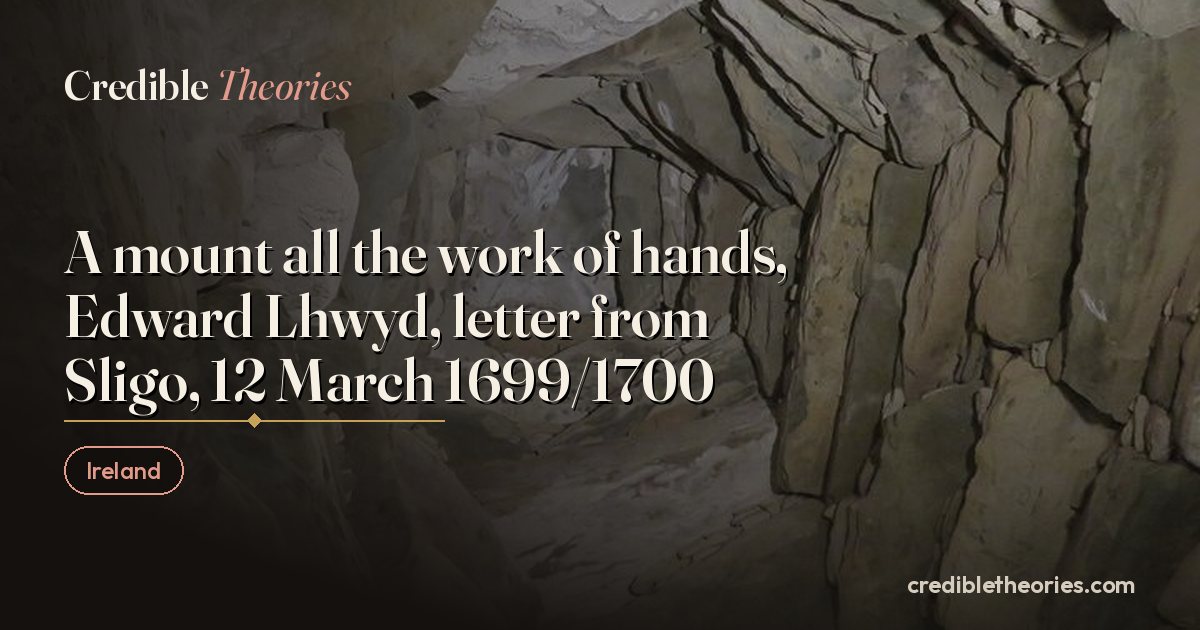
Edward Lhwyd wrote this in a letter from Sligo in March 1700. He describes a great mound near Drogheda made almost wholly of stones and covered with gravel and grass, with a cave inside. At its entrance lay a flat stone set on its edge, carved with shapes like coiled snakes without heads.

ReferenceEdward Lhwyd, letter from Sligo, 12 March 1699/1700
WrittenWritten by Edward Lhwyd in a letter from Sligo, Ireland, dated 12 March 1699/1700; printed in 1766
SetNewgrange, near Drogheda, Ireland
This mount is all the work of hands, and consists almost wholly of stones; but is covered with gravel and green sward, and has within it a remarkable cave. The entry into this cave is at bottom, and before it we found a great flat stone, like a large tomb-stone, placed edgewise, having on the outside certain barbarous carvings, like snakes encircled, but without heads.

Documented · Ancient text, 12 Translation: Edward Lhwyd, in Rowlands, Mona Antiqua Restaurata (1766)

Read it literally

The earliest written description of the inside of Newgrange, by the Welsh scholar who crawled into its passage. He found carved spirals at the entrance, stone basins in the side cells and animal bones on the floor. The Newgrange file sets it beside the winter sunrise that lights the same chamber.

What scholars say

An eyewitness letter written within months of the visit.

Themes Strange time
Questions people ask about Edward Lhwyd, letter from Sligo, 12 March 1699/1700

Who was Edward Lhwyd?

A Welsh antiquarian. He wrote this letter from Sligo after spending months among the Hebrides and the Scottish Highlands, where he copied old inscriptions and studied monuments, before crossing to Ireland.

Did Lhwyd think Newgrange was Roman?

No. A gold coin of the emperor Valentinian had been found near the top of the mound, but he said the rough carving made him conclude it was never Roman, adding that there was no record of Romans ever being in Ireland.

Used on these files

  • Newgrange and the winter sunrise DocumentedA great stone-filled mound in Ireland lets the rising sun shine down its passage on the shortest days of the year. The light was first seen by a modern archaeologist in 1967, and some still argue over whether the opening that lets it in is original.

Where this comes from

EvidenceDocumented

Comes from Henry Rowlands, Edward Lhwyd, letter from Sligo, 12 March 1699/1700. Internet Archive: A nonprofit digital library in San Francisco, founded in 1996, that holds millions of scanned books, papers and recordings. A scan there shows the pages of a real printed book or document.

What this means

The text exists and is quoted from a published translation. What it describes is a separate question.

Primary records exist: an original document, a published text, an official file or a dated report. We link to them. This level says the record exists and what it says, not that every claim in it is true.

See all five labels

Sources

  1. Internet ArchiveA nonprofit digital library in San Francisco, founded in 1996, that holds millions of scanned books, papers and recordings. A scan there shows the pages of a real printed book or document.Henry Rowlands, Mona Antiqua Restaurata, 2nd ed. (London, 1766), with letters of Edward LhwydPrimary text
  2. Internet ArchiveEdward Lhwyd, letter from Sligo, 12 March 1699/1700, printed in Henry Rowlands, Mona Antiqua Restaurata, 2nd ed. (London, 1766), pp. 314-315Primary text

Scholarly dates are rounded. The wording follows the named public-domain translation.

More from Ireland

Two more stories, and what each shares with A mount all the work of hands.

Photo credits
‹ Before thisBalor's killing eyeSecond Battle of Mag Tuired

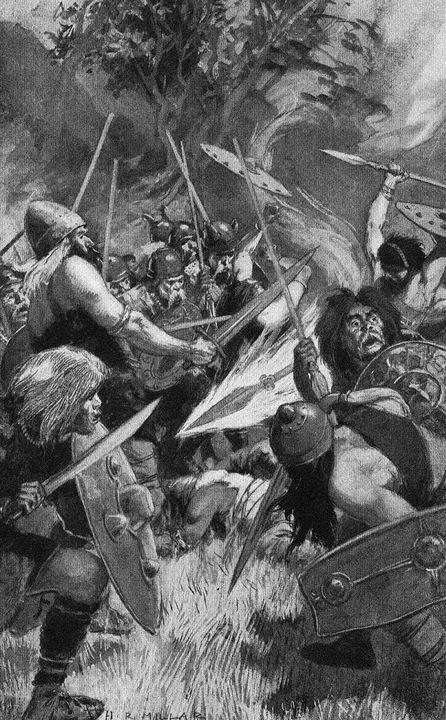
Balor, a one-eyed Fomorian giant, has an eye that destroys any army it looks at, and four men lift its lid by a handle.

Also about Ireland
Photo credits
RelatedThe Tuatha Dé Danann arrive in dark cloudsLebor Gabála Érenn (Book of Invasions)

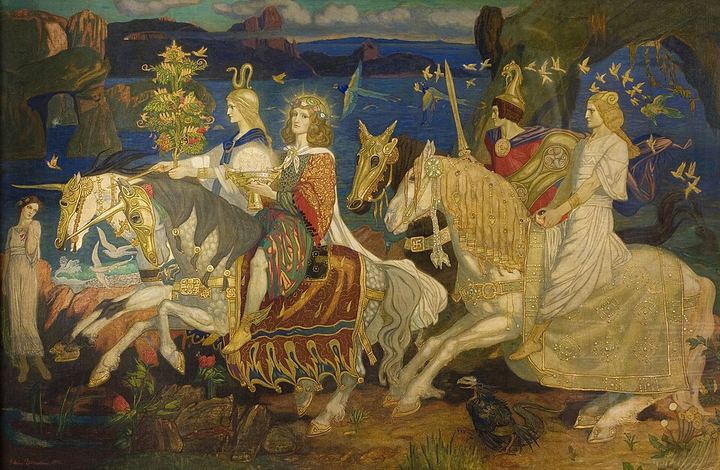
It says the Tuatha Dé Danann came to Ireland in dark clouds, landed on a mountain, and darkened the sun for three days.

Also about Ireland

Updated

Discussion