Credible Theories Sign in
Apocrypha · 2 Maccabees 3:25–26

Heliodorus is beaten, 2 Maccabees 3:25–26

Share

In plain words

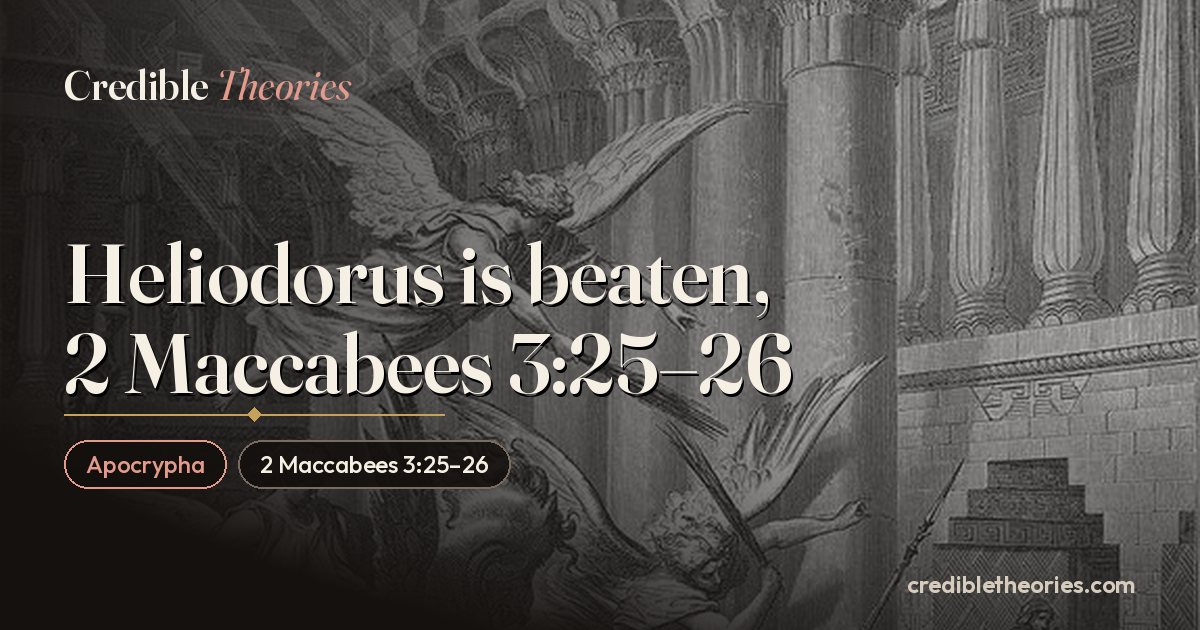
This is a short passage from the Second Book of Maccabees, a Jewish history written in Greek, probably in the late 100s BC. In the story, an official named Heliodorus tries to rob the Temple. A horse with a terrifying rider appears, along with two strong, handsome young men, and they beat him to stop him.

Reference2 Maccabees 3:25–26
Writtenc. 124 BCE
Setc. 178 BCE
For there appeared unto them an horse with a terrible rider upon him… Moreover two other young men appeared before him, notable in strength, excellent in beauty, and comely in apparel.

Documented · Ancient text, c. 124 BCE Translation: KJV Apocrypha

Read it literally

Security guards for the Temple treasury, who beat an official and vanish.

What scholars say

Temple-protection legend.

Themes From the sky
Questions people ask about 2 Maccabees 3:25–26

Who was Heliodorus, and why did he come to the Temple?

Heliodorus was the chief minister of the Seleucid king Seleucus IV. A Temple official named Simon, who was feuding with the high priest Onias III, claimed the treasury held vast sums. The king sent Heliodorus to take the money. Outside the Bible, Heliodorus is remembered for later murdering Seleucus IV in 175 BCE.

What happens to Heliodorus after he is beaten?

He falls to the ground and is carried out on a stretcher, close to death. His friends beg Onias to pray for him, and Onias offers a sacrifice. The two young men appear again and tell Heliodorus to thank the high priest for his life. He then offers his own sacrifice and goes back to tell the king about the power of the God of Israel.

Is 2 Maccabees in the Bible?

2 Maccabees is in the Catholic and Orthodox Old Testament, where it is counted among the deuterocanonical books. Protestant Bibles leave it out or print it in a separate Apocrypha section, and it is not part of the Jewish Bible. It was written in Greek, and its author says it shortens a five-volume history by Jason of Cyrene.

Where this comes from

EvidenceDocumented

Comes from The Second Book of Maccabees, 2 Maccabees 3:25–26, read here in the King James Version. A Jewish history written in Greek, probably in the late 100s BC, about the Jewish revolt against the Greek kings of Syria. It tells how Heliodorus was stopped from robbing the Temple by a heavenly rider.

What this means

The text exists and is quoted from a published translation. What it describes is a separate question.

Primary records exist: an original document, a published text, an official file or a dated report. We link to them. This level says the record exists and what it says, not that every claim in it is true.

See all five labels

Sources

  1. The King James BibleThe English Bible made for King James I and first printed in 1611; the wording most people know comes from a 1769 update. It is out of copyright, which is why we quote it. The 1611 printing also had the Apocrypha, extra books kept in Catholic and Orthodox Bibles.King James Version (1611; standard 1769 text), with ApocryphaPrimary text Archived copy, 2026-10-03

Scholarly dates are rounded. The wording follows the named public-domain translation.

More from Apocrypha

Two more stories, and what each shares with Heliodorus is beaten.

Photo credits
‹ Before thisHorsemen running in the air2 Maccabees 5:2–3

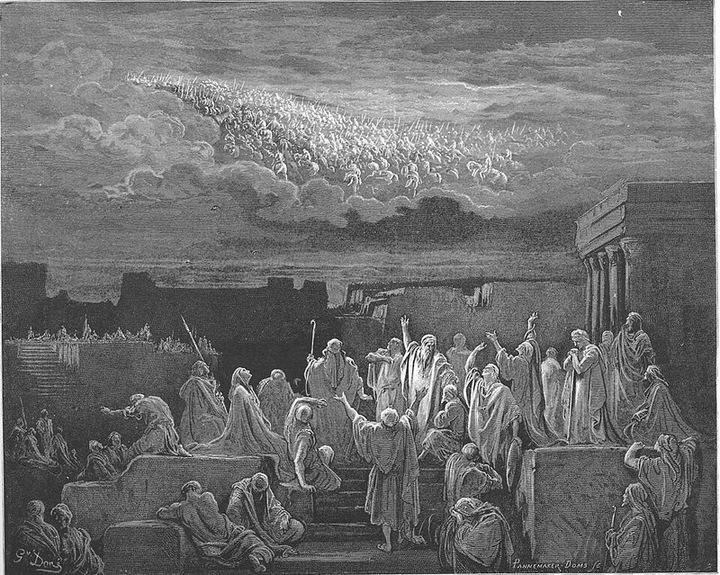
The text says that for almost forty days, people all over Jerusalem saw horsemen running through the air, dressed in gold cloth and armed with lances like a band of soldiers.

Same theme: From the sky
Photo credits
RelatedThe sons of God and the NephilimGenesis 6:1–4

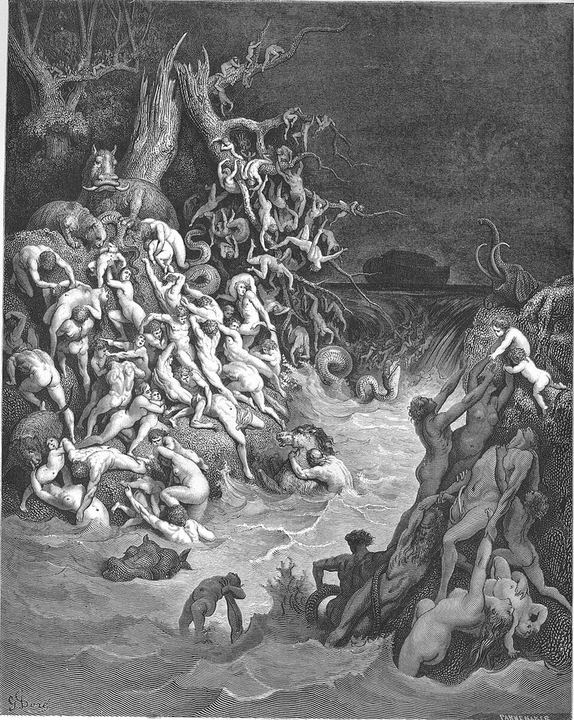
It says the "sons of God" married human women and had children with them.

Same theme: From the sky

Updated

Discussion