Credible Theories Sign in
Apocrypha · 2 Maccabees 5:2–3

Horsemen running in the air, 2 Maccabees 5:2–3

Share

In plain words

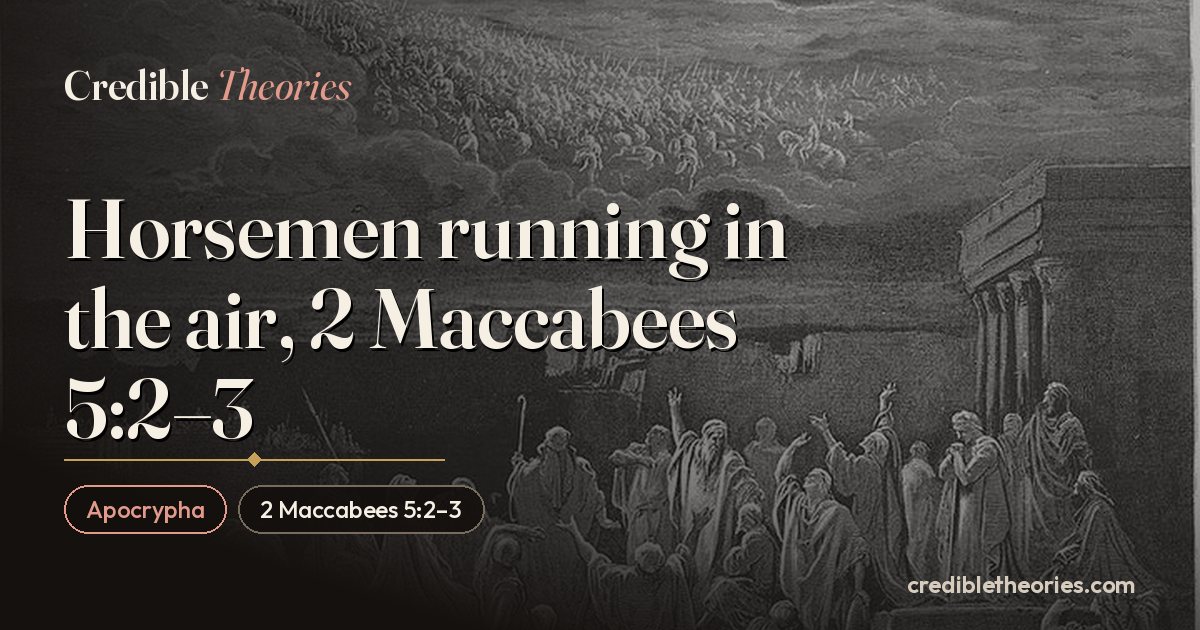
This is a short passage from the Second Book of Maccabees, a Jewish history written in Greek, probably in the late 100s BC, about the Jewish revolt against the Greek kings of Syria. The text says that for almost forty days, people all over Jerusalem saw horsemen running through the air, dressed in gold cloth and armed with lances like a band of soldiers.

Reference2 Maccabees 5:2–3
Writtenc. 124 BCE
SetJerusalem, c. 170 BCE
Through all the city, for the space almost of forty days, there were seen horsemen running in the air, in cloth of gold, and armed with lances, like a band of soldiers… and glittering of golden ornaments, and harness of all sorts.

Documented · Ancient text, c. 124 BCE Translation: KJV Apocrypha

Read it literally

A mass sighting over a whole city for more than a month, recorded by a historian a generation later. Formation flying.

What scholars say

A historical book with miracle stories; the date is close to the events.

Themes From the sky
Questions people ask about 2 Maccabees 5:2–3

Is 2 Maccabees in the Bible?

It depends on the church. Catholic and Eastern Orthodox Bibles include 2 Maccabees as scripture. Jewish Bibles and most Protestant Bibles leave it out, and Protestants place it among the Apocrypha. The 1611 King James Version printed it in a separate Apocrypha section between the two testaments, though many later printings dropped that section.

Who wrote 2 Maccabees?

The book says it is a shorter version of a five-volume history by a man named Jason of Cyrene, whose original is lost. The person who made the summary is unknown. It was written in Greek, probably by a Jew living outside Judea, and opens with two letters urging Jews in Egypt to celebrate the new festival of the temple's rededication.

What happened in Jerusalem after the sky vision?

A former high priest named Jason attacked the city, and King Antiochus IV took this as a revolt. Chapter 5 says he stormed Jerusalem, killed many people and looted the temple. Soon after, the temple was turned to pagan worship. This led to the Maccabean revolt, and the temple's rededication in 164 BCE is remembered at Hanukkah.

Where this comes from

EvidenceDocumented

Comes from The Second Book of Maccabees, 2 Maccabees 5:2–3, read here in the King James Version. A Jewish history written in Greek, probably in the late 100s BC, about the Jewish revolt against the Greek kings of Syria. It tells how Heliodorus was stopped from robbing the Temple by a heavenly rider.

What this means

The text exists and is quoted from a published translation. What it describes is a separate question.

Primary records exist: an original document, a published text, an official file or a dated report. We link to them. This level says the record exists and what it says, not that every claim in it is true.

See all five labels

Sources

  1. The King James BibleThe English Bible made for King James I and first printed in 1611; the wording most people know comes from a 1769 update. It is out of copyright, which is why we quote it. The 1611 printing also had the Apocrypha, extra books kept in Catholic and Orthodox Bibles.King James Version (1611; standard 1769 text), with ApocryphaPrimary text Archived copy, 2026-10-03

Scholarly dates are rounded. The wording follows the named public-domain translation.

More from Apocrypha

Two more stories, and what each shares with Horsemen running in the air.

Photo credits
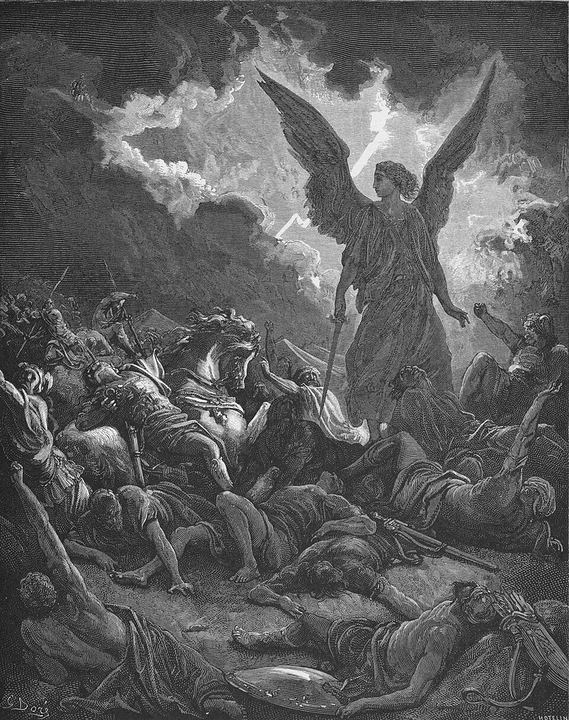
Related185,000 dead in one night2 Kings 19:35

It is set during the Assyrian siege of Jerusalem in 701 BCE.

Also about JerusalemSame theme: From the sky
Photo credits
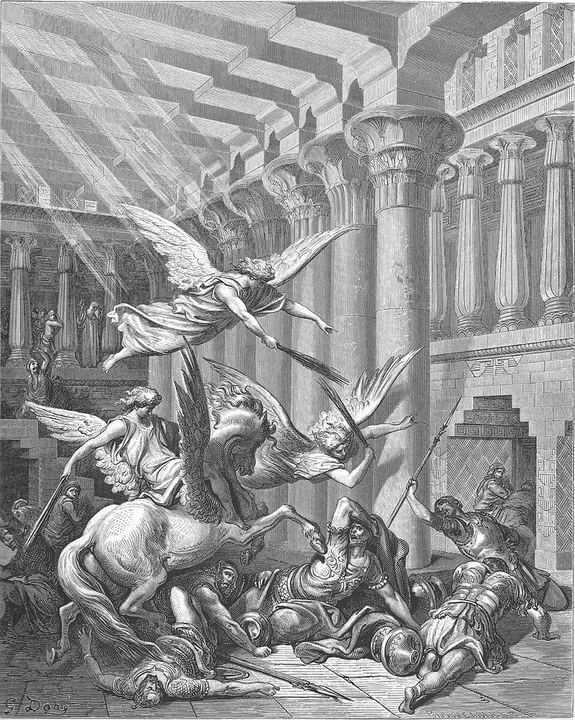
Next ›Heliodorus is beaten2 Maccabees 3:25–26

An official named Heliodorus tries to rob the Temple.

Same theme: From the sky

Updated

Discussion