Credible Theories Sign in
Sumer and Babylon · Enuma Elish VI

The Anunnaki split: three hundred above, three hundred below, Enuma Elish VI

Share

In plain words

This is a summary from the Enuma Elish, the Babylonian creation story, written around 1200 to 1100 BCE. The god Marduk divides the Anunnaki, the great gods, into three hundred who guard heaven and three hundred on earth. To thank him, they make bricks for a year and build him the city of Babylon and its temple.

ReferenceEnuma Elish VI
Writtenc. 1200–1100 BCE
SetAfter creation
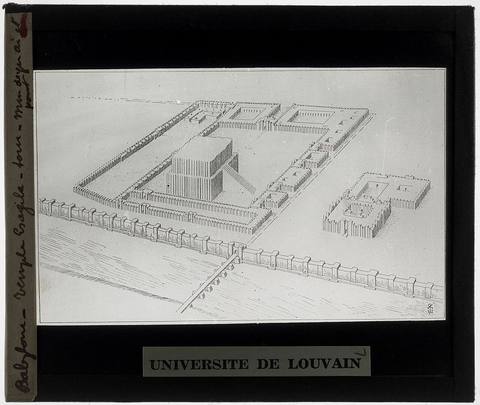
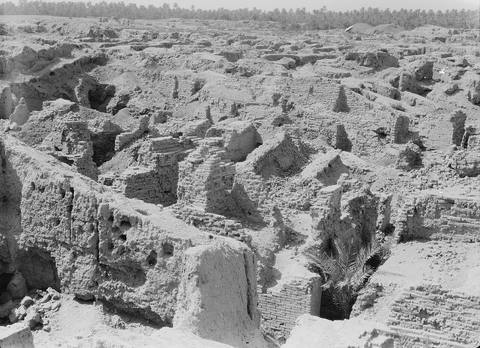
Marduk divides the Anunnaki: three hundred to stand guard in heaven and three hundred on earth. In thanks, the Anunnaki build him Babylon and its temple Esagila, making bricks for a year.

Documented · Retold in English, c. 1200–1100 BCE Summary by the editors. Translation: Summary (King 1902 has the full text)

Read it literally

A garrison split between orbit and ground, and the gods themselves do construction.

What scholars say

The Anunnaki are the great gods, 'offspring of An'.

Themes From the sky Council of gods
People and places hereBabylonEsagila

Questions people ask about Enuma Elish VI

What is the Enuma Elish?

It is the Babylonian creation epic, written on seven clay tablets. Its name comes from its first words, 'When on high'. It tells how Marduk defeats the sea goddess Tiamat and becomes king of the gods. The poem was recited during the Akitu, Babylon's spring new year festival.

What happens earlier in Tablet VI?

Before the gods are divided, Marduk decides to create humans so they can carry the gods' workload. The god Ea makes the first people from the blood of Kingu, the leader of Tiamat's rebel army, who is executed for starting the war. The gods are then free to rest.

Where were the Enuma Elish tablets found?

Most of the first known copies came from the library of the Assyrian king Ashurbanipal at Nineveh, dug up in the mid-1800s. The British Museum scholar George Smith published pieces of it in 1876 in a book called The Chaldean Account of Genesis. More copies have since been found at Ashur, Kish, Sultantepe and other sites.

Used on these files

  • Anunnaki: Who Were the Great Gods of Sumer? Myth or legendIn one Sumerian poem, the gods who rule the cosmos sit as seven underworld judges who can turn a goddess into a corpse with a single look. The name probably means "offspring of An," yet modern writers made it famous as a name for astronauts. What do the real texts say about these gods?
  • Marduk: How Babylon's God Became King of the Gods Myth or legendWhen enemies captured Marduk's statue and carried it abroad, Babylonian writers explained the loss as the god choosing to go on a journey. He began as the minor god of a minor city; in the epic Enuma Elish he splits the sea-monster Tiamat in two and earns fifty names. How does a small-town god become king?

Where this comes from

EvidenceDocumented

Comes from The Enuma Elish (Babylonian Creation Epic), Enuma Elish VI, read here in the L. W. King. The Babylonian creation story, named after its first words, 'When on high'. The god Marduk defeats the sea monster Tiamat and makes heaven and earth from her body.

What this means

The text exists and is quoted from a published translation. What it describes is a separate question.

Primary records exist: an original document, a published text, an official file or a dated report. We link to them. This level says the record exists and what it says, not that every claim in it is true.

See all five labels

Sources

  1. The Enuma Elish (Babylonian Creation Epic)The Babylonian creation story, named after its first words, 'When on high'. The god Marduk defeats the sea monster Tiamat and makes heaven and earth from her body. It filled seven clay tablets and was probably written in the 1100s BC; copies were dug up at Nineveh from 1849 on.L. W. King, The Seven Tablets of Creation (1902) Online copyPrimary text Archived copy, 2026-05-23
  2. Inanna's Descent to the UnderworldA Sumerian poem in which the goddess Inanna goes down to the land of the dead, is killed there and is brought back to life. It survives on clay tablets copied in about 1900 to 1600 BC. A later Babylonian version tells the same story about Ishtar.Inana's Descent to the Nether World, ETCSL t.1.4.1, University of OxfordPrimary text Archived copy, 2026-09-08
  3. The Enuma Elish (Babylonian Creation Epic)Enuma Elish, Tablet IV, trans. L. W. King, The Seven Tablets of Creation (1902) Online copyPrimary text Archived copy, 2026-05-23

Scholarly dates are rounded. The wording follows the named public-domain translation.

More from Sumer and Babylon

The story before and after this one, and what each shares with The Anunnaki split: three hundred above, three hundred below.

Photo credits
‹ Before thisEnuma Elish: Marduk splits TiamatEnuma Elish, tablets I, IV, VI

It begins in a time before heaven and earth had names.

Also about BabylonSame theme: From the sky
Photo credits
Next ›Atrahasis: the gods go on strikeAtrahasis, tablet I

Junior gods called the Igigi dig rivers for 3,600 years, then burn their tools in protest.

Same theme: Council of gods

Updated

Discussion