Credible Theories Sign in

The record

From the text
All those that pledge him are first stripped naked, and their bodies anointed all over with a kind of white balsam (by them called Curcai), of which there is great plenty, and yet very dear, amongst them, and it is of all others the most precious, whereof we have had good experience: when they are anointed all over, certain servants of the Emperor having prepared gold made into fine powder, blow it through hollow canes upon their naked bodies, until they be all shining from the foot to the head, and in this sort they sit drinking by twenties and hundreds, and continue in drunkenness sometimes six or seven days together.
Documented · Early modern text, 1595
Sir Walter Raleigh, The Discovery of Guiana (1596) · The Americas
Translation: Sir Walter Raleigh, The Discovery of Guiana (1596; Cassell's National Library edition, 1887) · Public domain

El Dorado means the gilded one. To Spanish and English explorers of the 1500s it became the name of a city of gold somewhere in the interior of South America, and finding it cost many of them their fortunes and their lives.

Sir Walter Raleigh sailed for Guiana in February 1595, tempted, as an 1887 edition of his book puts it, by Spanish tales of El Dorado. In The Discovery of Guiana he reported what Spaniards had told him: that Manoa, the imperial city of Guiana, which the Spaniards call El Dorado, stood on a lake of salt water two hundred leagues long and surpassed any city in the known world. He described a feast at which the emperor's servants blew gold powder through hollow canes over the guests' anointed bodies until they shone from head to foot. Raleigh never reached Manoa.

The story had a real root in the highlands of Colombia, among the Muisca people. National Geographic notes that when a new chieftain came to power his rule began with a ceremony at Lake Guatavita, and that the accounts vary but agree he was covered with gold dust. In 1545, it adds, Spaniards lowered the lake's level enough to find hundreds of pieces of gold along its edge.

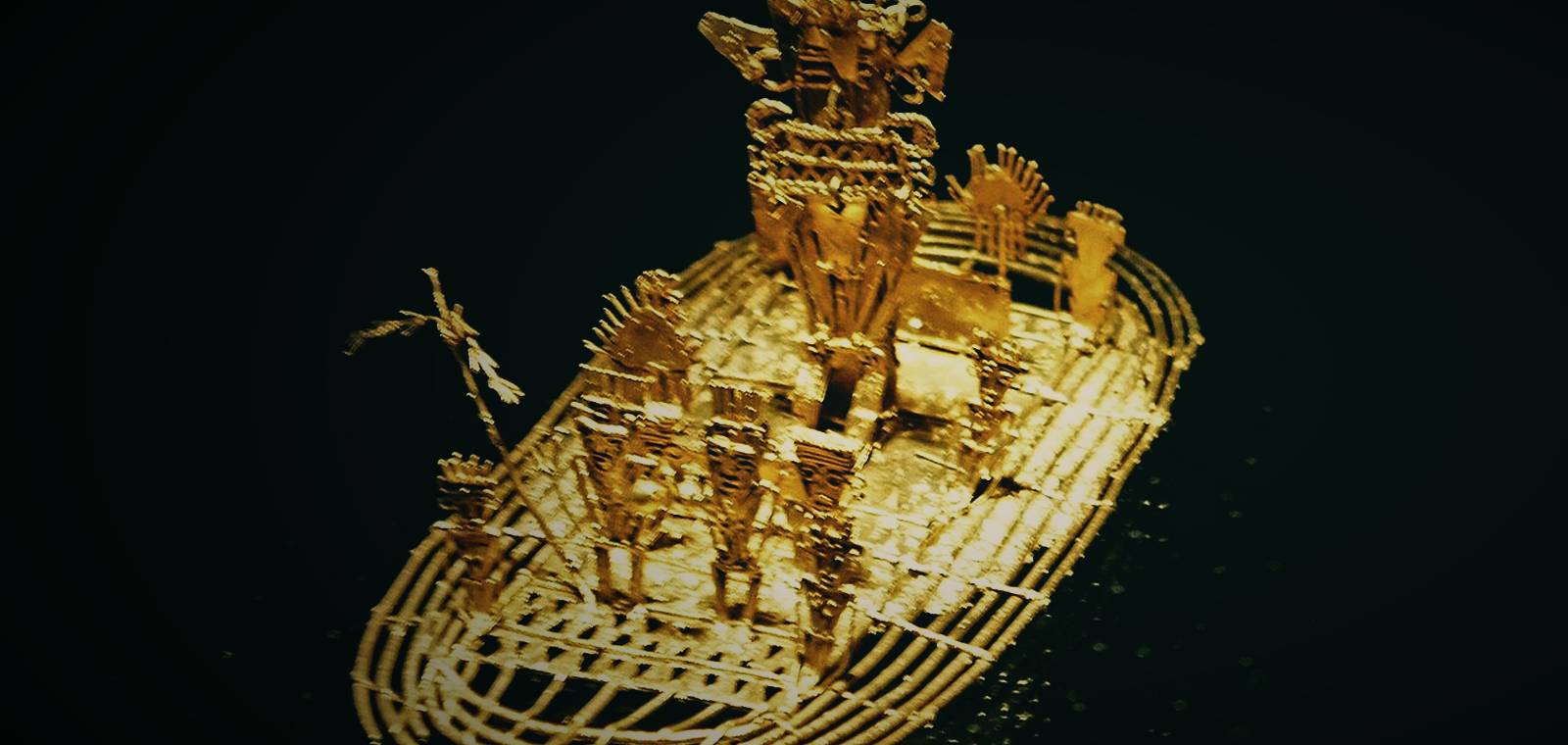
In 1969 a small gold model was found in a cave in the páramo of Pasca, near Bogotá. The Banco de la República describes it as 19.5 centimeters long, made of high-grade gold with silver and copper, showing a richly adorned central figure surrounded by ten smaller ones. It has traditionally been read as the investiture of the chief of Guatavita.
Questions people ask about El Dorado, the Gilded Man

Who first called Manoa El Dorado?

Raleigh credits Juan Martinez, a munitions master on an earlier Spanish expedition, whom he calls the first man to see Manoa. Martinez, he says, told the story to his confessor as he was dying and left his gourds of gold beads to the Church.

How long did Raleigh say the gold feasts lasted?

He wrote that once the guests were gilded, they sat drinking by twenties and hundreds, sometimes for six or seven days together.

How old is the Muisca raft?

The Banco de la República says the exact date it was made cannot be fixed. It most likely belongs to the late Muisca period, which the bank dates from 600 to 1600 CE.

The open question

Still strange: The gilded man.

No such city was ever found, yet a real ceremony of a ruler covered in gold stood behind the story, and a gold model of it turned up in 1969.

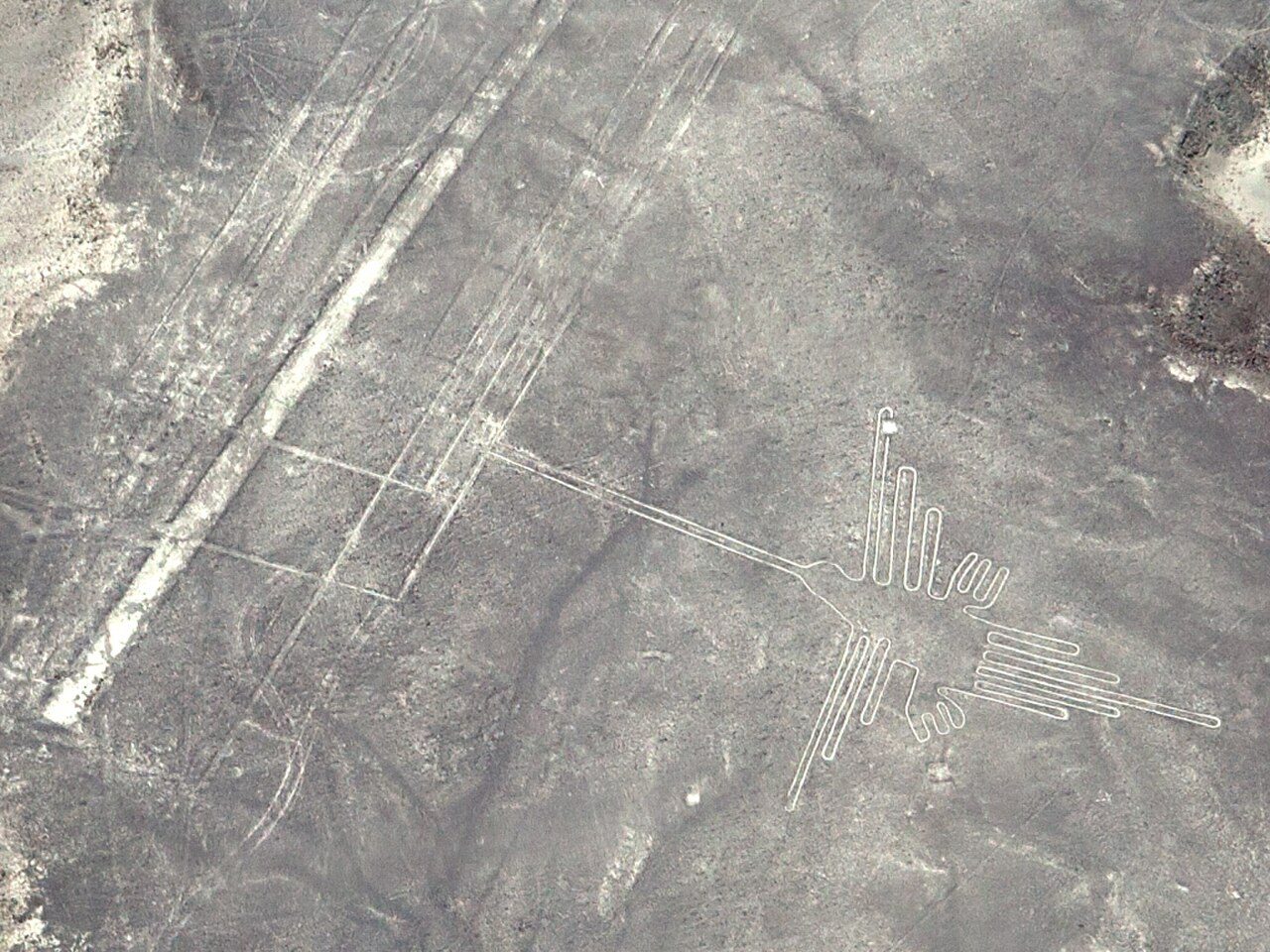
The Nazca lines →
  1. Step 1 of 4 · This fileEl Dorado, the Gilded Man
  2. Step 2 of 4 · The passageGold blown through hollow canes, Sir Walter Raleigh, The Discovery of Guiana (1596)
  3. Step 3 of 4 · Next fileThe Nazca lines
  4. Step 4 of 4 · Next fileTeotihuacan, where the gods were made
About these videos

Found by a YouTube search for this topic, not checked by us. The player loads from YouTube only when you press play.

Where it turns up

Where this comes from

EvidenceDocumented

Comes from Sir Walter Raleigh, The Discovery of Guiana (1596; Cassell's National Library edition…. Internet Archive: A nonprofit digital library in San Francisco, founded in 1996, that holds millions of scanned books, papers and recordings. A scan there shows the pages of a real printed book or document.

What this means

Records exist and are linked below. This page says what the records say.

For El Dorado, the Gilded Man, the original record exists and is linked: Sir Walter Raleigh, The Discovery of Guiana (1596; Cassell's National Library edition…. That tells you the record is real and what it says. It does not mean every claim in it is true.

Primary records exist: an original document, a published text, an official file or a dated report. We link to them. This level says the record exists and what it says, not that every claim in it is true.

See all five labels

Sources

  1. Internet ArchiveA nonprofit digital library in San Francisco, founded in 1996, that holds millions of scanned books, papers and recordings. A scan there shows the pages of a real printed book or document.Sir Walter Raleigh, The Discovery of Guiana (1596; Cassell's National Library edition, 1887)Primary text
  2. Banco de la República (Colombia), Enciclopedia Banrepcultural, "Balsa muisca"
  3. National GeographicThe magazine of the National Geographic Society, published since 1888, covering science, archaeology and exploration for general readers.Willie Drye, "The real history behind El Dorado, the legendary city of gold", National Geographic (2017, updated 2025)

Quotations come from public-domain translations. A book in our Library links to its Library page; other links open the free online copy or the reference page.

Updated

Credible or not?

Tap one to see how other readers voted.

Discussion