












What is Lake Guatavita known for?
Lake Guatavita is a mountain lake in Colombia. National Geographic says that when a new chieftain of the Muisca came to power, his rule began with a ceremony at the lake, and that the accounts vary but agree he was covered with gold dust.
The ceremony is the root of the El Dorado legend, the gilded man who became a golden city in European stories. In 1545, National Geographic adds, Spaniards lowered the lake's level enough to find hundreds of pieces of gold along its edge.
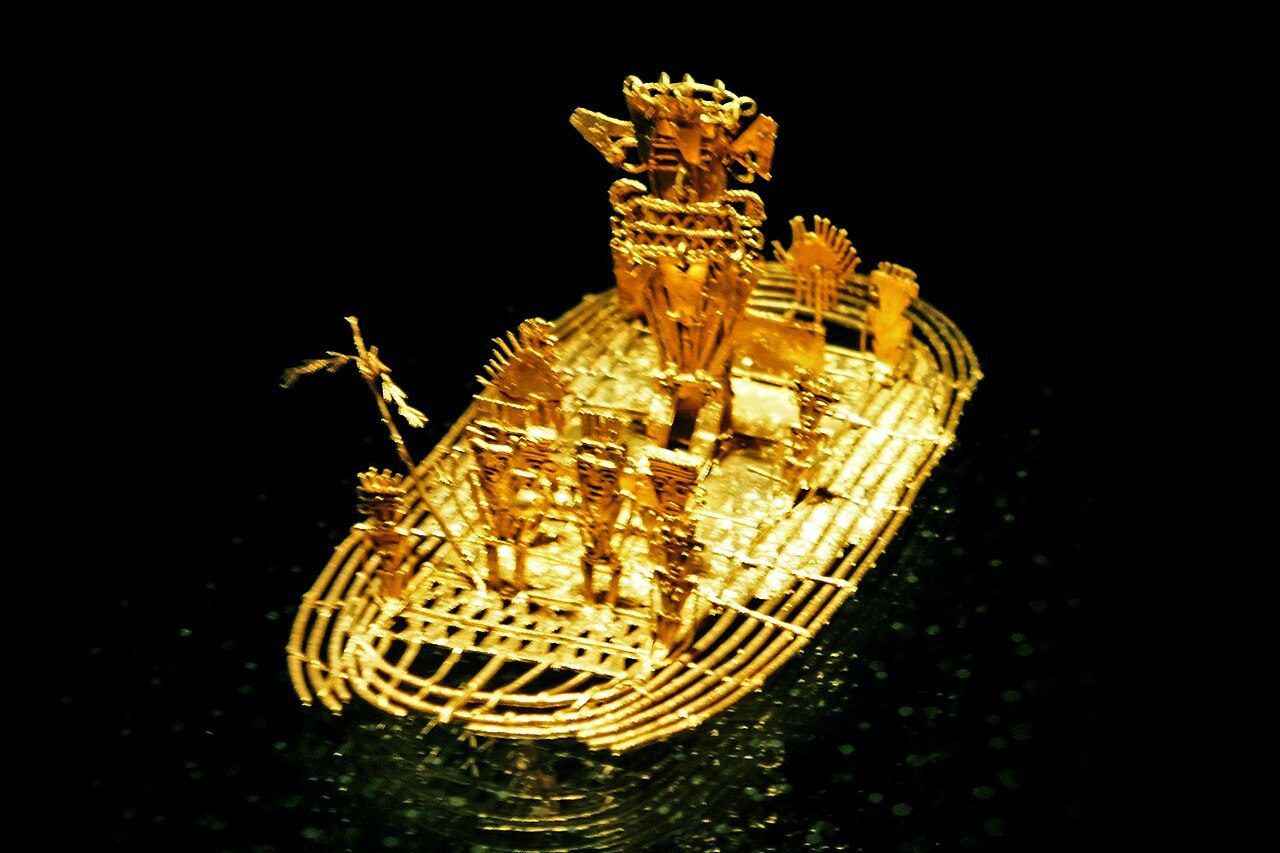
The Banco de la República, which runs Bogotá's Gold Museum, says its famous gold raft has traditionally been read as the investiture of the chief of Guatavita: a navigation on a raft and offerings thrown into a lake. The raft itself was found in 1969 in a cave at Pasca, not in the lake.
Mentioned on these pages
Linked people and places
Where this comes from
Comes from Willie Drye, "The real history behind El Dorado, the legendary city of gold", National…. National Geographic: The magazine of the National Geographic Society, published since 1888, covering science, archaeology and exploration for general readers.
What this means
A real place with records. Sources are listed below.
For Lake Guatavita, the original record exists and is linked: Willie Drye, "The real history behind El Dorado, the legendary city of gold", National…. That tells you the record is real and what it says. It does not mean every claim in it is true.
Primary records exist: an original document, a published text, an official file or a dated report. We link to them. This level says the record exists and what it says, not that every claim in it is true.
Sources
- National GeographicThe magazine of the National Geographic Society, published since 1888, covering science, archaeology and exploration for general readers.Willie Drye, "The real history behind El Dorado, the legendary city of gold", National Geographic (2017, updated 2025)
- Banco de la República (Colombia), Enciclopedia Banrepcultural, "Balsa muisca"
No public-domain picture of this place yet. We do not show drawn or generated likenesses.