Every claim on this site comes from a credible source, and the source is always shown so you can check it yourself. How we check
Credible TheoriesTheories sourced with evidence Dive in blind

Gordon Cooper's UFO statements

One of the original Mercury Seven, Gordon Cooper spent his later years saying UFOs were real and the government was hiding them. He also insisted he never saw one in space.

EvidenceSpeculationThat Cooper made these statements is well documented, but the sightings themselves rest on personal accounts with no released independent record.
What this means

For Gordon Cooper's UFO statements, the idea goes beyond what the evidence shows. We cover it because people ask about it. The main problem: Cooper's statements are well documented, but the events he described rest on his memory and on others' accounts told to him. The Edwards film has never surfaced in any released record, and no…

An idea or reading that goes beyond what the evidence shows. We include it because people ask about it, and we mark it so it never gets mixed in with the record.

See all five labels

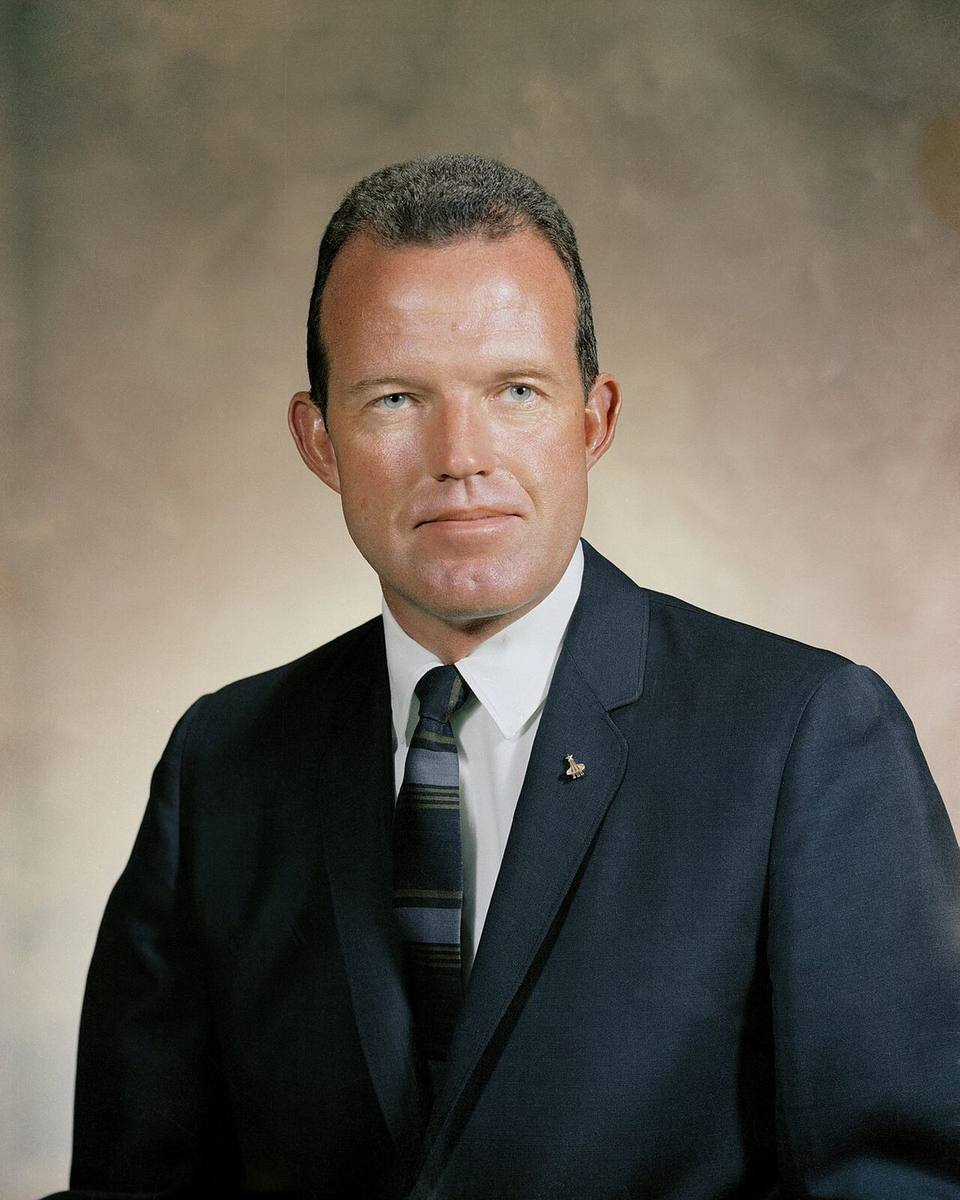
Official NASA portrait of astronaut Gordon Cooper

NASA. Public domain. Picture source

Strangest fact

Cooper is quoted constantly as an astronaut who saw UFOs, but the sightings he actually described all happened on Earth, as a fighter and test pilot. The one story set in space, from his Mercury flight, is the one he called a lie.

L. Gordon Cooper Jr. was one of NASA's first seven astronauts. On May 15 and 16, 1963, he flew the last Mercury mission, Faith 7, for 22 orbits, and in 1965 he commanded the eight-day Gemini 5 flight. He retired from NASA and the Air Force in 1970 and died on October 4, 2004, at age 77.

After leaving NASA, Cooper spoke openly about UFOs. The Independent's obituary records that in 1978 he gave testimony to a United Nations hearing on the subject, and that he campaigned for years against what he saw as a government cover-up. He said he had seen and chased metallic, saucer-shaped objects while flying with the Air Force in Europe in the 1950s. In his 2000 memoir Leap of Faith, he also wrote that in 1957 a camera crew at Edwards Air Force Base filmed a saucer landing on a dry lake bed, and that the film was sent to Washington and never seen again.

Cooper drew a firm line about space. Many UFO books claimed he saw a greenish object with a red tail during his Mercury flight. In 1999 he told a radio interviewer, as reported by Space.com, No, somebody made a lot of money selling ... lies on that one. It was totally untrue, sorry to say. James Oberg wrote in 1978 that the Mercury story came from a misquotation of Cooper's report of seeing the southern aurora.

The space historian Robert Pearlman, reviewing Leap of Faith for collectSPACE in 2000, wrote that he found it hard to understand how someone so tied to science could embrace ideas such as extraterrestrial visits with little more than anecdotal evidence.

Watch videos about Gordon Cooper's UFO statements

Found by a YouTube search, not checked by us. The player loads from YouTube only when you press play.

Sources

  1. NASAThe official website of NASA, the US government's space agency, with mission histories, records and news releases.Leroy Gordon Cooper Jr., NASA biographyPrimary text
  2. The IndependentA British national newspaper, founded in 1986 and online only since 2016.Peter Bond, 'Col Gordon Cooper' (obituary), The Independent, November 18, 2004Reference
  3. Wayback Machine (Internet Archive)The Internet Archive's Wayback Machine, which saves copies of web pages over time. We link it when the original page has gone; the saved copy shows exactly what the page said.Robert Scott Martin, 'Gordon Cooper: No Mercury UFO', Space.com, September 10, 1999 (archived)Reference
  4. collectSPACEA website about space history and space artifacts, founded in 1999 by Robert Pearlman, with news and interviews with astronauts.Robert Pearlman, ''Faith' regained: Gordon Cooper interview', collectSPACE, July 2000Reference
  5. Skeptical InquirerA magazine published since 1976 by a group that checks paranormal and fringe science claims. Its articles are often well researched, but it starts from a skeptical point of view.James Oberg, 'Astronaut "UFO" Sightings', Skeptical Inquirer, Fall 1978Reference
  6. WikipediaA free online encyclopedia written and edited by volunteers. It is a good starting point and usually lists its own sources, but anyone can change it, so we treat it as a guide to better sources, not the final word.Gordon Cooper, Wikipedia (section on UFO sightings)Reference

Quotations come from public-domain translations. Links open the free online copy or the reference page.

Updated