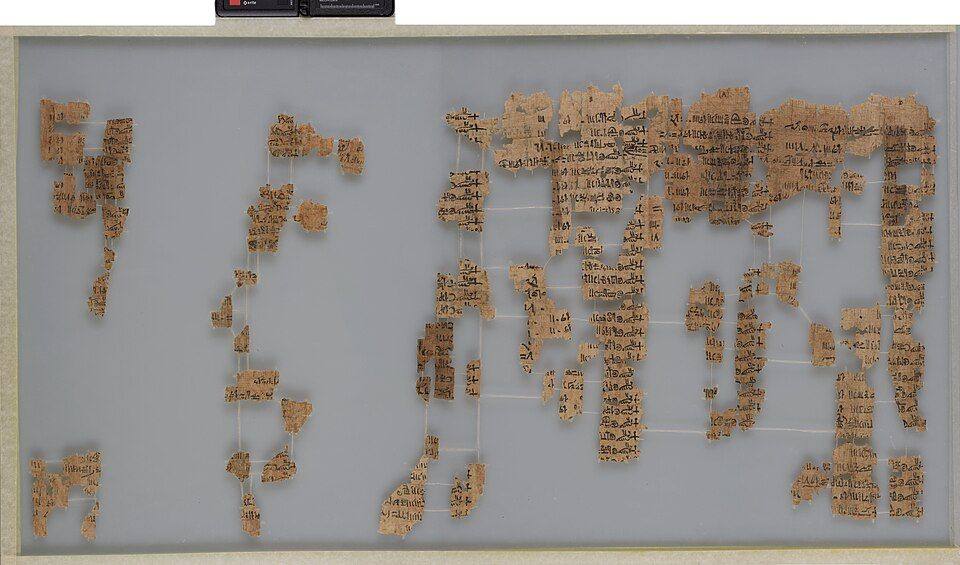
The record
Behold thou me! See thou me! my son Thutmose. I am thy father, Harmakhis-Khepri-Re-Atum, who will give to thee my kingdom on earth at the head of the living. Thou shalt wear the white crown and the red crown upon the throne of Keb, the hereditary prince.
Sphinx Stela of Thutmose IV, lines 9 to 10 · Egypt and Hermes
Translation: James Henry Breasted, Ancient Records of Egypt, vol. 2 (University of Chicago Press, 1906) · Public domain
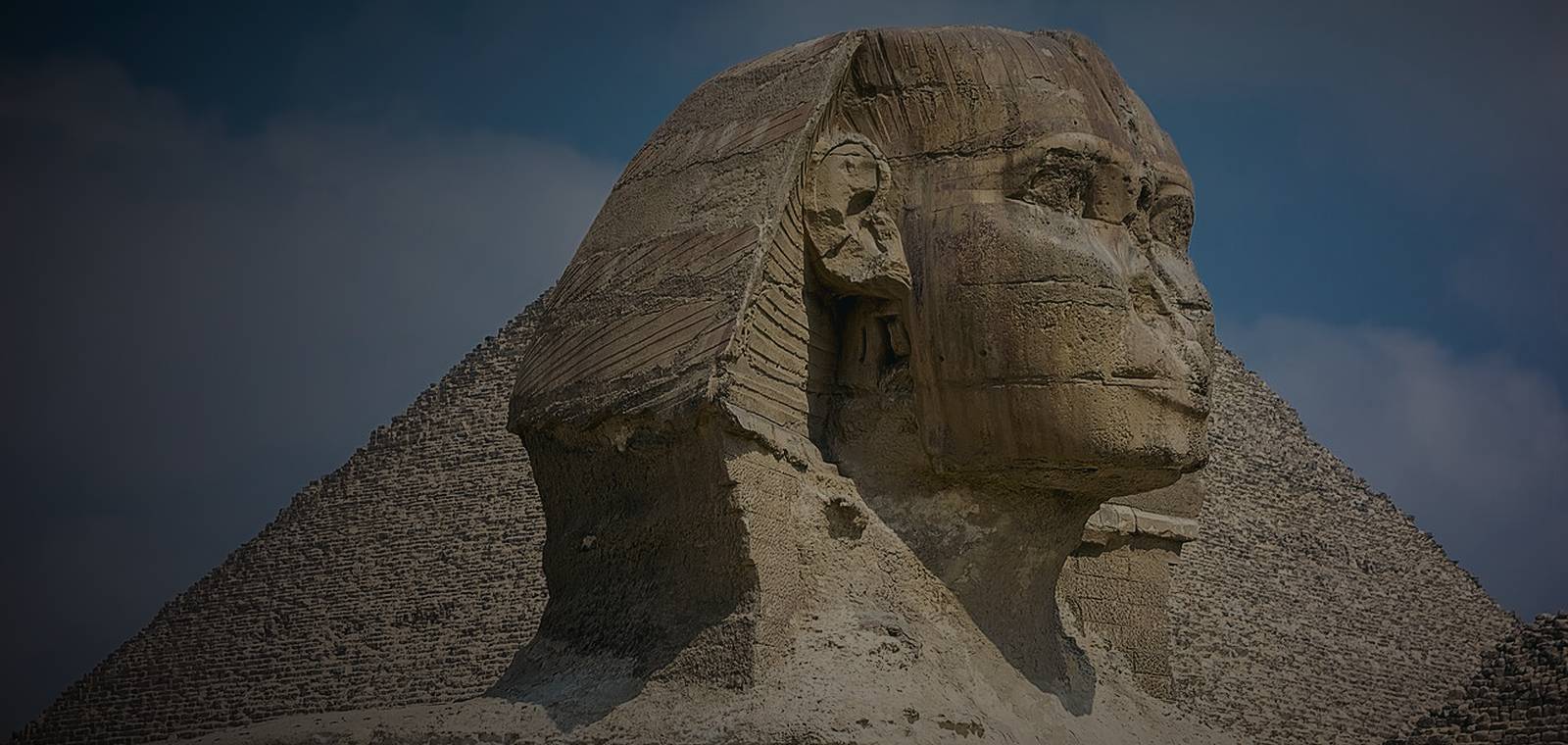
The Great Sphinx is a giant lion with a human head, lying in front of the pyramids at Giza, just outside Cairo. UNESCO names it among the monuments of its World Heritage site Memphis and its Necropolis. It was not built from blocks: it was carved straight out of the bedrock of the Giza plateau.
Between its front paws stands a red granite tablet, 11 feet 10 inches high, uncovered by the explorer Giovanni Caviglia in 1818. It is known as the Sphinx Stela or Dream Stela, and it names King Thutmose IV. It tells how the young prince, out hunting, fell asleep at noon in the Sphinx's shadow and dreamed that the god spoke to him, calling himself Harmakhis-Khepri-Re-Atum. In the translation by James Henry Breasted (1906), the god complains: The sand of this desert upon which I am, has reached me,
and promises the prince a kingdom if he clears it. A broken line near the bottom gives part of a king's name, "Khaf[re]". Breasted judged the stela a late restoration
with the form of a folk-tale, and the German scholar Adolf Erman dated it centuries after Thutmose.
Around 77 CE the Roman writer Pliny the Elder called the Sphinx a still more wondrous object of art
than the pyramids. He said local people believed a King Harmais was buried in it and claimed it was brought there from a distance,
but added that it was hewn from the solid rock,
and that its face was painted red. Who carved it, and when, is still argued over.