The record
What the Air Force wrote down. Project Blue Book, the Air Force's UFO office, opened case file 10129 for the night of December 9, 1965. Its record card lists the place as Indiana, Ohio, Pennsylvania, Michigan and Canada, the source as Civilians (MULTIPLE)
, the course as descending, physical evidence as no, and the conclusion as Astro (METEOR)
. The memos typed the next day name the spot as Acme, Pennsylvania, a village beside Kecksburg that the memos place 45 to 50 miles east of Pittsburgh. One says the radar station at Oakdale, Pennsylvania reported that the search ended at about 0200. They searched with the State Police. They could not find anything.
The memo that keeps the case alive. When a Major Howard at the Pentagon called to ask what he could tell the public, Major Hector Quintanilla, then head of Blue Book, told him that The team of men who were sent out to pick up the object worked along with the State Highway Patrol in trying to recover the object.
The same memo says the thing was visual, was not picked up by radar
, that Quintanilla thought it was Ok to call it a meteor that entered the atmosphere
, and ends: There was no space debris which entered the atmosphere on 9 December 1965.
Other memos in the file note gold-colored strips found in Flint, Michigan, foil the Air Force thought was radar chaff from Michigan, and a photograph taken near Detroit that shows a trail of smoke. A clipping kept in the file, from the UFO newsletter Saucer News, reports that officials blamed a meteorite but that the times reported suggested the object moved too slowly for one.
What people in Kecksburg say. A background paper the Coalition for Freedom of Information sent with its 2003 request, kept in NASA's released file, says four witnesses gave independent, corroborated descriptions of the object and its location in the Kecksburg woods
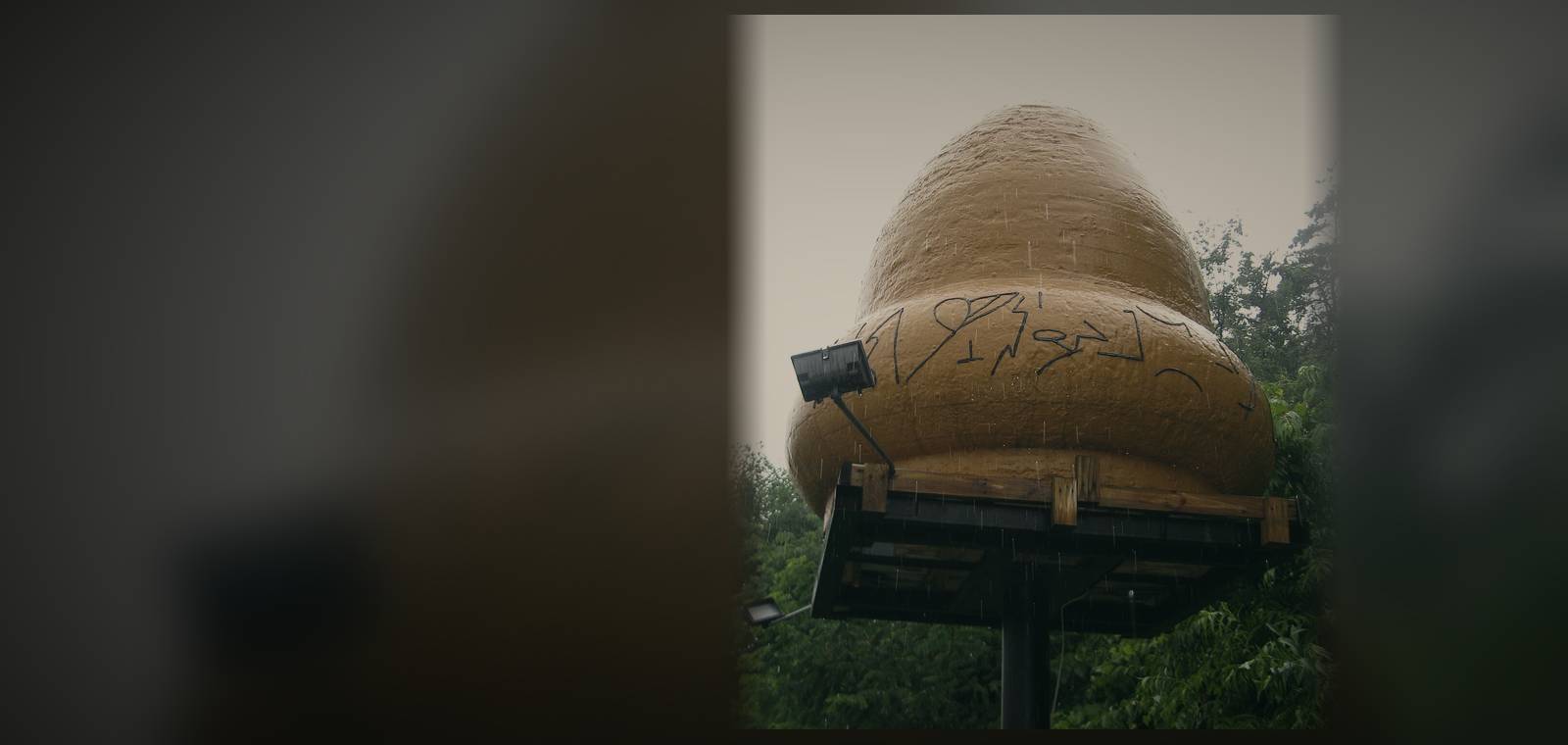
. It says dozens more, among them firefighters, newspaper reporters and a news director from radio station WHJB who taped interviews at the scene, describe soldiers at the site, the area roped off, and an object carried away on an Army truck, and that many signed statements for the researcher Stan Gordon. None of that appears in the Blue Book file, which records only a search that found nothing. The acorn on this page is a model of what residents said they saw, with a band of marks like hieroglyphs, and it stands in the village today.
NASA and the missing boxes. In 2003 the journalist Leslie Kean, backed by the Coalition for Freedom of Information, asked NASA for its records on Kecksburg and on its "fragology" files, its reports on space debris found on the ground from 1962 to 1967. NASA's history office said it had none. On appeal, NASA ruled that the search may not have been fully adequate
and released a 1996 letter in which the Washington National Records Center said it could not locate the two boxes identified as fragology files, with the accession number 255-68A-2062
. Kean sued, and NASA's own letter of 2019 says that the FOIA lawsuit concluded in 2006
and that most of its case file had since been destroyed under NASA's records schedule. In 1967 two astronomers, Von Chamberlain and David Krause, published a study of the fireball's path in the Journal of the Royal Astronomical Society of Canada.