Credible Theories Sign in

The record

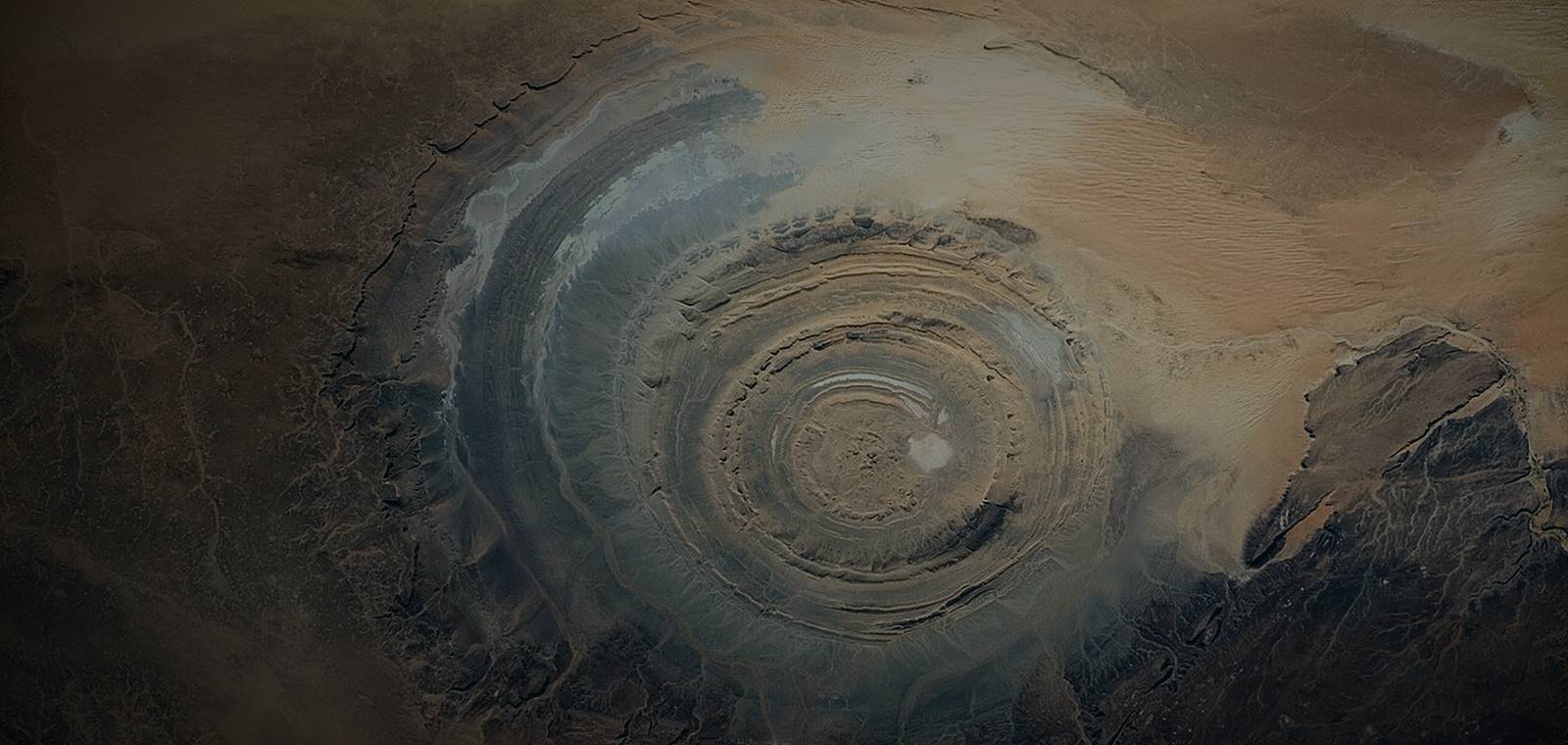
The Richat Structure is a set of giant rings in the Sahara in Mauritania, about 40 kilometers across. NASA says the NASA astronauts Ed White and James McDivitt helped bring it to wider attention, photographing it from Gemini IV, and that it became known as the Eye of the Sahara. From space it looks like a target painted on the desert.

Its shape made people think at first of something falling from the sky. NASA writes that the structure was initially thought to be an impact crater, but that it is actually a deeply eroded geologic dome formed by the uplift of rock above an underground intrusion. The rings appear because different kinds of rock in the exposed upper dome wear away at different rates.

The key study came in 2005, when Guillaume Matton, Michel Jébrak and James Lee published Resolving the Richat enigma in the journal Geology. The IUGS geoheritage commission sums up the result: the structure is a large dome in Late Proterozoic to Ordovician rock, intruded by basaltic ring dikes, kimberlites and alkaline volcanic rocks, and its impact origin has been disproved in favor of an intrusion. It dates carbonatite rocks there to about 99 and 85 million years ago.

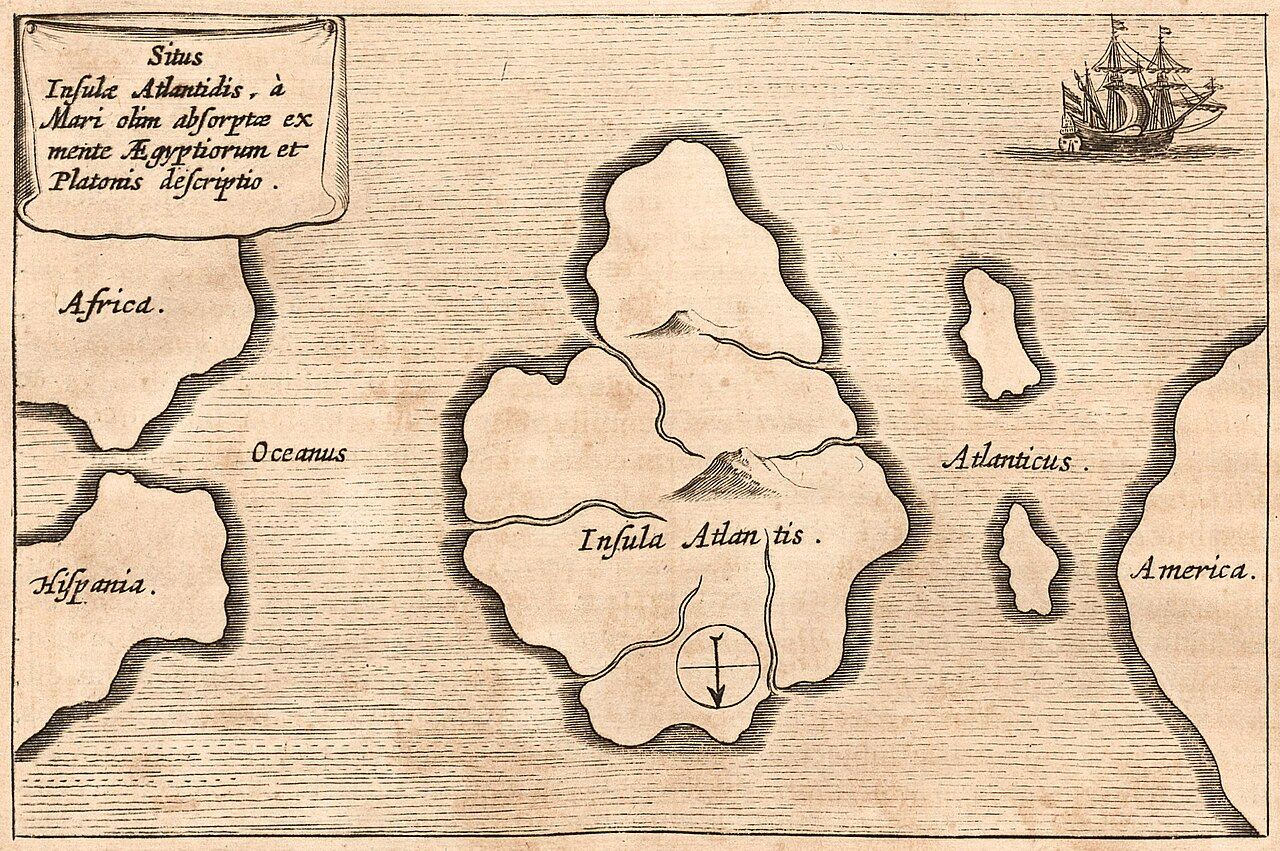
In recent years videos online have claimed the Richat is the ruined city of Atlantis, because Plato described Atlantis as built in rings of land and water. The geologists' rings are layers of rock exposed by erosion, not walls or canals, and Plato placed his island beyond the Pillars of Heracles in the sea.
Questions people ask about The Richat Structure (Eye of the Sahara)

Can you see the Richat from space?

Yes, easily. Ed White and James McDivitt photographed it from Gemini IV. NASA used it again as an Image of the Day in April 2026.

Is the Richat on any official list?

The International Union of Geological Sciences lists it as a geoheritage site and calls it a spectacular example of a magmatic concentric alkaline complex.

Is there newer research on how old it is?

NASA's 2026 article points to a 2024 study, How old is the Eye of Africa? A polyphase history for the igneous Richat Structure, Mauritania, which describes it as built up in more than one phase.

The open question

Still strange: The Sahara's bullseye.

Scientists first took it for an impact crater, and online videos now call it Atlantis, but it is a worn-down dome of rock.

Atlantis: Is Plato's Sunken Island Real or a Myth? →
  1. Step 1 of 4 · This fileThe Richat Structure
  2. Step 2 of 4 · Next fileAtlantis: Is Plato's Sunken Island Real or a Myth?
  3. Step 3 of 4 · Next fileLibyan Desert Glass: How Did Impact Glass Reach Tutankhamun?
  4. Step 4 of 4 · Next fileThe Younger Dryas: What Caused the Big Freeze 12,900 Years Ago?
About these videos

Found by a YouTube search for this topic, not checked by us. The player loads from YouTube only when you press play.

Where this comes from

EvidenceDocumented

Comes from Guillaume Matton, Michel Jébrak and James K. W. Lee, "Resolving the Richat enigma…. A research article: An article written by a researcher and published in a scholarly journal or book. Most such journals have other experts check a paper before it is printed, so it carries more weight than a news story, though later studies can still change the picture.

What this means

Records exist and are linked below. This page says what the records say.

For The Richat Structure, the original record exists and is linked: Guillaume Matton, Michel Jébrak and James K. W. Lee, "Resolving the Richat enigma…. That tells you the record is real and what it says. It does not mean every claim in it is true.

Primary records exist: an original document, a published text, an official file or a dated report. We link to them. This level says the record exists and what it says, not that every claim in it is true.

See all five labels

Sources

  1. A research articleAn article written by a researcher and published in a scholarly journal or book. Most such journals have other experts check a paper before it is printed, so it carries more weight than a news story, though later studies can still change the picture.Guillaume Matton, Michel Jébrak and James K. W. Lee, "Resolving the Richat enigma: Doming and hydrothermal karstification above an alkaline complex", Geology 33 (2005), pp. 665-668Primary text
  2. NASA ScienceNASA's official science website, with its research news, mission pages and reports, such as its 2023 study of UFOs.NASA Earth Observatory, "Eyeing the Richat Structure", Image of the Day (16 April 2026)
  3. IUGS International Commission on Geoheritage, "Richat Structure, a Cretaceous Alkaline Complex"

Quotations come from public-domain translations. A book in our Library links to its Library page; other links open the free online copy or the reference page.

Updated

Credible or not?

Tap one to see how other readers voted.

Discussion