The record
Great Zimbabwe is a ruined stone city in the south of the country that took its name. UNESCO says the city covers almost 800 hectares and was built between 1100 and 1450 AD
by a Bantu population of the Iron Age, the Shona.
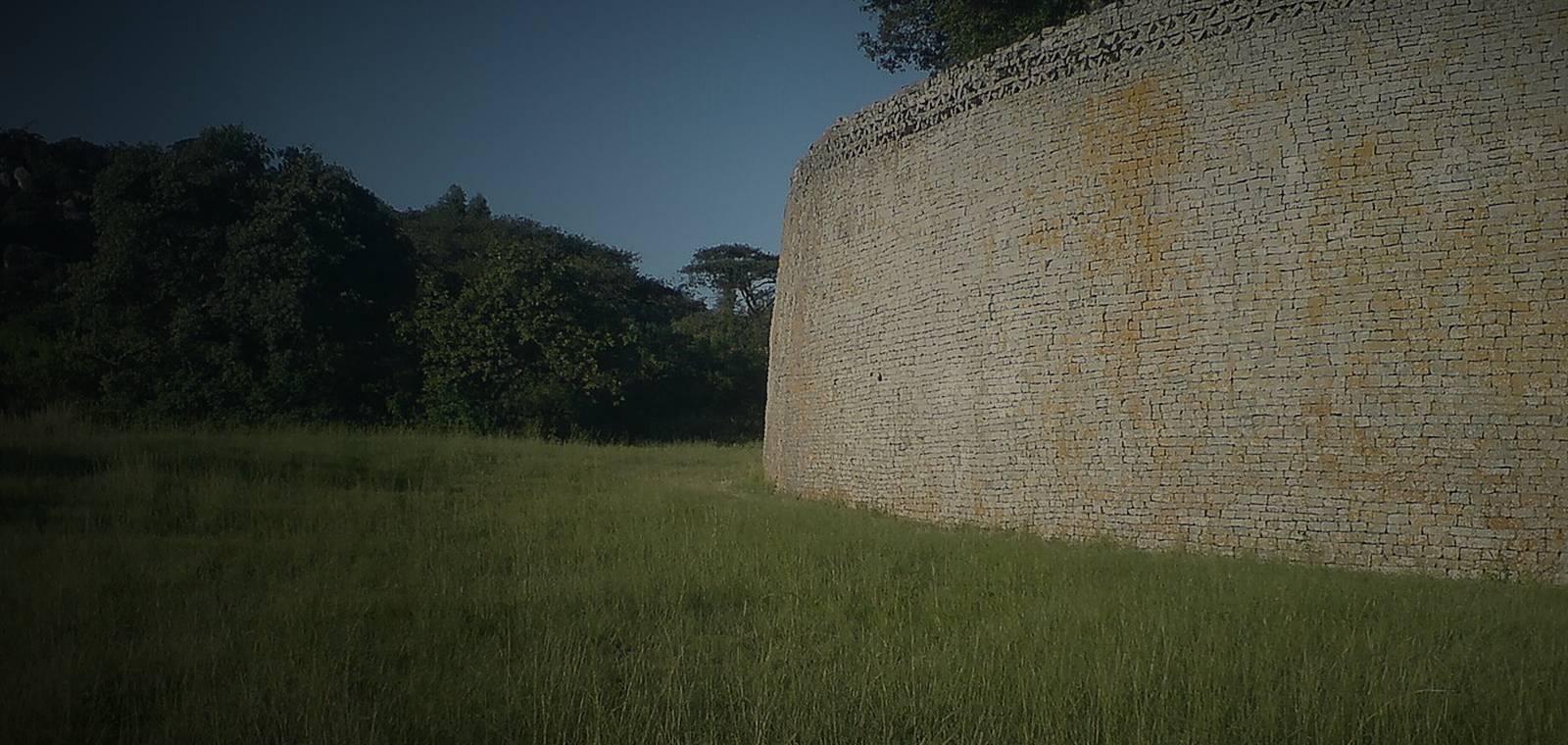
It was a trading center: glass beads and porcelain from China and Persia have been found there, along with carved soapstone birds. NOVA puts its population at its height at some 12,000 to 20,000 people. Its best-known part, the Great Enclosure, is in NOVA's words the largest single prehistoric structure south of the Sahara,
ringed by an outer wall more than 800 feet long, its granite blocks fitted together without mortar.
The idea that outsiders built it is old. NOVA traces it to the Portuguese historian João de Barros and others, almost 450 years ago. In 1891 the English traveler J. Theodore Bent dug at the ruins, and his book The Ruined Cities of Mashonaland (1892) credited the gold working there to people of Arabian origin. NOVA also reports that the Lemba, a southern African people whom it describes as having Semitic origins, say one of their clans built the city, while adding that by medieval times the Lemba had long since become part of Bantu Africa.
The main question was settled by digging. In 1929 the archaeologist Gertrude Caton-Thompson reported that the oldest ruins could not be placed earlier than the tenth century. The Spectator wrote that she found it inconceivable how a theory of Semitic or civilized origin could ever have been formulated,
since every detail, apart from imported beads and porcelain, was typically African Bantu.
The archaeologist David Randall-MacIver had reached the same view in 1905. What the solid Conical Tower inside the Great Enclosure was for is still unknown.