












How reliable is this source?
25/100 · Often wrong
Plato was a philosopher, not a historian, and he often used invented stories to teach ideas. His Atlantis tale claims to come from Egyptian priests through Solon, but no Egyptian or earlier Greek record of it has ever been found. Most scholars treat Atlantis as a story Plato created, possibly colored by memories of real disasters such as the Thera eruption.
What checks out
- Real places he names, such as Athens, Sais in Egypt and the Pillars of Heracles, existed.
- Earthquakes and sea floods did destroy real Greek towns, as at Helike in 373 BCE during his lifetime.
What does not
- No trace of Atlantis or of a 9,000-year-old Athens has been found by archaeology.
- The Egyptian priests' record he cites has never turned up in any Egyptian source.
- Some ancient readers already suspected he invented it, as Strabo records.
Our main source for: Atlantis; The reversed world of the Statesman myth.
This rates how well the factual claims hold up against later evidence and scholarship. It is not a judgment of character or honesty. How the meter works
What is Plato known for?
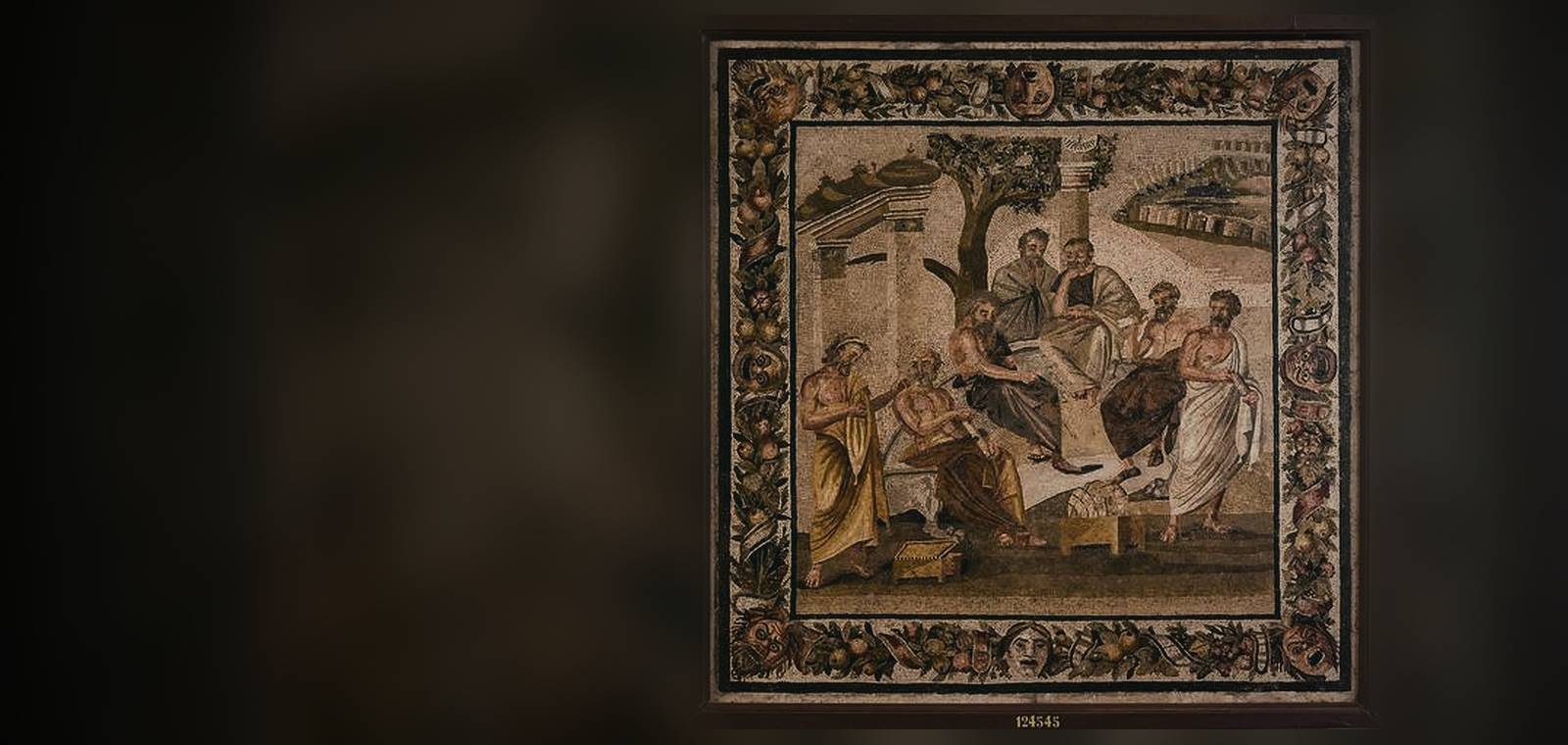
Plato was an Athenian philosopher, a student of Socrates and the founder of the Academy, a school in Athens. He wrote in the form of dialogues, usually with Socrates as the main speaker, and his works shaped Western philosophy more than almost any others.
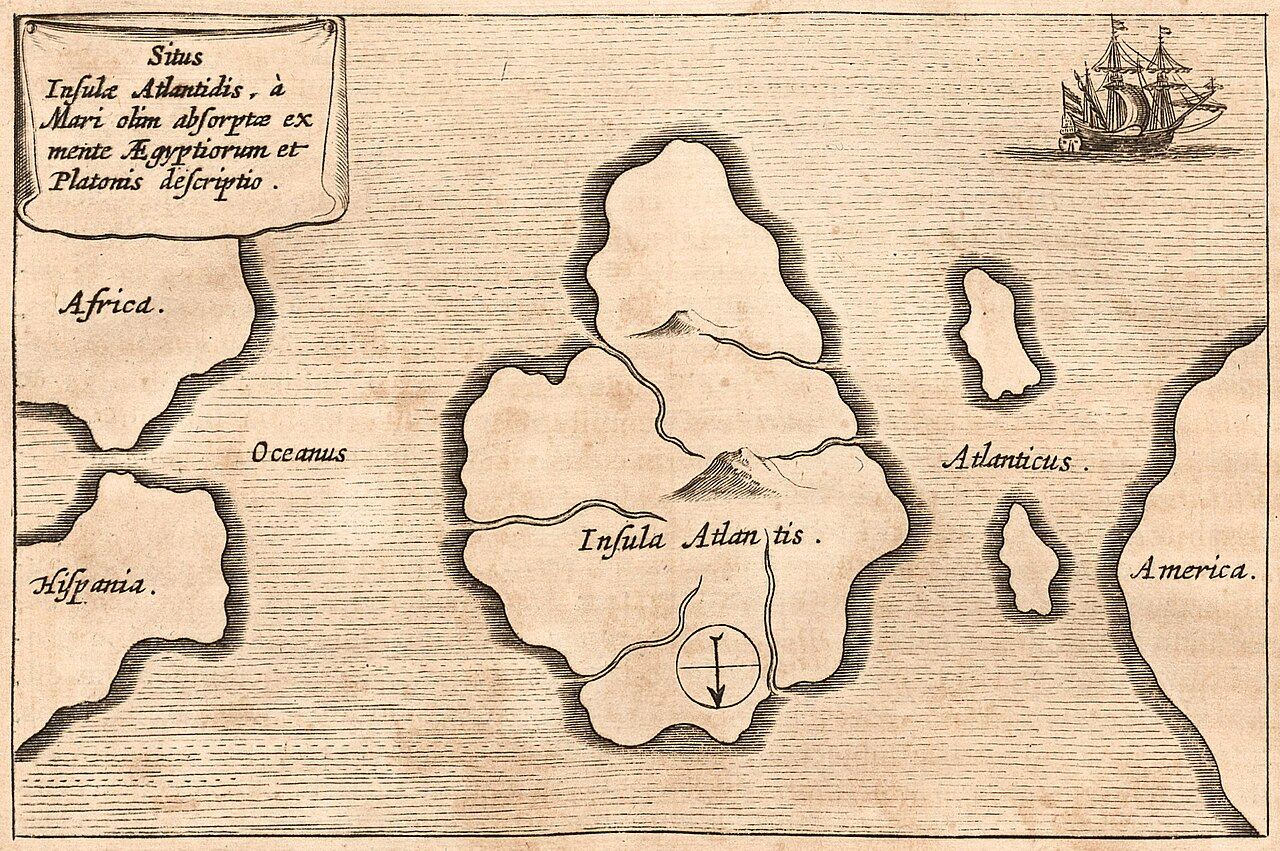
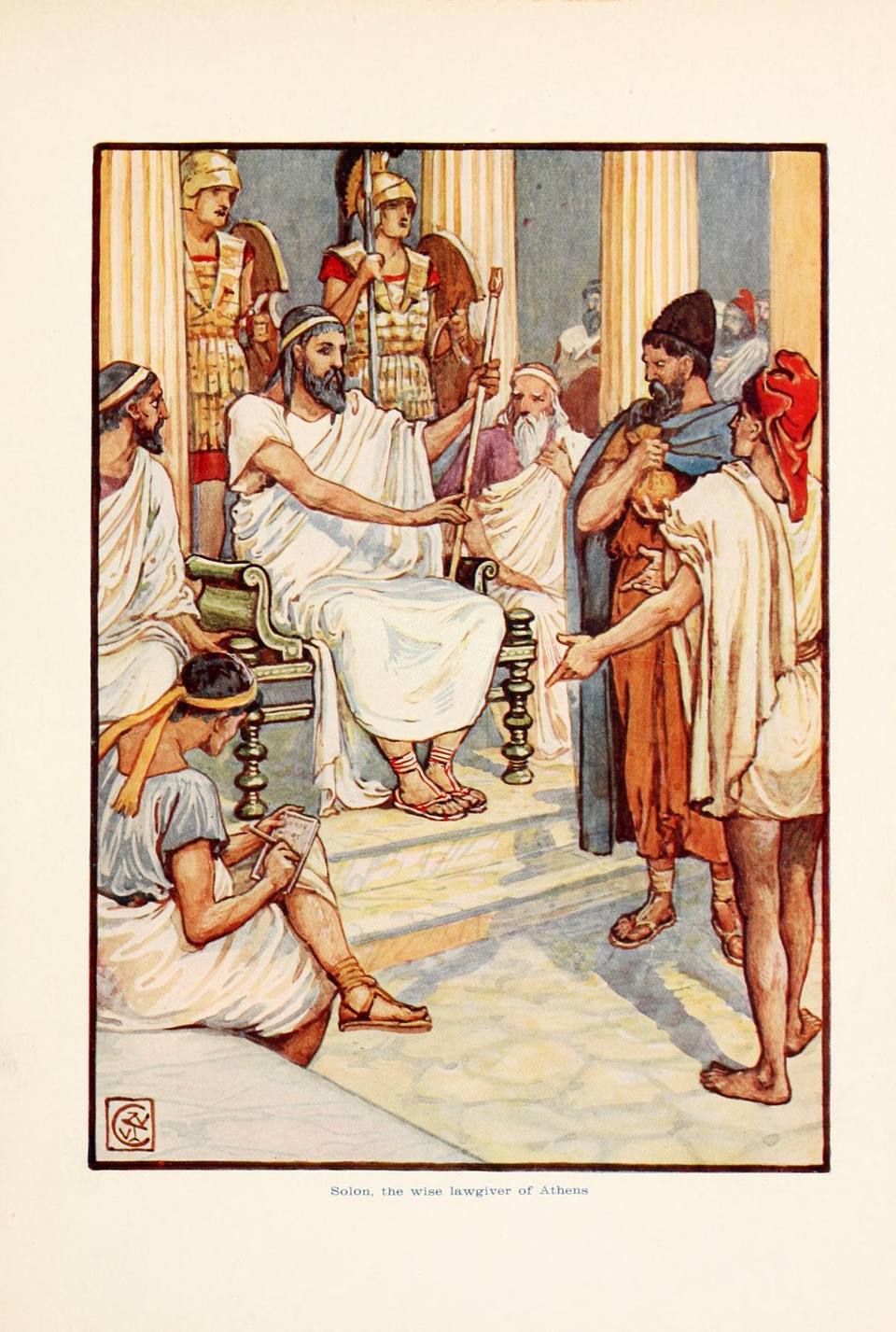
Two late dialogues, Timaeus and Critias, written around 360 BCE, contain the story of Atlantis. In them a speaker says the tale reached Athens through the lawgiver Solon, who heard it from Egyptian priests at Sais: a great island power beyond the Pillars of Heracles that attacked the Mediterranean world and sank in a single day and night, about 9,000 years before Solon. Critias breaks off unfinished.
His Statesman includes another strange myth, of an age when the cosmos ran in reverse and people were born old and grew young.
No Greek writer before Plato mentions Atlantis, and no Egyptian record of it has been found. Most classicists read it as a philosophical fable Plato built to illustrate his ideal state, possibly drawing on real disasters such as the sinking of Helike in 373 BCE. Since the 19th century, writers on lost civilizations have treated it as history.
Titles and honors
- Offices held
- Founder and head of the Academy, Athens c. 383-348 BCE
The same story, told elsewhere
Shared story · Beginnings
Beings Who Taught Humanity the Arts
Fallen angels taught metalwork and makeup, a fish-man from the sea taught writing and law, Prometheus gave fire and numbers, and Thoth invented letters. Many cultures say civilization was a gift from outside.
Plato, Phaedrus (the myth of Theuth) is one telling. The same story is told 6 more times, in 4 parts of the world. Follow it:
- GreekAthens · c. 460-430 BCE · Ancient text
- Greek, about EgyptAthens, telling an Egyptian story · c. 370 BCE · Ancient textTied to this page
- ChineseChina · c. 4th to 3rd century BCE · Ancient text
- Jewish apocalyptic (Second Temple)Judea · c. 300-200 BCE · Ancient text
- Babylonian, retold in GreekBabylon · c. 280 BCE · Ancient text
- Jewish (Second Temple)Judea · c. 160-150 BCE · Ancient text
- IslamArabia · 7th century CE · Medieval text
The open question: Did people credit outsiders for their own inventions, or is there a reason so many say they were taught? Join the debate
Shared story · Beginnings
The Lost Golden Age and the Ages of the World
Gold, silver, bronze, iron: Greece, Persia and the Book of Daniel all count the ages of the world in metals, India counts four yugas, and the Norse and Maya see whole worlds destroyed and remade.
Plato, Statesman (the age of Cronos) and Plato, Timaeus (the priest of Sais) are two tellings. The same story is told 8 more times, in 6 parts of the world. Follow it:
- GreekBoeotia, Greece · c. 700 BCE · Ancient text
- Greek (Plato)Athens · c. 360 BCE · Ancient textTied to this page
- Greek, about EgyptAthens, telling an Egyptian story · c. 360 BCE · Ancient textTied to this page
- Hindu law codeIndia · c. 200 BCE · Ancient text
- Hebrew BibleJudea · c. 165 BCE · Ancient text
- RomanRome · c. 8 CE · Ancient text
- Zoroastrian (Persian)Iran · 9th to 13th centuries CE · Medieval text
- Zoroastrian (Persian)Iran · 9th century CE · Medieval text
- NorseIceland · c. 1000 CE · Medieval text
- K'iche' MayaHighland Guatemala · c. 1554-1558 · Retold in English
The open question: Why do so many traditions believe the past was better and the world is running down? Memory, or human nature? Join the debate
Shared story · Floods and lost lands
Lost Lands Under the Sea: Atlantis, Dvaraka and Ys
A rich city, a proud people and one terrible day when the sea comes in and never leaves. Greece, India, Egypt, Wales, Cornwall and Brittany all tell of a land that now lies under the waves.
Plato, Timaeus (Atlantis) is one telling. The same story is told 8 more times, in 4 parts of the world. Follow it:
- Ancient EgyptianEgypt · c. 1900-1800 BCE · Ancient text
- Hindu (Sanskrit epic)Dvaraka · c. 400 BCE · Ancient text
- Greek, retold in a Roman-era geographyHelike, on the Gulf of Corinth, Greece · 373 BCE · Ancient text
- GreekAthens · c. 360 BCE · Ancient textTied to this page
- Tamil (South India)Tamil Nadu, southern tip of India · c. 5th-6th century CE · Ancient text
- WelshCardigan Bay, Wales · c. 1250 CE · Medieval text
- BretonBay of Douarnenez, Brittany, France · 15th century · Retold in English
- CornishBetween Land's End and the Isles of Scilly, Cornwall, England · c. 1478 · Medieval text
- Modern science (19th-century Europe)Germany and Britain · 1864 · Modern book
The open question: Do these stories keep real memories of lost coastlines, or is a drowned city simply a story people tell to warn against pride? Join the debate
Mentioned on these pages
- FileAtlantis
- FileHelike
- FileHermes Trismegistus
- FileNag Hammadi library
- FileSolon and the priests of Sais
- FileThe Richat Structure (Eye of the Sahara)
- FileThe Younger Dryas freeze
- FileThe reversed world of Plato's Statesman
- FileThoth
- ChapterOne History 1: The world before this one
- ChapterOne History 6: The defection
- ChapterOne History 8: The reset
- Passage'You Hellenes are never anything but children' (Plato, Timaeus 22b–d)
- PassageAtlantis: gods who divided the earth (Plato, Critias 109b–121c)
- PassageThe world that ran backward (Plato, Statesman 269c–274d)
- PersonBenjamin Jowett
- PersonCosimo de' Medici
- PersonDora Katsonopoulou
- PersonGraham Hancock
- PersonIgnatius Donnelly
- PersonMarsilio Ficino
- PersonPsenophis of Heliopolis
- PersonSonchis of Sais
- PersonSteven Soter
- PlaceAncient Greece
- PlaceAthens
- PlaceHeliopolis
- PlaceSais
- PlaceThera (Santorini)
Linked people and places
Where this comes from
Comes from Encyclopaedia Britannica, 'Plato'. An encyclopedia first published in Scotland in 1768 and now online. Its articles are written and checked by named experts and editors, which makes it a reliable source for basic facts.
What this means
A real person with records. Sources are listed below.
For Plato, the original record exists and is linked: Encyclopaedia Britannica, 'Plato'. That tells you the record is real and what it says. It does not mean every claim in it is true.
Primary records exist: an original document, a published text, an official file or a dated report. We link to them. This level says the record exists and what it says, not that every claim in it is true.
Sources
- Encyclopaedia BritannicaAn encyclopedia first published in Scotland in 1768 and now online. Its articles are written and checked by named experts and editors, which makes it a reliable source for basic facts.Encyclopaedia Britannica, 'Plato'Reference Archived copy, 2026-09-27
- Stanford Encyclopedia of PhilosophyA free online encyclopedia of philosophy from Stanford University. Each article is written by an expert, checked by other experts and kept up to date, which makes it one of the most trusted sources in its field.Stanford Encyclopedia of Philosophy, 'Plato'Reference
- WikipediaA free online encyclopedia written and edited by volunteers. It is a good starting point and usually lists its own sources, but anyone can change it, so we treat it as a guide to better sources, not the final word.Wikipedia, 'Plato'Reference