












What is Francisco Ximénez known for?
Francisco Ximénez (1666–c. 1729) was a Spanish Dominican priest and linguist who worked among the K'iche' Maya of Guatemala. He studied Maya languages and wrote grammars and a history of the Dominican province of Chiapas and Guatemala.
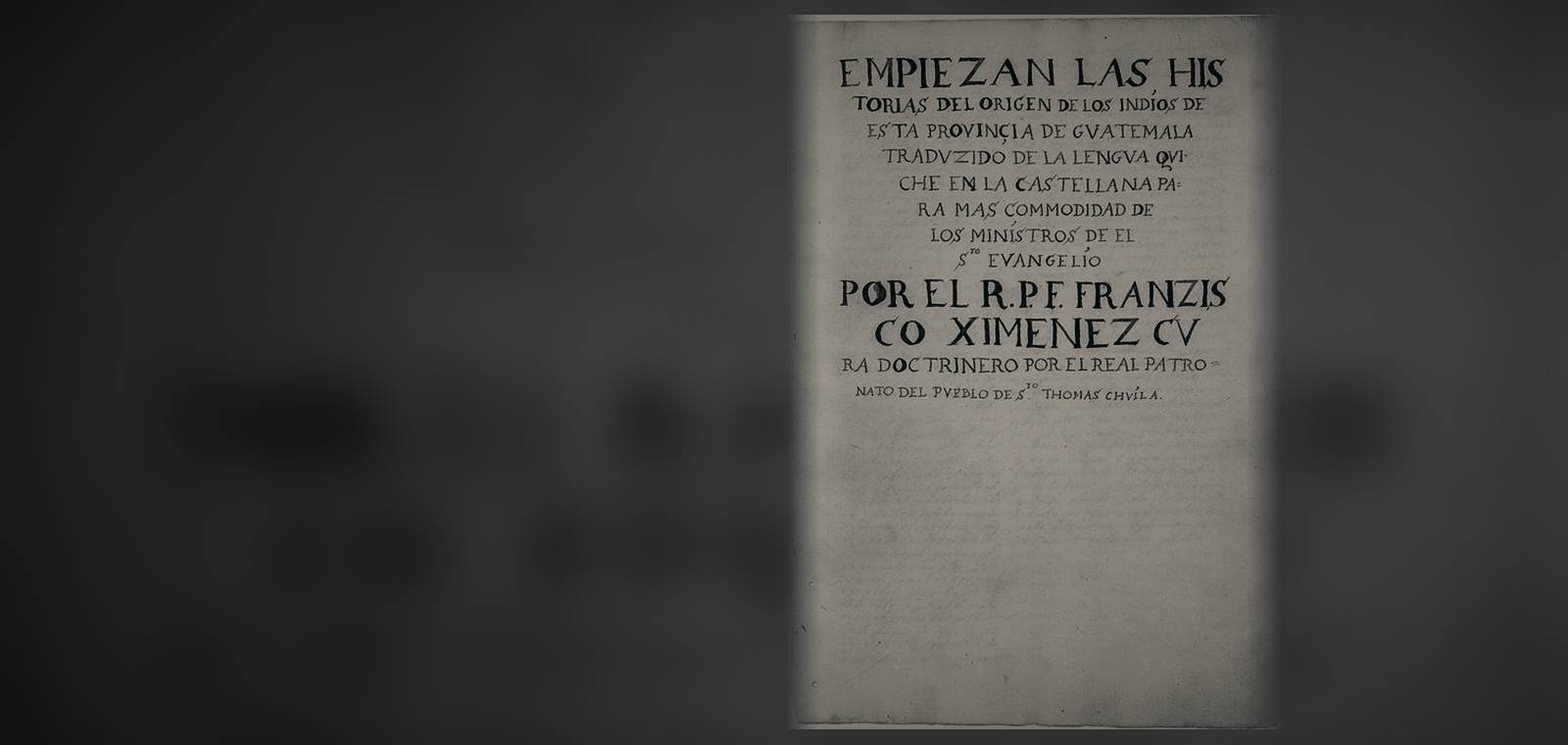
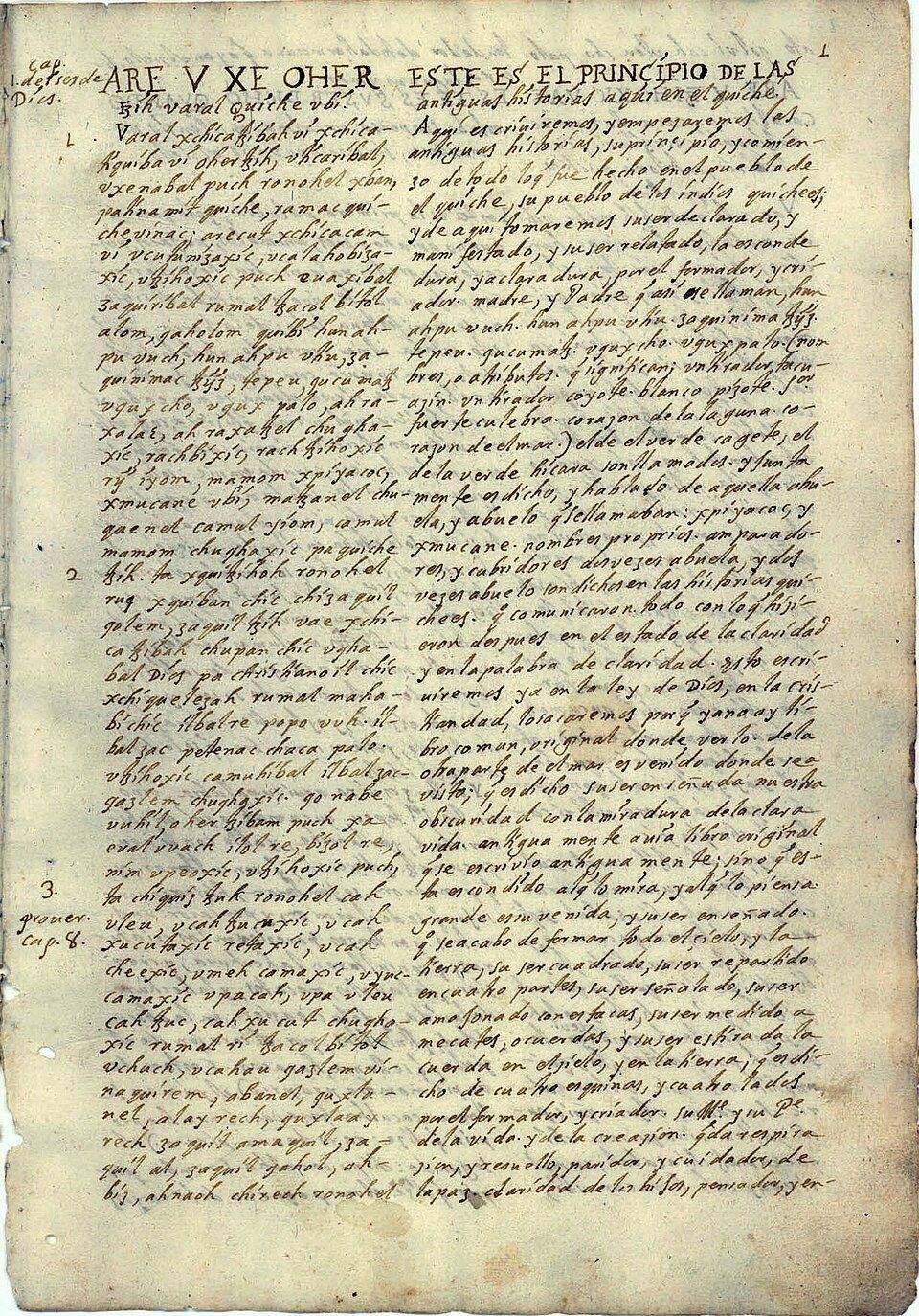
While parish priest at Chichicastenango in the early 1700s, he copied a K'iche' text written in Latin letters in the 16th century, apparently to preserve an older hieroglyphic book, and set beside it a Spanish translation. This is the Popol Vuh, the K'iche' account of creation, of the Hero Twins and their contest with the lords of Xibalba, and of the K'iche' lineages. The 16th-century original is lost, so his copy is the only surviving source.
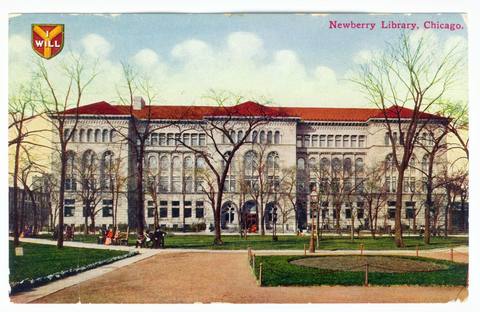
The manuscript passed through the hands of the French scholar Brasseur de Bourbourg and others before the collector Edward E. Ayer bought it in 1887. It has been at the Newberry Library in Chicago since 1912.
Titles and honors
- Offices held
- Curate of Rabinal 1704-1714
The same story, told elsewhere
Shared story · Floods and lost lands
Flood Stories Around the World
A god warns one good man, a boat is built, the world drowns and birds are sent out to find land. The same story turns up from Iraq to India to Greece, with cousins in China, Scandinavia and Guatemala.
Popol Vuh (the wooden people) is one telling. The same story is told 9 more times, in 6 parts of the world. Follow it:
- Vedic IndiaNorthern India · c. 800-600 BCE · Ancient text
- Babylonian (Akkadian)Mesopotamia · 7th century BCE · Ancient text
- Hebrew BibleJudah / Babylon · c. 600-400 BCE · Ancient text
- ChineseYellow River valley, China · 1st millennium BCE · Ancient text
- Zoroastrian (Persian)Iran / Central Asia · 1st millennium BCE · Ancient text
- Babylonian, retold in GreekBabylon · c. 280 BCE · Ancient text
- GreekGreece · 1st or 2nd century CE · Ancient text
- IslamArabia · 7th century CE · Medieval text
- NorseIceland · c. 1220 CE · Medieval text
- K'iche' MayaHighland Guatemala · c. 1554-1558 · Retold in EnglishTied to this page
The open question: One real flood remembered by many peoples, or many different floods that each people told in its own way? Join the debate
Shared story · Beginnings
Giants and the Races Before Us
Genesis has the Nephilim, Greece has the Giants, the North has the frost giants, Arabia has the tall people of 'Ad and the Maya have Zipacna, who piled up mountains. Why does almost everyone remember giants?
Popol Vuh (Vukub-Cakix and his sons) is one telling. The same story is told 7 more times, in 4 parts of the world. Follow it:
- Hebrew BibleCanaan · c. 700-400 BCE · Ancient text
- GreekBoeotia, Greece · c. 700 BCE · Ancient text
- Hebrew BibleJudah · c. 600-400 BCE · Ancient text
- Jewish apocalyptic (Second Temple)Judea · c. 300-200 BCE · Ancient text
- GreekGreece · 1st or 2nd century CE · Ancient text
- IslamSouthern Arabia · 7th century CE · Medieval text
- NorseIceland · c. 1220 CE · Medieval text
- K'iche' MayaHighland Guatemala · c. 1554-1558 · Retold in EnglishTied to this page
The open question: Real bones dug up and explained, a memory of older peoples, or something else that made giants a story almost everywhere? Join the debate
Shared story · Beginnings
People Made From Clay: Adam, Nuwa, Prometheus and the Potter Gods
A god kneels in the mud, shapes a body with his hands and breathes it into life. That scene is told in Iraq, Israel, Egypt, Greece, China, Arabia, Guatemala, Sudan and New Zealand.
Popol Vuh (the man of clay), as summarized by H. H. Bancroft is one telling. The same story is told 8 more times, in 6 parts of the world. Follow it:
- Babylonian (Akkadian)Mesopotamia · c. 1700 BCE · Ancient text
- Ancient EgyptianEgypt · c. 1215 BCE · Ancient text
- Hebrew BibleJudah · c. 900-450 BCE · Ancient text
- GreekGreece · 1st or 2nd century CE · Ancient text
- ChineseChina · c. 195 CE · Retold in English
- IslamArabia · 7th century CE · Medieval text
- K'iche' MayaHighland Guatemala · c. 1554-1558 · Retold in EnglishTied to this page
- Maori (New Zealand)Aotearoa · 19th century · Retold in English
- Shilluk (South Sudan)White Nile, South Sudan · 1911 · Retold in English
The open question: Did one old story about a potter god travel from people to people, or does anyone who works with clay end up imagining that we were made from it? Join the debate
Mentioned on these pages
Linked people and places
Where this comes from
Comes from Newberry Library, 'Popol Vuh' research guide. The Popol Vuh: The sacred story of the K'iche' Maya of Guatemala: how gods made people from maize, and the Hero Twins' contest with the lords of the underworld. It was written down in the K'iche' language in the mid 1500s; the only surviving copy, made by the friar Francisco Ximénez around 1701, is at the Newberry Library, Chicago.
What this means
A real person with records. Sources are listed below.
For Francisco Ximénez, the original record exists and is linked: Newberry Library, 'Popol Vuh' research guide. That tells you the record is real and what it says. It does not mean every claim in it is true.
Primary records exist: an original document, a published text, an official file or a dated report. We link to them. This level says the record exists and what it says, not that every claim in it is true.
Sources
- The Popol VuhThe sacred story of the K'iche' Maya of Guatemala: how gods made people from maize, and the Hero Twins' contest with the lords of the underworld. It was written down in the K'iche' language in the mid 1500s; the only surviving copy, made by the friar Francisco Ximénez around 1701, is at the Newberry Library, Chicago.Newberry Library, 'Popol Vuh' research guidePrimary text Archived copy, 2026-09-11
- WikipediaA free online encyclopedia written and edited by volunteers. It is a good starting point and usually lists its own sources, but anyone can change it, so we treat it as a guide to better sources, not the final word.Wikipedia, 'Francisco Ximénez'Reference Archived copy, 2026-10-03