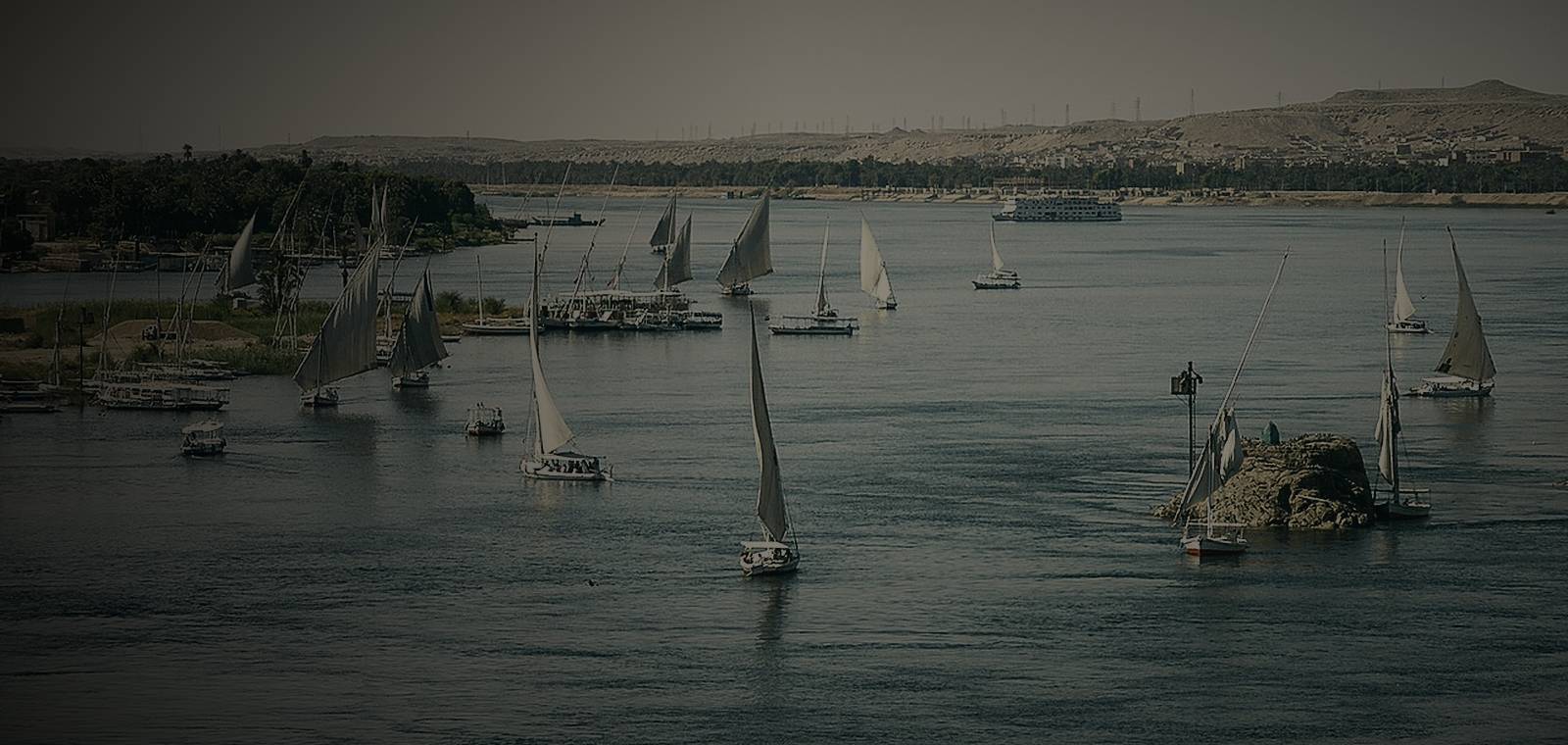
What is Nile known for?
The Nile is usually counted as the longest river in the world, about 6,650 kilometers. Its two main branches, the White Nile and the Blue Nile, meet at Khartoum in Sudan, and the river runs north through Egypt to a wide delta on the Mediterranean.
Before the Aswan High Dam was finished in 1970, the river flooded every summer, leaving rich black silt on the fields. Egyptians called their land Kemet, "the black land," after that soil, and their calendar began its year with the flood season.
Nearly every ancient Egyptian city, temple and tomb stands within a short walk of the Nile or its desert edge, and the river runs through Egyptian myths of creation and the afterlife.
The river behind every Egyptian page on the site, from Thebes and the Pyramid Texts to the flood myths.
Mentioned on these pages
- FileManetho
- FileSolon and the priests of Sais
- FileThoth
- PersonAhmose I
- PersonCush
- PersonJames Bruce
- PersonMenes
- PlaceAkhmim
- PlaceAncient Egypt
- PlaceAswan
- PlaceCoptos
- PlaceMedinet Habu
- PlaceSais
- PlaceSaqqara
- PlaceThebes (Egypt)
Linked people and places
Sources
- WikipediaA free online encyclopedia written and edited by volunteers. It is a good starting point and usually lists its own sources, but anyone can change it, so we treat it as a guide to better sources, not the final word.Wikipedia, 'Nile'Reference
- WikipediaWikipedia, 'Flooding of the Nile'Reference
No public-domain picture of this place yet. We do not show drawn or generated likenesses.