How the rabbit hole works. Start with anything that grabs you, say UFOs. Every person, place and document a page mentions links to its own page, so a UFO file leads to a witness, the witness leads to the people who investigated the case, and it keeps going.
The path you take shows in the bar under the top menu on every page, so you can step back any time or climb out and start again.
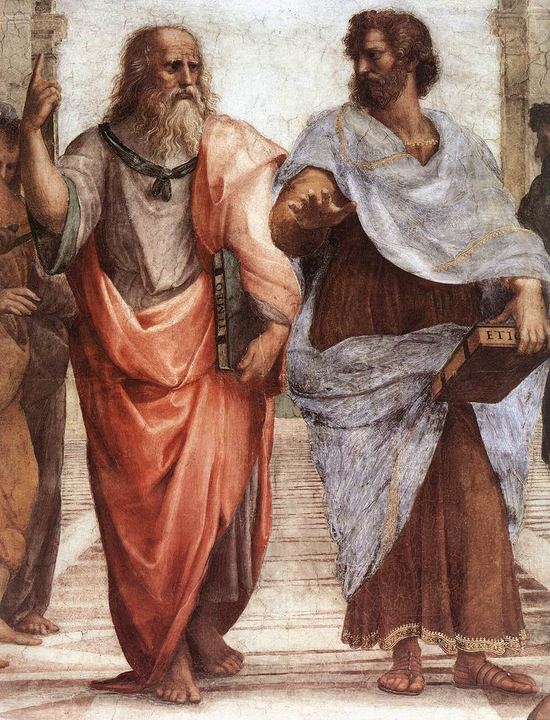
This is a short passage from Hesiod's Works and Days, a Greek poem written around 700 BCE. It tells a myth of five ages of humans. The gods first made a golden race, and other races followed, including a race of hero-men called demigods who lived just before our own. Scholars read the poem as a story of humanity getting worse over time.
ReferenceHesiod, Works and Days 109–201
Writtenc. 700 BCE
SetThe ages before ours
First of all the deathless gods who dwell on Olympus made a golden race of mortal men… a god-like race of hero-men who are called demi-gods, the race before our own.
A god warns one good man, a boat is built, the world drowns and birds are sent out to find land. The same story turns up from Iraq to India to Greece, with cousins in China, Scandinavia and Guatemala.
Apollodorus, The Library (Deucalion and Pyrrha) is one telling. The same story is told 9 more times, in 6 parts of the world. Follow it:
Genesis has the Nephilim, Greece has the Giants, the North has the frost giants, Arabia has the tall people of 'Ad and the Maya have Zipacna, who piled up mountains. Why does almost everyone remember giants?
Hesiod, Works and Days (the bronze race) is one telling. The same story is told 7 more times, in 4 parts of the world. Follow it:
The open question: Real bones dug up and explained, a memory of older peoples, or something else that made giants a story almost everywhere? Join the debate
Gold, silver, bronze, iron: Greece, Persia and the Book of Daniel all count the ages of the world in metals, India counts four yugas, and the Norse and Maya see whole worlds destroyed and remade.
Hesiod, Works and Days (the five races) is one telling. The same story is told 9 more times, in 6 parts of the world. Follow it:
Fire was kept from people, hidden away by gods or guarded by jealous owners, until someone took it. A Greek god hides it in a hollow stalk, a Maori hero tricks it out of his grandmother, and a little Cherokee spider carries a coal home on her back.
Hesiod, Works and Days (Prometheus) is one telling. The same story is told 6 more times, in 6 parts of the world. Follow it:
The open question: Are these stories a real memory of how precious and hard to get fire once was, or just a natural way for any people to explain where a useful thing came from? Join the debate
Again and again, people almost lived forever. A man refuses the food of life, a snake steals the plant of youth, a slow chameleon arrives too late, and a woman throws a stone that sinks. Each time, the chance was lost.
Hesiod, Works and Days (Pandora's jar) is one telling. The same story is told 8 more times, in 6 parts of the world. Follow it:
The open question: Do these stories share one ancient source, or does every people eventually ask why we die and arrive at the same kind of answer? Join the debate
Questions people ask about Hesiod, Works and Days 109–201
Who was Hesiod?
Hesiod was a Greek poet who lived in Ascra, a village in Boeotia, and was likely a farmer. Ancient Greeks often paired him with Homer. Besides Works and Days he is credited with the Theogony, which tells the birth of the gods. Works and Days is partly addressed to his brother Perses, after a quarrel over their inheritance.
What does Hesiod say will happen to the iron race?
He warns that Zeus will destroy it too. The sign will be babies born with gray hair at their temples. Before that, he says, children will not honor their aging parents, guests and friends will not be welcomed, and the strong will rule by force. He even wishes he had died before this age or been born after it.
Did other writers tell a story of ages like this?
Yes. The Roman poet Ovid tells it in the first book of his Metamorphoses, but with only four ages of gold, silver, bronze and iron, and no age of heroes. Readers also compare it with the metal statue of kingdoms in Daniel 2 and with the four yugas of Hindu tradition, though the details differ.
Used on these files
Hesiod's Five Ages of Man: Humanity Made and Unmade Five TimesDocumentedAround 700 BCE, Hesiod wrote that the gods made humanity five times, from gold down to iron, and ours is the iron race. The silver people stayed children for a hundred years before a short, foolish adulthood. What happened to the earlier races, and what does Hesiod say comes next for us?
Where this comes from
EvidenceDocumented
Comes fromHesiod's Works and Days, Hesiod, Works and Days 109–201, read here in the Hugh G. Evelyn-White. A Greek poem by Hesiod, written about 700 BC, full of advice on farming and honest living. It tells the myth of five ages of humans, from a golden age through a race of heroes to the hard iron age of the poet's own time.
What this means
The text exists and is quoted from a published translation. What it describes is a separate question.
Primary records exist: an original document, a published text, an official file or a dated report. We link to them. This level says the record exists and what it says, not that every claim in it is true.