Credible Theories Sign in
New Testament · Acts 8:39–40

Philip vanishes, Acts 8:39–40

Share

In plain words

This is a short passage from the Book of Acts, a New Testament book about the first Christians after Jesus, usually dated about AD 80 to 90. The text says the Spirit of the Lord suddenly took Philip away, so the man he had been traveling with saw him no more. Philip was then found at a place called Azotus.

ReferenceActs 8:39–40
Writtenc. 80–90 CE
Setc. 35 CE
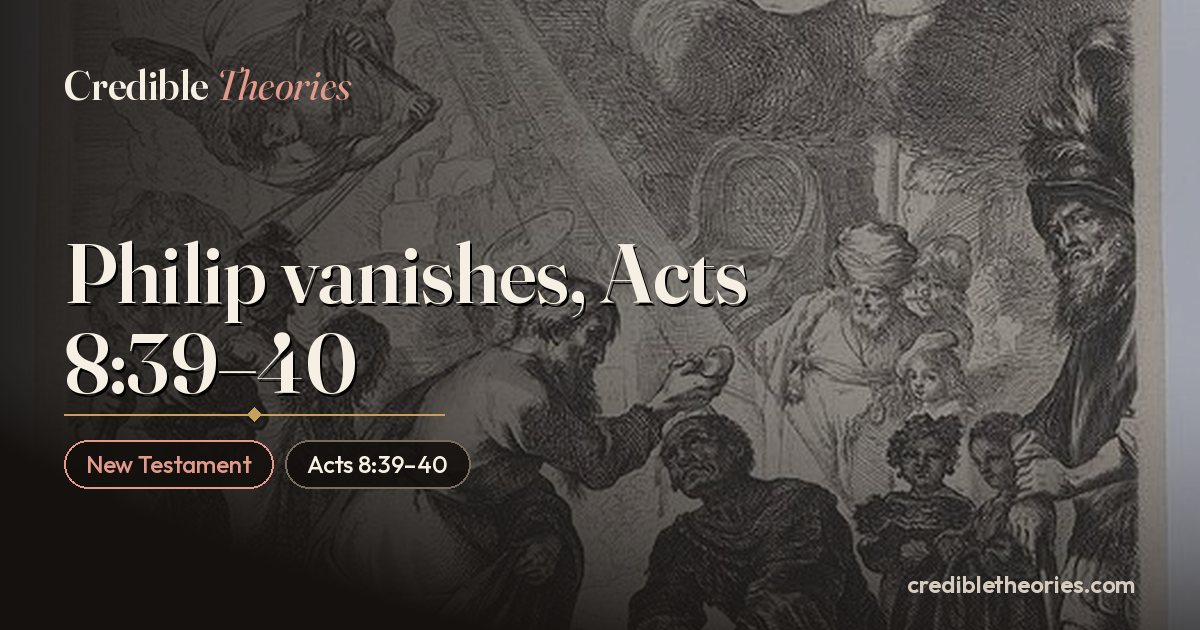
The Spirit of the Lord caught away Philip, that the eunuch saw him no more… But Philip was found at Azotus.

Documented · Ancient text, c. 80–90 CE Translation: KJV

Read it literally

Teleportation of about 20 miles.

What scholars say

Read as a miraculous relocation.

Themes Looks like technology
Questions people ask about Acts 8:39–40

Who wrote the Book of Acts, and when?

The book never names its author, but early church tradition credits Luke, a travel companion of Paul. The same writer is believed to have produced the Gospel of Luke, since both books open by addressing a man named Theophilus. Most scholars place Acts late in the first century, though a minority argue it was finished in the early 60s.

Who was the Ethiopian eunuch that Philip met?

Acts calls him a court official in charge of the treasure of Candace, queen of the Ethiopians. Candace was a royal title, not a personal name. He was riding home from worship in Jerusalem, reading Isaiah 53 aloud, when Philip joined him. In ancient usage, Ethiopia usually meant the kingdom of Kush, in what is now Sudan.

Where did Philip go after he turned up at Azotus?

Acts 8:40 says he preached in every town along the coast until he reached Caesarea. He appears there again in Acts 21, where Paul stays at his house and the text mentions his four unmarried daughters who prophesied. This Philip was one of the seven helpers chosen in Acts 6, not the apostle Philip. Azotus is the Greek name for Ashdod.

Where this comes from

EvidenceDocumented

Comes from The Book of Acts, Acts 8:39–40, read here in the King James Version. A New Testament book about the first Christians after Jesus, by the writer of the Gospel of Luke, usually dated about AD 80 to 90. It includes Jesus being taken up into a cloud and Paul's blinding vision on the road to Damascus.

What this means

The text exists and is quoted from a published translation. What it describes is a separate question.

Primary records exist: an original document, a published text, an official file or a dated report. We link to them. This level says the record exists and what it says, not that every claim in it is true.

See all five labels

Sources

  1. The King James BibleThe English Bible made for King James I and first printed in 1611; the wording most people know comes from a 1769 update. It is out of copyright, which is why we quote it. The 1611 printing also had the Apocrypha, extra books kept in Catholic and Orthodox Bibles.King James Version (1611; standard 1769 text), with ApocryphaPrimary text Archived copy, 2026-10-03

Scholarly dates are rounded. The wording follows the named public-domain translation.

More from New Testament

The story before and after this one, and what each shares with Philip vanishes.

Photo credits
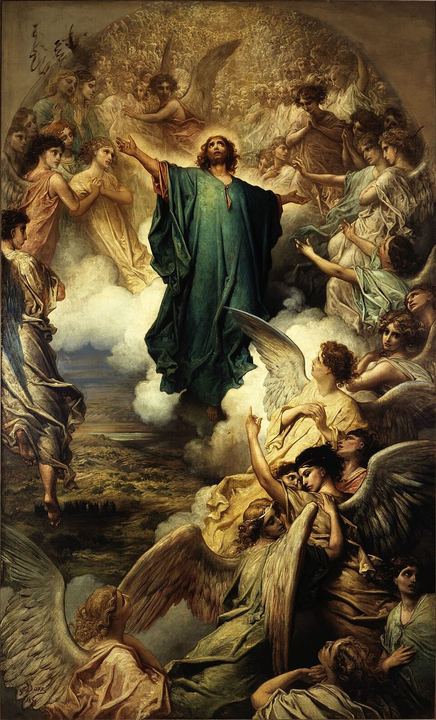
‹ Before thisTaken up in a cloudActs 1:9–11

Jesus goes up toward heaven and a cloud hides him from view.

Also about Jesus of Nazareth
Photo credits
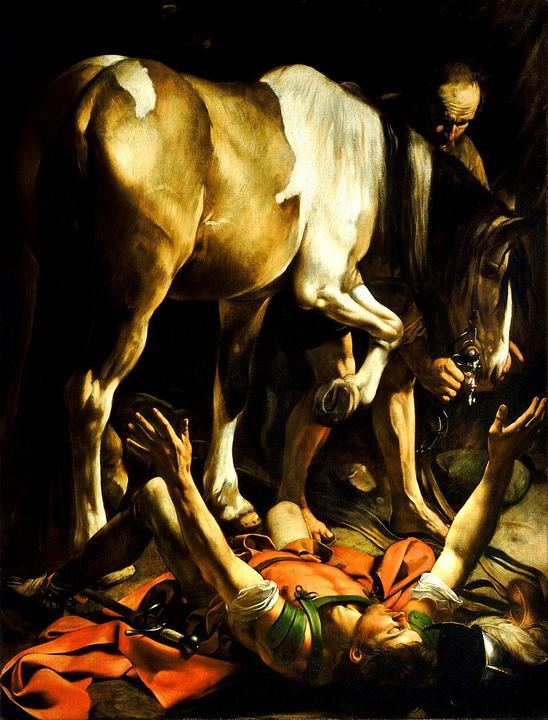
Next ›The light that blinded SaulActs 9:3–9

A light from heaven shines around a man named Saul, he falls to the ground, hears a voice, and is blind for three days.

Also about Jesus of NazarethSame theme: Looks like technology

Updated

Discussion