How the rabbit hole works. Start with anything that grabs you, say UFOs. Every person, place and document a page mentions links to its own page, so a UFO file leads to a witness, the witness leads to the people who investigated the case, and it keeps going.
The path you take shows in the bar under the top menu on every page, so you can step back any time or climb out and start again.
This is a short passage from Exodus, the second book of the Bible, written roughly 900 to 500 BCE. In the story, God comes down on Mount Sinai in fire, smoke rises from it like a furnace, and the whole mountain shakes. The people are warned that anyone who touches the mountain will die. Some scholars link the scene to a volcano or a storm god tradition.
ReferenceExodus 19:12–18
Writtenc. 900–500 BCE
SetThe Exodus
And mount Sinai was altogether on a smoke, because the LORD descended upon it in fire: and the smoke thereof ascended as the smoke of a furnace, and the whole mount quaked greatly.
Documented · Ancient text, c. 900–500 BCE Translation: KJV
AdvertisementAd space
Read it literally
A landing in fire, a loud trumpet sound growing louder, and a boundary: anyone who touches the mountain dies (19:12). A quarantine line around a hot landing zone.
What scholars say
Some scholars link the imagery to a volcano or a storm god tradition.
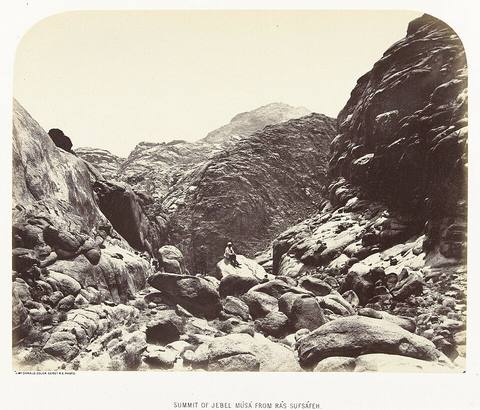
No one knows for certain. Since at least the fourth century CE, Christian tradition has placed it at Jebel Musa in the southern Sinai Peninsula, where St Catherine's Monastery was built in the sixth century. Other proposals include peaks in the northern Sinai, the Negev and northwest Saudi Arabia. The Bible also calls the mountain Horeb.
What happens right after Exodus 19?
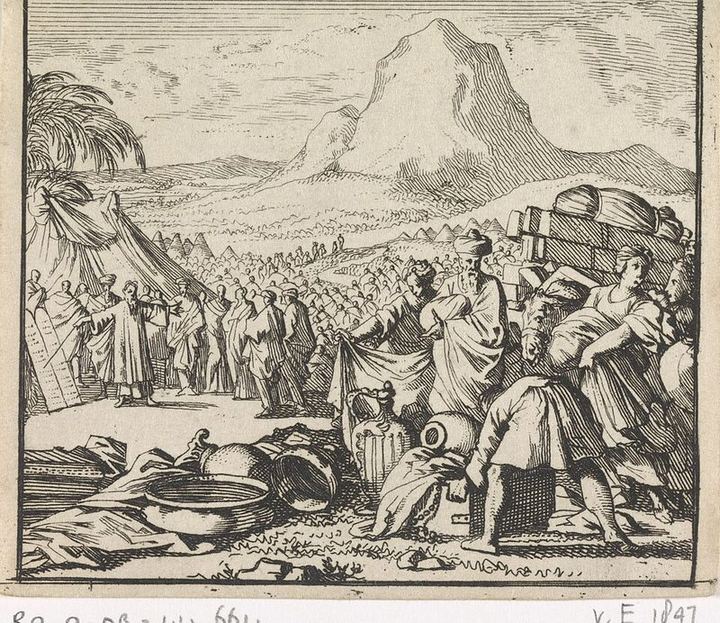
Exodus 20 gives the Ten Commandments, spoken from the mountain. The people, frightened by the thunder and the sound of the trumpet, stand back and beg Moses to speak to them instead of God (20:18–19). Chapters 21 to 23 then set out a body of laws that scholars call the Covenant Code.
How is the Sinai event remembered in Judaism?
The festival of Shavuot, held seven weeks after Passover, celebrates the giving of the Torah at Sinai. The Ten Commandments are read aloud in synagogue on that day. Many communities also stay up through the night studying, a custom called Tikkun Leil Shavuot, and the Book of Ruth is read.
The text exists and is quoted from a published translation. What it describes is a separate question.
Primary records exist: an original document, a published text, an official file or a dated report. We link to them. This level says the record exists and what it says, not that every claim in it is true.
The King James BibleThe English Bible made for King James I and first printed in 1611; the wording most people know comes from a 1769 update. It is out of copyright, which is why we quote it. The 1611 printing also had the Apocrypha, extra books kept in Catholic and Orthodox Bibles.King James Version (1611; standard 1769 text), with ApocryphaPrimary textArchived copy, 2026-10-03
Scholarly dates are rounded. The wording follows the named public-domain translation.
More from Hebrew Bible
The story before and after this one, and what each shares with Sinai: a mountain in smoke.