












What is Moses known for?
In the books of Exodus through Deuteronomy, Moses is born in Egypt, raised in Pharaoh's household, called by God from a burning bush, and leads the Israelites out of slavery. At Mount Sinai he receives the Law. He dies at 120 on Mount Nebo, in sight of the promised land. Judaism counts him as its greatest prophet, and Christianity and Islam (as Musa) honor him highly.
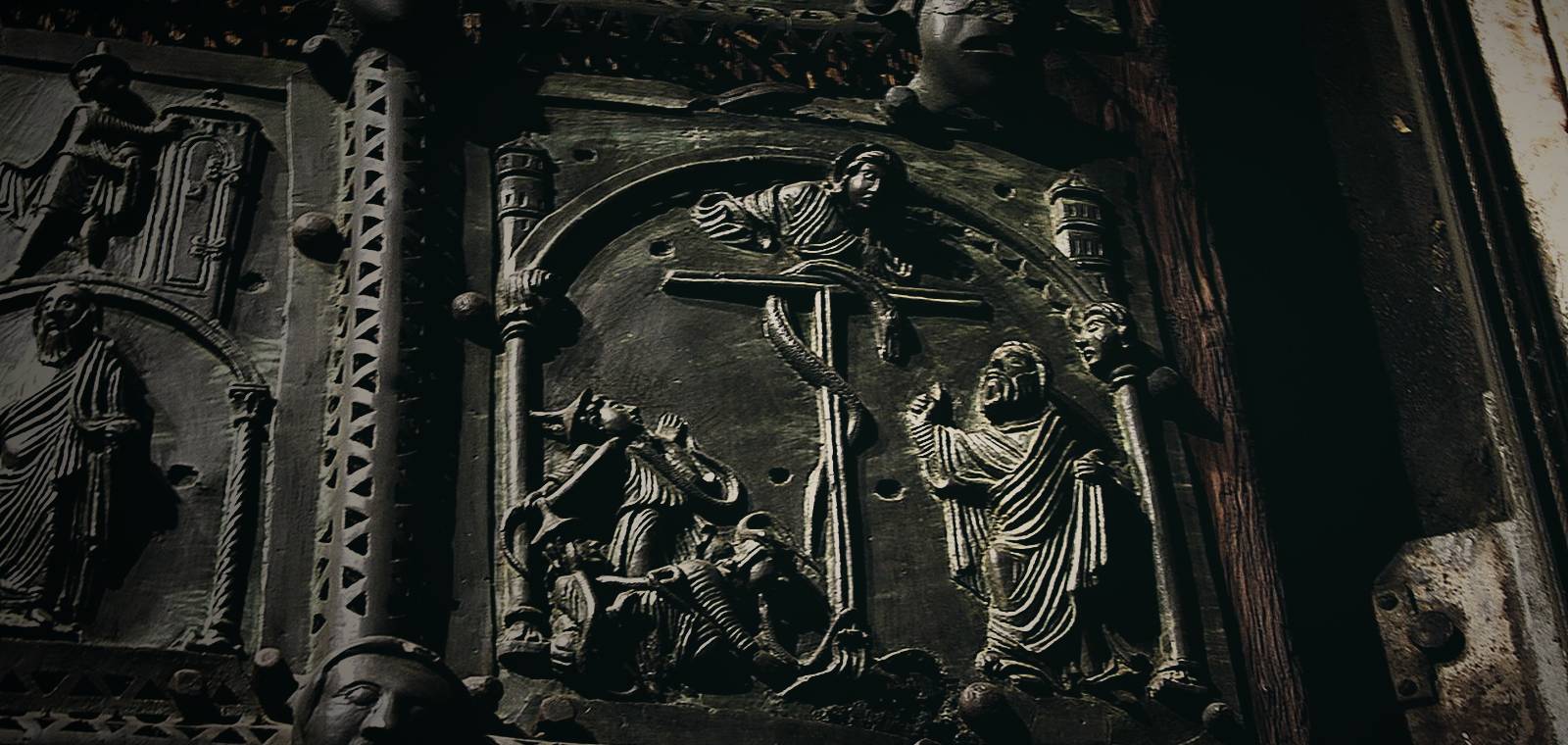
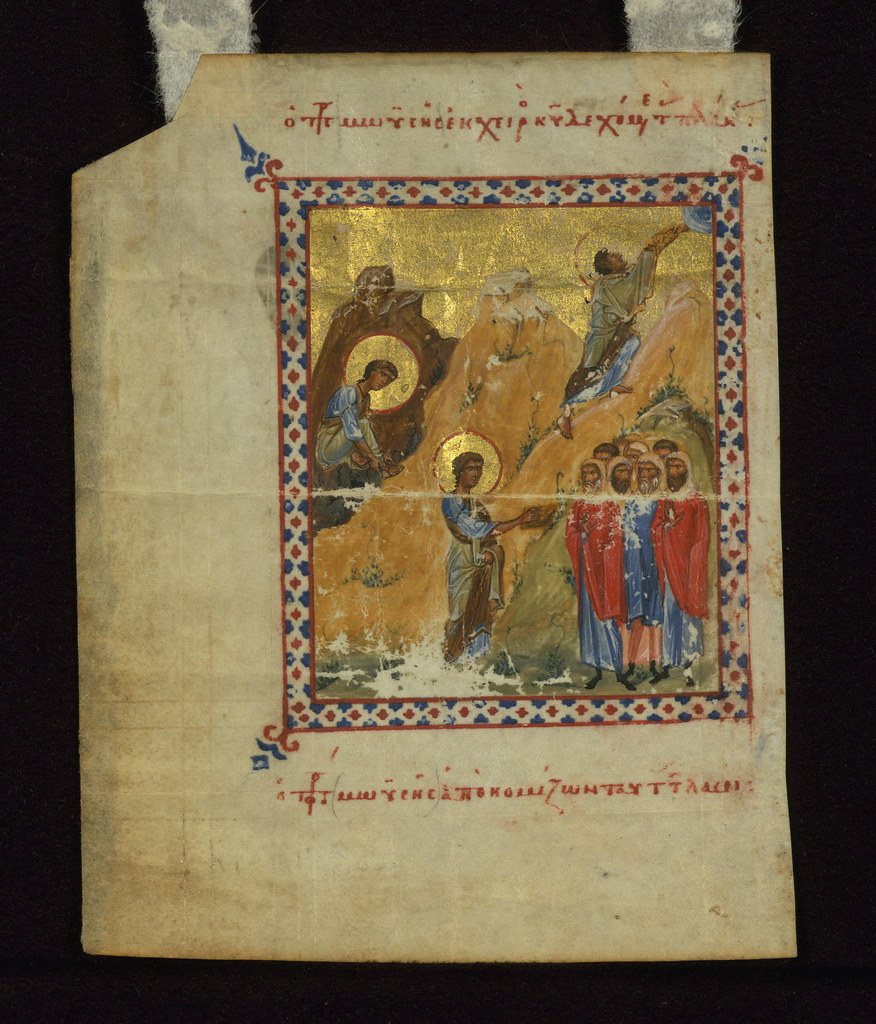
Several episodes recur on this site. After forty days on the mountain, Moses comes down with his face shining so that people fear to approach, and he wears a veil (Exodus 34:29–35). The Hebrew verb for shining comes from the same root as the word for horn, and Jerome's Latin Vulgate rendered it as "horned," which is why Michelangelo's Moses has horns. In Numbers 21 Moses makes a serpent of bronze on a pole that heals those bitten by snakes. Jubilees presents itself as a revelation dictated to Moses on Sinai by an angel.
Most historians regard Moses as largely a figure of tradition, though some allow that a historical leader may lie behind the stories.
Titles and honors
- Titles
- Prophet, in Judaism, Christianity, Islam and Samaritanism
- Moshe Rabbenu (Our Leader Moses), in Jewish tradition
- Saint, commemorated 4 September in several churches
- Death toll and kills
- In the text Golden calf: about 3,000 killed by the Levites at his command, Exodus 32
The same story, told elsewhere
Shared story · Beginnings
Giants and the Races Before Us
Genesis has the Nephilim, Greece has the Giants, the North has the frost giants, Arabia has the tall people of 'Ad and the Maya have Zipacna, who piled up mountains. Why does almost everyone remember giants?
Numbers 13 (the spies' report) is one telling. The same story is told 7 more times, in 4 parts of the world. Follow it:
- Hebrew BibleCanaan · c. 700-400 BCE · Ancient textTied to this page
- GreekBoeotia, Greece · c. 700 BCE · Ancient text
- Hebrew BibleJudah · c. 600-400 BCE · Ancient text
- Jewish apocalyptic (Second Temple)Judea · c. 300-200 BCE · Ancient text
- GreekGreece · 1st or 2nd century CE · Ancient text
- IslamSouthern Arabia · 7th century CE · Medieval text
- NorseIceland · c. 1220 CE · Medieval text
- K'iche' MayaHighland Guatemala · c. 1554-1558 · Retold in English
The open question: Real bones dug up and explained, a memory of older peoples, or something else that made giants a story almost everywhere? Join the debate
Shared story · Floods and lost lands
Towers to Heaven
Babel is the famous one, but Babylonians, Greeks, the Quran, Mexico, China and the Zambezi all tell of people trying to build or climb their way up to the gods, and failing.
Quran, Surah al-Qasas (Pharaoh's tower) is one telling. The same story is told 7 more times, in 5 parts of the world. Follow it:
- GreekIonia / Greece · c. 8th to 7th century BCE · Ancient text
- Hebrew BibleBabylon · c. 600-400 BCE · Ancient text
- ChineseChina · 1st millennium BCE · Ancient text
- Jewish (Second Temple)Judea · c. 160-150 BCE · Ancient text
- Babylonian / Greek (Abydenus, after Berossus)Babylon · c. 2nd century CE · Ancient text
- IslamArabia · 7th century CE · Medieval textTied to this page
- Aztec / Nahua (Cholula)Cholula, central Mexico · c. 1566 · Recorded folklore
- Lozi (A-Louyi), Upper ZambeziUpper Zambezi · 1901 · Recorded folklore
The open question: Is the tower story about one real building, about pride, or about why people speak different languages? Join the debate
Shared story · Births
Saved From the Water: Sargon, Moses and Karna
A mother seals her baby in a basket, tars the lid and lets the river take him. A stranger pulls him out, and the child grows up to rule. The same story is told of a king in Iraq, a prophet in Egypt and a warrior in India.
Exodus 2 (the birth of Moses) is one telling. The same story is told 8 more times, in 6 parts of the world. Follow it:
- ChineseYellow River valley, China · c. 1000-700 BCE · Ancient text
- Akkadian (Mesopotamia)Mesopotamia · c. 8th-7th century BCE · Ancient text
- Hebrew BibleJudah / Babylon · c. 600-400 BCE · Ancient textTied to this page
- Persian (told by a Greek)Media and Persia · c. 430 BCE · Ancient text
- Hindu (Mahabharata)Northern India · c. 400 BCE · Ancient text
- RomanRome, Italy · c. 27-25 BCE · Ancient text
- GreekGreece · 1st or 2nd century CE · Ancient text
- WelshWales · c. 1550 CE · Early modern text
- Maori (New Zealand)New Zealand · 1840 · Recorded folklore
The open question: Did one old Near Eastern story travel from people to people, or does every great leader's story end up with the same rescue from the river? Join the debate
Mentioned on these pages
- FileAnakim
- FileArk of the Covenant
- FileBook of Jubilees
- FileHermes Trismegistus
- FileMastema
- FileOg of Bashan
- FilePetra, the Rose-Red City
- PassageMoses' shining face (Exodus 34:29–35)
- PassageThe bronze serpent (Numbers 21:6–9)
- PersonAhiman, Sheshai and Talmai (sons of Anak)
- PersonEzra
- PersonHezekiah
- PersonIsaac Casaubon
- PersonJeremiah
- PersonJoshua
- PersonMarsilio Ficino
- PersonSargon of Akkad
- Personal-Khidr
- PlaceCanaan
- PlaceHebron
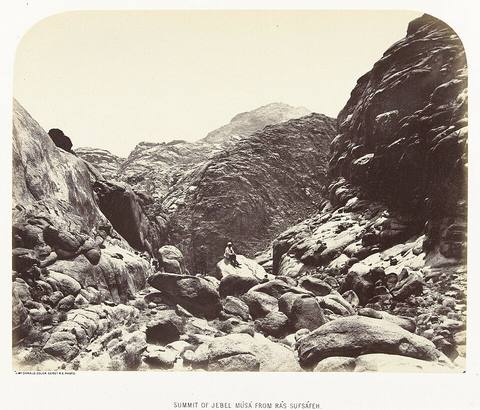
- PlaceMount Sinai
Linked people and places
Where this comes from
Comes from Exodus 34:29–35 (KJV), Bible Gateway. The Book of Exodus: The second book of the Bible. It tells how Moses led the Israelites out of slavery in Egypt, how God gave the law at Mount Sinai, and how the Ark of the Covenant was made.
What this means
A story or tradition. It is documented as a story; nothing independent shows it happened.
Moses is known from stories, scripture or tradition. The texts are real and we quote them (for example Exodus 34:29–35 (KJV), Bible Gateway), but nothing outside those texts shows that Moses was real as described.
The page covers something known from myths, scripture or tradition. The texts are real and we quote them, but no independent record shows the events or beings were real.
Sources
- The Book of ExodusThe second book of the Bible. It tells how Moses led the Israelites out of slavery in Egypt, how God gave the law at Mount Sinai, and how the Ark of the Covenant was made. Scholars think it reached its final form by roughly 500 to 400 BC.Exodus 34:29–35 (KJV), Bible Gateway Online copyPrimary text Archived copy, 2026-10-03
- The Book of NumbersThe fourth book of the Bible, named for its head counts of the people. It follows the Israelites through 40 years in the desert, including the spies' report of giants in Canaan and the bronze snake Moses made. Scholars think it reached its final form by roughly 500 to 400 BC.Numbers 21:4–9 (KJV), Bible Gateway Online copyPrimary text Archived copy, 2026-10-03
- WikipediaA free online encyclopedia written and edited by volunteers. It is a good starting point and usually lists its own sources, but anyone can change it, so we treat it as a guide to better sources, not the final word.Wikipedia, 'Moses'Reference Archived copy, 2026-10-01
- WikipediaWikipedia, 'Golden calf'Reference
No public-domain picture of this person yet. We do not show drawn or generated likenesses.