












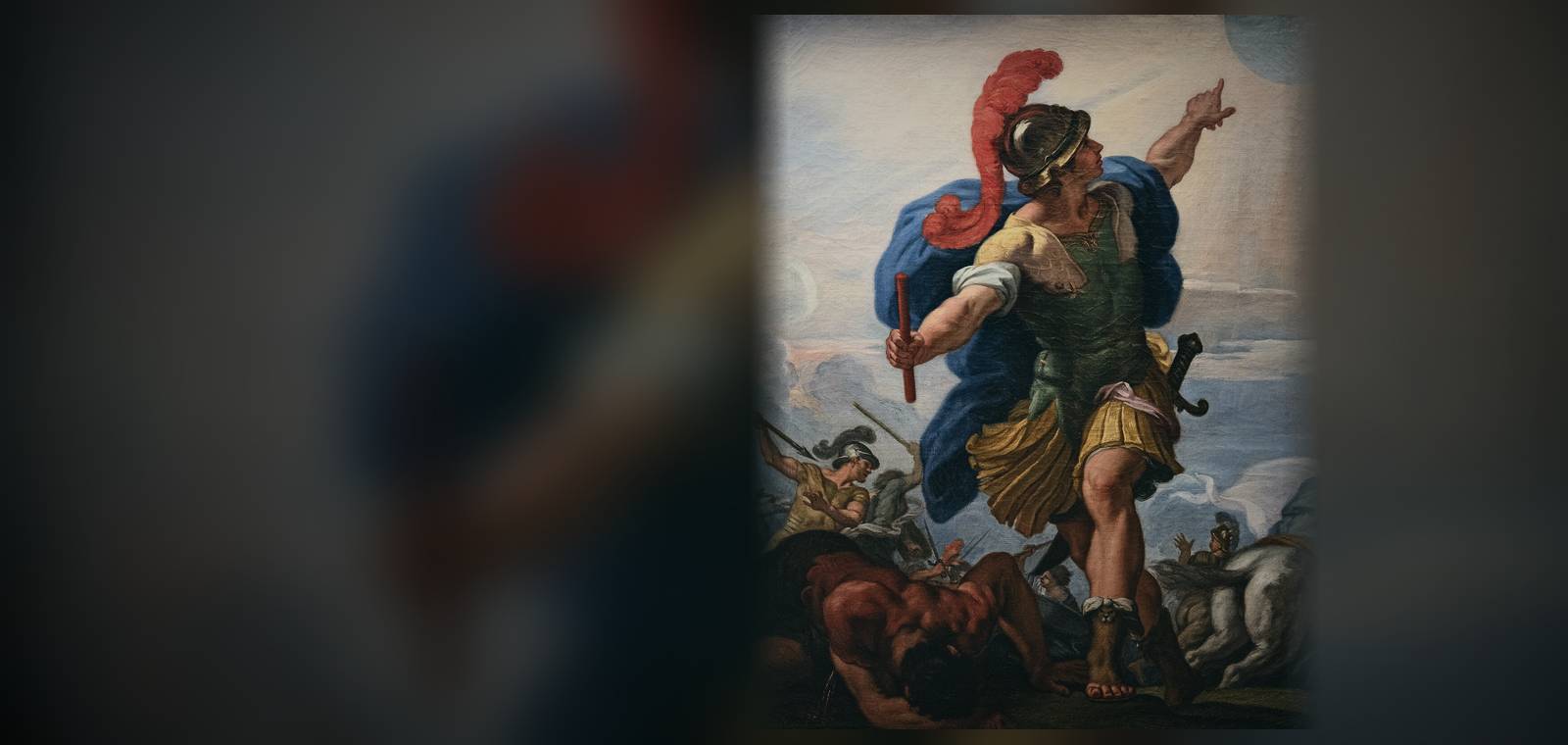
What is Joshua known for?
Joshua is Moses' assistant in Exodus and Numbers and becomes leader of Israel after Moses' death. The Book of Joshua describes the crossing of the Jordan, the fall of Jericho and the conquest and division of Canaan. He dies at 110.
Two passages matter for this site. In Joshua 10, during a battle to defend Gibeon, great stones fall from heaven on the fleeing enemy and Joshua asks the sun and moon to stand still; the text cites the lost "book of Jasher" as its source for the poem. Joshua 11 says Joshua cut off the Anakim, the giants of Hebron, from the hill country, leaving survivors only in Gaza, Gath and Ashdod, and Joshua 12 calls Og of Bashan one of the last of the Rephaim.
Most scholars do not read the Book of Joshua as a factual record; archaeology shows that sites such as Jericho and Ai were not occupied as described in the presumed period. It is read as a later national narrative.
Titles and honors
- Titles
- Leader of the Israelite tribes after Moses, in Joshua
- One of the Nine Worthies, in medieval European tradition
- Death toll and kills
- In the text Capture of Ai: 12,000 men and women killed, Joshua 8
The same story, told elsewhere
Shared story · Beginnings
Giants and the Races Before Us
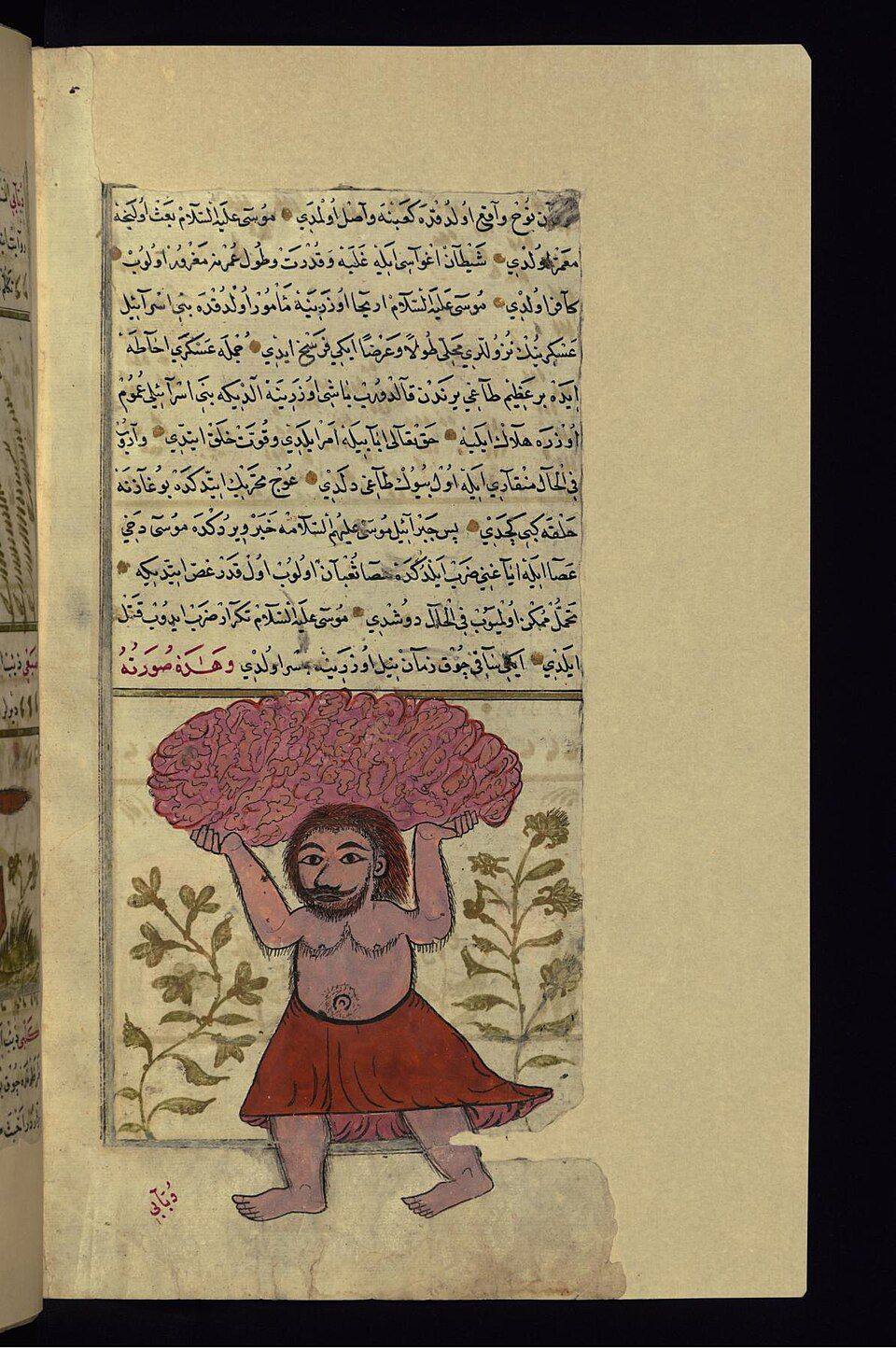
Genesis has the Nephilim, Greece has the Giants, the North has the frost giants, Arabia has the tall people of 'Ad and the Maya have Zipacna, who piled up mountains. Why does almost everyone remember giants?
Numbers 13 (the spies' report) is one telling. The same story is told 7 more times, in 4 parts of the world. Follow it:
- Hebrew BibleCanaan · c. 700-400 BCE · Ancient textTied to this page
- GreekBoeotia, Greece · c. 700 BCE · Ancient text
- Hebrew BibleJudah · c. 600-400 BCE · Ancient text
- Jewish apocalyptic (Second Temple)Judea · c. 300-200 BCE · Ancient text
- GreekGreece · 1st or 2nd century CE · Ancient text
- IslamSouthern Arabia · 7th century CE · Medieval text
- NorseIceland · c. 1220 CE · Medieval text
- K'iche' MayaHighland Guatemala · c. 1554-1558 · Retold in English
The open question: Real bones dug up and explained, a memory of older peoples, or something else that made giants a story almost everywhere? Join the debate
Shared story · Signs and numbers
The Sun Stands Still: Joshua, Hezekiah, Athena and Maui
A general shouts at the sun to stop, and it stops. A goddess holds back the dawn, a hero lassoes the sun, and a wife's curse keeps it from rising at all.
Joshua 10 (the battle at Gibeon) is one telling. The same story is told 8 more times, in 7 parts of the world. Follow it:
- GreekIthaca · c. 750-650 BCE · Ancient text
- Hebrew BibleCanaan · c. 650-550 BCE · Ancient textTied to this page
- Hebrew BibleJerusalem · c. 600-550 BCE · Ancient text
- Egyptian, reported in GreekEgypt · c. 430 BCE · Ancient text
- GreekThebes, Greece · 1st or 2nd century CE · Ancient text
- ChineseChina · c. 80 CE · Ancient text
- Hindu (Puranic)India · c. 250-500 CE · Ancient text
- Ojibwe (North America)Great Lakes region, North America · 1820 · Recorded folklore
- Maori (New Zealand)Aotearoa · 1840 · Recorded folklore
The open question: When ancient writers say the sun stood still, are they remembering something people really saw in the sky, or using the boldest picture they could find for a god's power over time? Join the debate
Mentioned on these pages
- FileAnakim
- FileBook of Jasher
- FileOg of Bashan
- FileThe Walls of Jericho
- PassageThe Book of Jasher: hybrids of animals (Book of Jasher 4:18)
- PassageThe sun stands still (Joshua 10:11–13)
- PersonAhiman, Sheshai and Talmai (sons of Anak)
- PersonGoliath
- PersonTerah
- PlaceAshdod
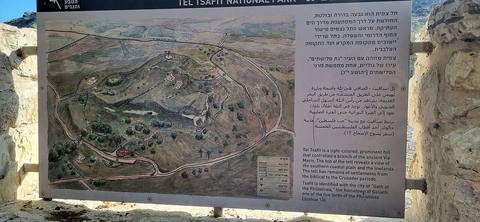
- PlaceGath
- PlaceGaza
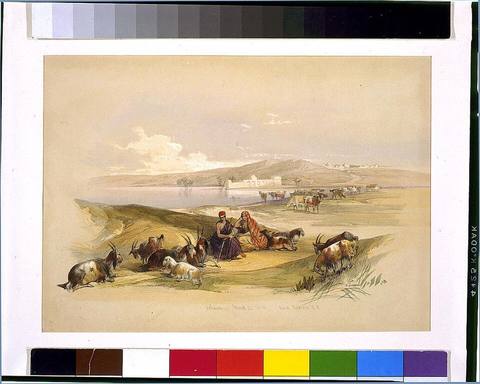
- PlaceGibeon
- PlaceHebron
- PlaceJericho
Linked people and places
Where this comes from
Comes from Joshua 10–12 (KJV), Bible Gateway. The Book of Joshua: The sixth book of the Bible, telling how Joshua led the Israelites into Canaan, including the fall of Jericho and the day the sun stood still. Scholars think it was written down long after the events, probably in the 600s to 500s BC, and archaeologists debate how much of it is history.
What this means
A story or tradition. It is documented as a story; nothing independent shows it happened.
Joshua is known from stories, scripture or tradition. The texts are real and we quote them (for example Joshua 10–12 (KJV), Bible Gateway), but nothing outside those texts shows that Joshua was real as described.
The page covers something known from myths, scripture or tradition. The texts are real and we quote them, but no independent record shows the events or beings were real.
Sources
- The Book of JoshuaThe sixth book of the Bible, telling how Joshua led the Israelites into Canaan, including the fall of Jericho and the day the sun stood still. Scholars think it was written down long after the events, probably in the 600s to 500s BC, and archaeologists debate how much of it is history.Joshua 10–12 (KJV), Bible Gateway Online copyPrimary text Archived copy, 2026-10-03
- WikipediaA free online encyclopedia written and edited by volunteers. It is a good starting point and usually lists its own sources, but anyone can change it, so we treat it as a guide to better sources, not the final word.Wikipedia, 'Joshua'Reference Archived copy, 2026-09-18
- WikipediaWikipedia, 'Battle of Ai'Reference
No public-domain picture of this person yet. We do not show drawn or generated likenesses.