Credible Theories Sign in
Hebrew Bible · Judges 13:6, 18–20

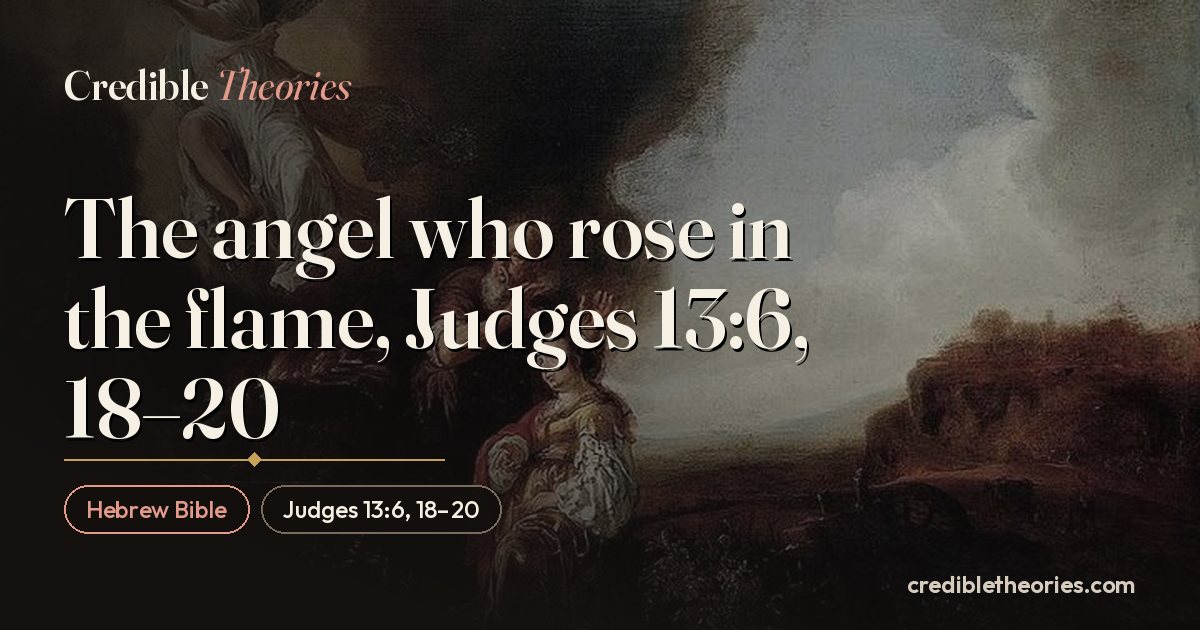
The angel who rose in the flame, Judges 13:6, 18–20

Share

In plain words

This is a short passage from Judges, a book of the Bible with stories of Israel's leaders before it had kings, written around 650 to 550 BCE. Before the strongman Samson is born, a visitor called the angel of the LORD appears. He will not give his name, and when a fire burns on the altar, he rises up to heaven in the flame. Scholars read it as a birth-announcement story.

ReferenceJudges 13:6, 18–20
Writtenc. 650–550 BCE
SetBefore Samson's birth
For it came to pass, when the flame went up toward heaven from off the altar, that the angel of the LORD ascended in the flame of the altar.

Documented · Ancient text, c. 650–550 BCE Translation: KJV

Read it literally

The visitor refuses to give his name ('seeing it is secret') and leaves by rising in a column of fire. Then Samson, a man of unnatural strength, is born.

What scholars say

Read as a birth-announcement story.

Themes From the sky Giants and hybrids
People and places hereSamson

Questions people ask about Judges 13:6, 18–20

Who were Samson's parents?

His father was Manoah, from the town of Zorah in the tribe of Dan. His mother is never named, and the text says she had been unable to have children. The angel tells her that her son must be a Nazirite from birth: no wine, nothing unclean and no razor on his head.

What does the angel's 'secret' name mean?

The Hebrew word translated 'secret' in the King James Version is pil'i, which more literally means 'wonderful' or 'beyond understanding'. It comes from the same root as 'Wonderful' in Isaiah 9:6. Many Christian readers see the angel of the LORD here as an appearance of Christ before his birth, while Jewish readers see a messenger of God.

How do Manoah and his wife react after the angel leaves?

Manoah is terrified and tells his wife they will surely die, because they have seen God (13:22). She calmly points out that God would not have accepted their offering or told them these things if he planned to kill them. Soon after, she gives birth to Samson.

Where this comes from

EvidenceDocumented

Comes from The Book of Judges, Judges 13:6, 18–20, read here in the King James Version. The seventh book of the Bible, with stories of the leaders, called judges, who led Israel before it had kings, including the strongman Samson. Scholars think the stories were collected and written down in about the 600s to 500s BC.

What this means

The text exists and is quoted from a published translation. What it describes is a separate question.

Primary records exist: an original document, a published text, an official file or a dated report. We link to them. This level says the record exists and what it says, not that every claim in it is true.

See all five labels

Sources

  1. The King James BibleThe English Bible made for King James I and first printed in 1611; the wording most people know comes from a 1769 update. It is out of copyright, which is why we quote it. The 1611 printing also had the Apocrypha, extra books kept in Catholic and Orthodox Bibles.King James Version (1611; standard 1769 text), with ApocryphaPrimary text Archived copy, 2026-10-03

Scholarly dates are rounded. The wording follows the named public-domain translation.

More from Hebrew Bible

The story before and after this one, and what each shares with The angel who rose in the flame.

Photo credits
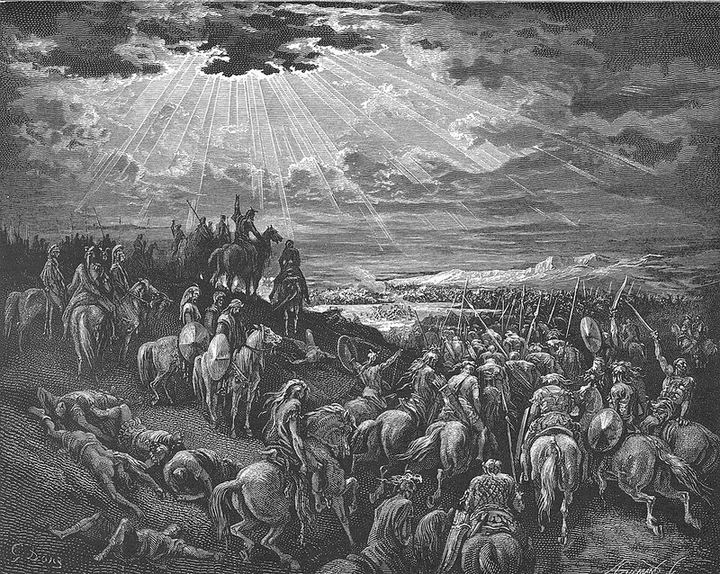
‹ Before thisThe sun stands stillJoshua 10:11–13

During a battle, the text says God threw great stones from the sky on the enemy.

Also about Ancient IsraelSame theme: From the sky
Photo credits
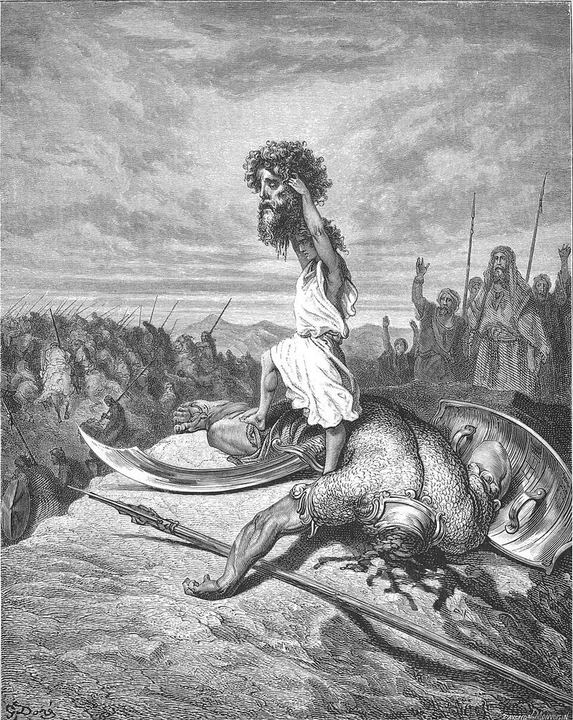
Next ›Goliath1 Samuel 17:4

It introduces Goliath of Gath, a champion fighter of the Philistines.

Same theme: Giants and hybrids

Updated

Discussion