Credible Theories Sign in

The record

Mohenjo-daro lies on a strip of land beside the Indus in Sindh, now in Pakistan. Its name is usually given as the Mound of the Dead. A Buddhist stupa and monastery stand on top of it, and they were what R. D. Banerji came to dig. John Marshall, who directed the Archaeological Survey of India, credits Banerji with having discovered, if not Mohenjo-daro itself, at any rate its high antiquity: while clearing the Buddhist remains, Banerji came on seals inscribed in an undecipherable script already known from Harappa. UNESCO dates the discovery to 1922.

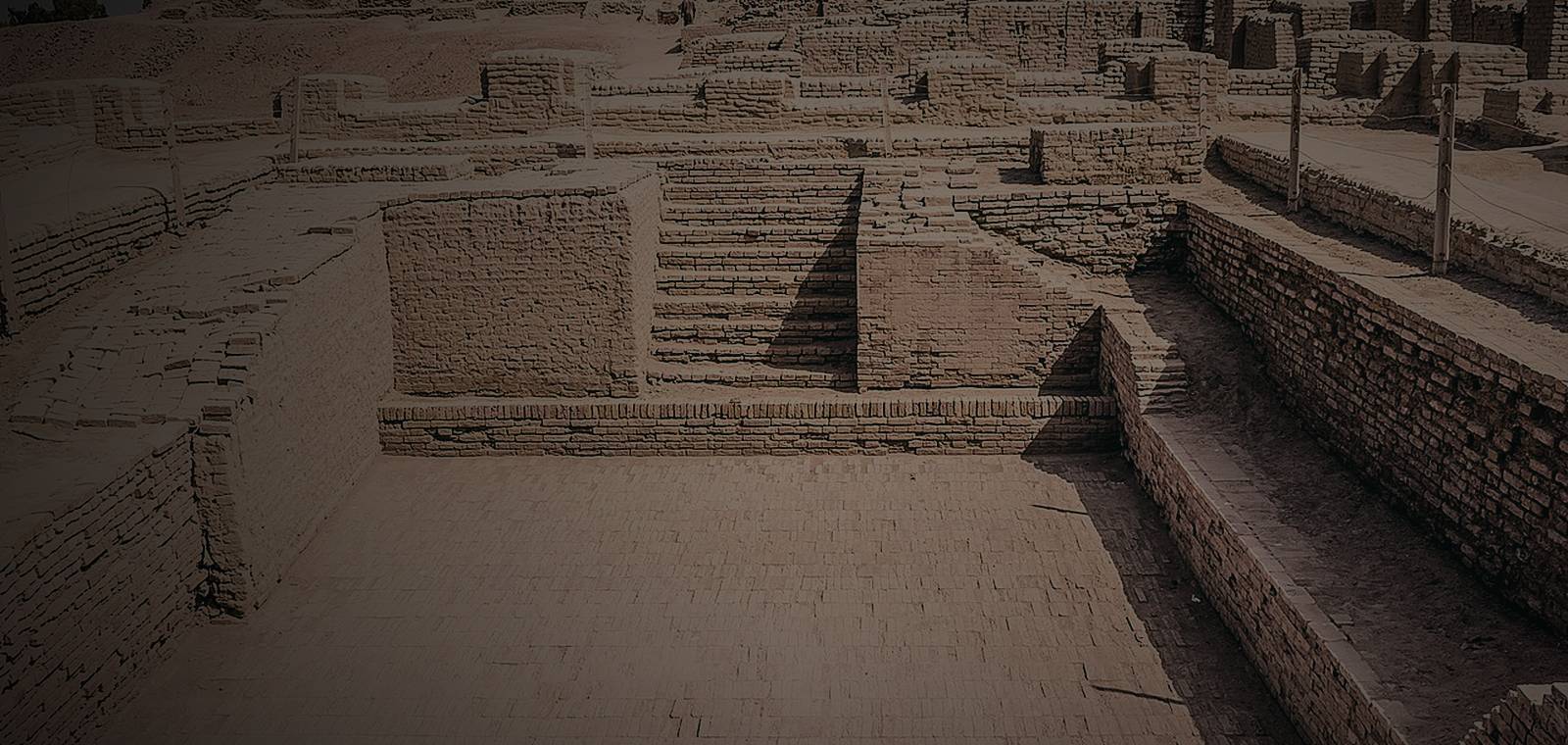
What the diggers found was a planned city. UNESCO calls it the best preserved urban settlement in South Asia, mostly built of baked brick, with a citadel to the west, a lower town by the river, public baths, a large granary and an elaborate drainage system. Its Great Bath is a tank some 39 feet long and 23 feet broad, sunk about 8 feet, with steps at either end. Ernest Mackay found that it was sealed on the outside with a layer of bitumen about an inch thick.

Marshall wrote in 1931 that the houses, with their ubiquitous wells and bathrooms and elaborate systems of drainage, showed a comfort unexampled in other parts of the then civilized world. He also noted that the people wrote, but that their legends were waiting to be deciphered. Later books told of a massacre in the last days of the city. George Dales of the Penn Museum counted in 1964 some 37 skeletons from nine years of digging, none of them inside the fortified citadel, and found no proof that they even belonged to one moment.
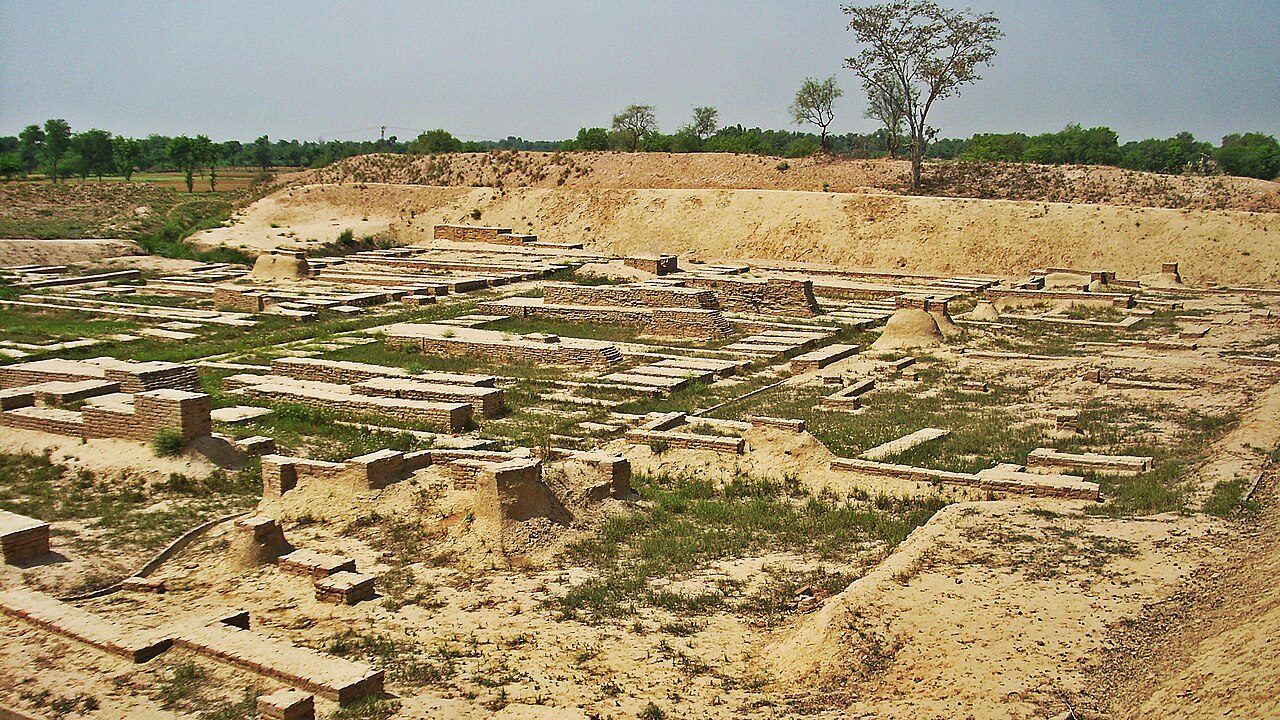
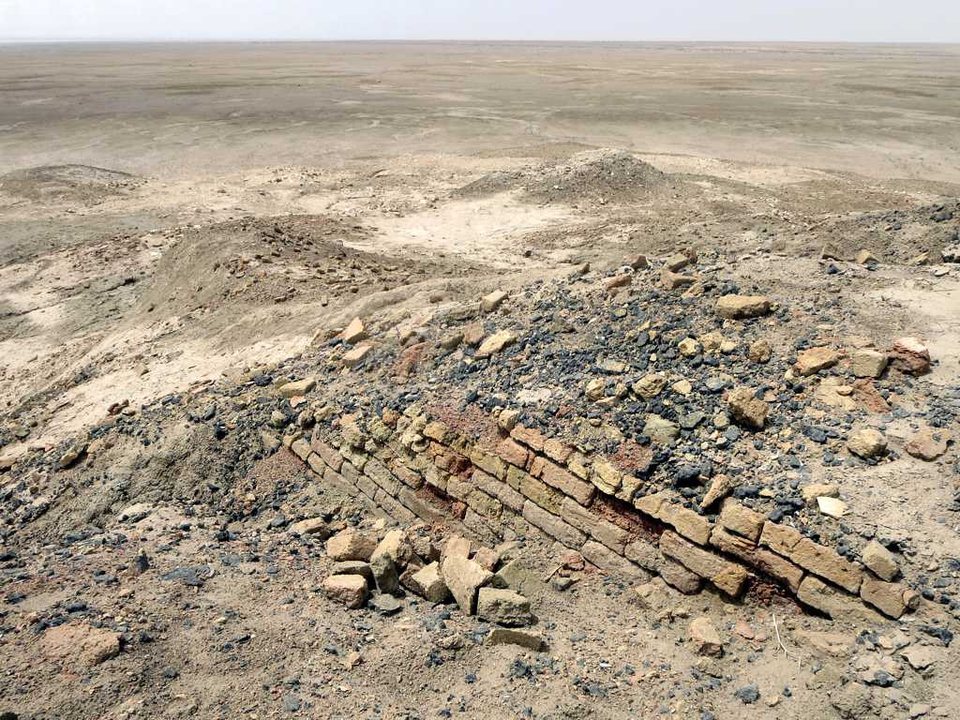
Questions people ask about Mohenjo-daro

How was the Great Bath filled and drained?

From a well in a nearby chamber and perhaps other wells. Waste water ran out through a covered drain near the south-west corner, with a corbelled roof about 6 feet 6 inches high.

Where did its bitumen come from?

Marshall thought most likely from Isa Khel on the Indus or from the Marri Hills or Sanni in Baluchistan, though it might have come by water from Hit on the Euphrates.

Where exactly is Mohenjo-daro?

On a strip of land called the Island, between the main bed of the Indus and the Western Nara loop, about 7 miles by road from Dokri and 25 from Larkana.

The open question

Still strange: The city with drains.

John Marshall called that comfort unexampled in the rest of the world at the time, and the people who built it left writing no one can read.

Harappa →
  1. Step 1 of 4 · This fileMohenjo-daro
  2. Step 2 of 4 · Next fileHarappa
  3. Step 3 of 4 · Next fileEridu: The City Where Kingship First Came From Heaven
  4. Step 4 of 4 · Next fileShuruppak: The Flood Hero's City and Its Real Flood Layer
About these videos

Found by a YouTube search for this topic, not checked by us. The player loads from YouTube only when you press play.

Where this comes from

EvidenceDocumented

Comes from John Marshall, ed., Mohenjo-daro and the Indus Civilization, vol. 1 (London: Arthur…. Internet Archive: A nonprofit digital library in San Francisco, founded in 1996, that holds millions of scanned books, papers and recordings. A scan there shows the pages of a real printed book or document.

What this means

Records exist and are linked below. This page says what the records say.

For Mohenjo-daro, the original record exists and is linked: John Marshall, ed., Mohenjo-daro and the Indus Civilization, vol. 1 (London: Arthur…. That tells you the record is real and what it says. It does not mean every claim in it is true.

Primary records exist: an original document, a published text, an official file or a dated report. We link to them. This level says the record exists and what it says, not that every claim in it is true.

See all five labels

Sources

  1. UNESCO World Heritage CentreThe official website of the World Heritage list kept by UNESCO, the United Nations agency for education, science and culture. Each place's page gives an expert-checked description of the site and why it matters.UNESCO World Heritage Centre, "Archaeological Ruins at Moenjodaro" (site 138)
  2. Internet ArchiveA nonprofit digital library in San Francisco, founded in 1996, that holds millions of scanned books, papers and recordings. A scan there shows the pages of a real printed book or document.John Marshall, ed., Mohenjo-daro and the Indus Civilization, vol. 1 (London: Arthur Probsthain, 1931), Digital Library of IndiaPrimary text
  3. Penn MuseumThe University of Pennsylvania Museum of Archaeology and Anthropology in Philadelphia, which has run digs at Ur and other ancient sites. Its Expedition magazine publishes articles by its researchers.George F. Dales, "The Mythical Massacre at Mohenjo-Daro", Expedition 6, no. 3 (Penn Museum, 1964)

Quotations come from public-domain translations. A book in our Library links to its Library page; other links open the free online copy or the reference page.

Updated

Credible or not?

Tap one to see how other readers voted.

Discussion