Credible Theories Sign in

The record

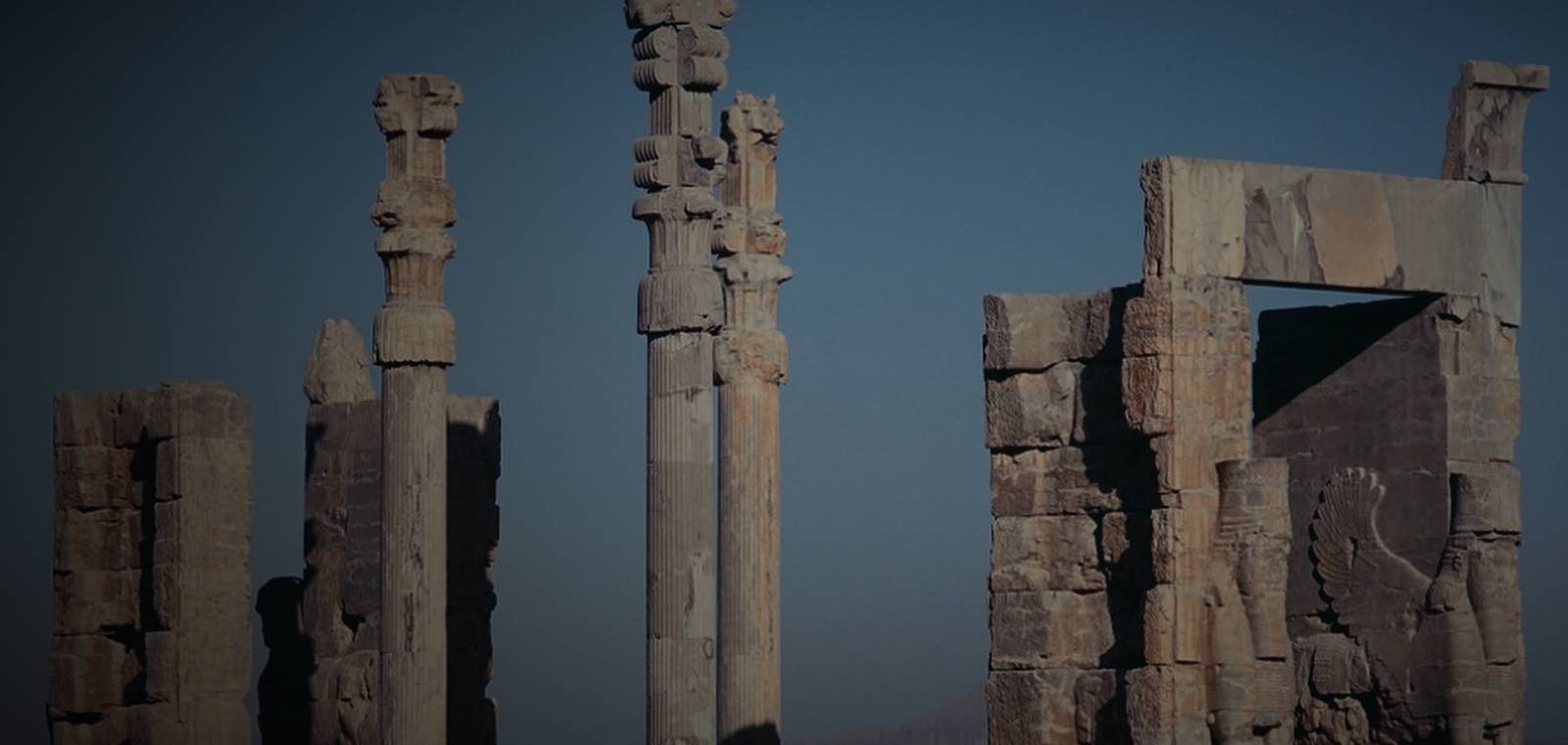
UNESCO says Persepolis was founded by Darius I in 518 BC as the capital of the Achaemenid Empire. Its great terrace sits at the foot of Kuh-e Rahmat, the Mountain of Mercy, in south-western Iran, and later kings kept adding palaces to it.

When Alexander took the city, Diodorus Siculus writes, he called it the most hateful of the cities of Asia and gave it to his soldiers to plunder, all but the palaces. On the citadel terrace his men found the treasure gathered since Cyrus, valued at one hundred and twenty thousand talents. Alexander sent for mules and three thousand pack camels to carry it off. Diodorus describes the citadel itself as ringed by a triple wall, the third sixty cubits high, with bronze doors in each side.

Then came the fire. At a victory feast, both Diodorus and Plutarch say, an Athenian woman named Thaïs urged the drunken guests to burn the palace, in revenge for the Persian king Xerxes, who had burned Athens. Diodorus has her throw the first torch after the king; Plutarch says Alexander led the way with a garland on his head and a torch in his hand. Plutarch adds that some writers said the burning was planned, However, it is agreed that Alexander speedily repented and gave orders to put out the fire.
Questions people ask about Persepolis

How long did Alexander stay at Persepolis?

Plutarch says he spent four months there because it was winter, wishing to refresh his soldiers.

Did Alexander spare a statue of Xerxes?

Plutarch tells of a great statue of Xerxes knocked over by the crowd. Alexander stopped and spoke to it as if it were alive, asking whether to leave it lying or set it up again, then passed on in silence.

What does the name Kuh-e Rahmat mean?

UNESCO translates it as the Mountain of Mercy, the mountain at whose foot the terrace of Persepolis was built.

The open question

Still strange: A fire lit at a feast.

Plutarch adds that other writers thought it was planned, and that Alexander quickly ordered the fire put out.

Bundahishn: What Does the Zoroastrian Creation Story Say? →
  1. Step 1 of 4 · This filePersepolis
  2. Step 2 of 4 · Next fileBundahishn: What Does the Zoroastrian Creation Story Say?
  3. Step 3 of 4 · Next fileYima and the Vara: An Ancient Shelter Against the Ice?
  4. Step 4 of 4 · Next fileThe Library of Alexandria
About these videos

Found by a YouTube search for this topic, not checked by us. The player loads from YouTube only when you press play.

Where this comes from

EvidenceDocumented

Comes from Diodorus Siculus, Library of History 17.70-72, trans. C. Bradford Welles (Loeb Classical…. LacusCurtius: LacusCurtius, a website of Greek and Roman texts and translations, many from the Loeb Classical Library, put online and carefully proofread by Bill Thayer and hosted on a University of Chicago server.

What this means

Records exist and are linked below. This page says what the records say.

For Persepolis, the original record exists and is linked: Diodorus Siculus, Library of History 17.70-72, trans. C. Bradford Welles (Loeb Classical…. That tells you the record is real and what it says. It does not mean every claim in it is true.

Primary records exist: an original document, a published text, an official file or a dated report. We link to them. This level says the record exists and what it says, not that every claim in it is true.

See all five labels

Sources

  1. LacusCurtiusLacusCurtius, a website of Greek and Roman texts and translations, many from the Loeb Classical Library, put online and carefully proofread by Bill Thayer and hosted on a University of Chicago server.Diodorus Siculus, Library of History 17.70-72, trans. C. Bradford Welles (Loeb Classical Library, 1963), LacusCurtiusPrimary text
  2. Plutarch's LivesLife stories of famous Greeks and Romans written by Plutarch, a Greek writer and priest at Delphi, around AD 100 to 120. They are full of personal detail and anecdotes, not all of them checked. Bernadotte Perrin's English version came out from 1914.Plutarch, Life of Alexander 37-38, trans. Bernadotte Perrin (Loeb Classical Library, 1919), LacusCurtiusPrimary text
  3. UNESCO World Heritage CentreThe official website of the World Heritage list kept by UNESCO, the United Nations agency for education, science and culture. Each place's page gives an expert-checked description of the site and why it matters.UNESCO World Heritage Centre, "Persepolis" (site 114)

Quotations come from public-domain translations. A book in our Library links to its Library page; other links open the free online copy or the reference page.

Updated

Credible or not?

Tap one to see how other readers voted.

Discussion