The record
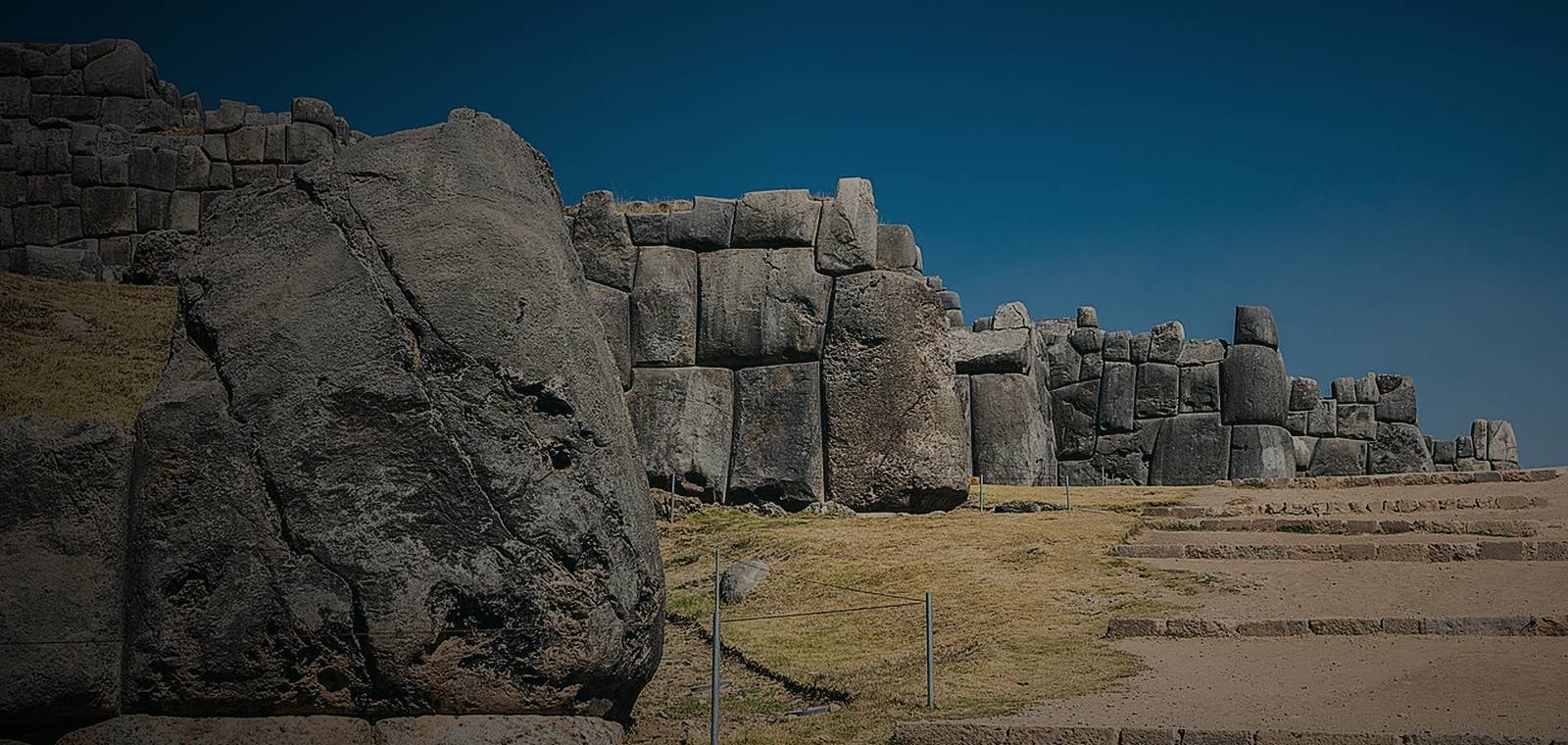
Sacsayhuamán is a walled complex on a hill above Cusco, the old Inca capital in the Andes of Peru. Its best-known part is three long terraced walls that zigzag along the slope, built of huge irregular blocks of stone that fit together with no mortar. Most of the rest, the towers and buildings inside, is gone.
The fullest early account was written by Garcilaso de la Vega, who grew up in Cusco and published his Royal Commentaries of the Incas in 1609. He says the work was begun by the Inca Tupac Yupanqui, or by his father Pachacutec, who left a plan and a model; that it took fifty years; and that it was still not finished under Huayna Capac when civil war and the Spanish arrived. In Clements Markham's 1871 translation he wrote: But it cannot be conceived how these Indians, without proper engines or tools, could work, dress, raise and lower enormous rocks (which are more like pieces of a mountain than the stones of an edifice), and fix them so accurately in their places.
He added that for this reason the work was put down to enchantment, and that a priest who visited asked whether the stones could have been placed without the help of the devil.
Garcilaso also records what happened next. The Spaniards pulled down the buildings and the smaller walls to get cut stone for their own houses in Cusco, so fast, he says, that even he remembered only ruins. The three great outer walls were left because their stones were too big to move.
In the 1980s the architect Jean-Pierre Protzen went to the Inca quarries to find out how it was done, cutting stone himself. As summed up in the journal Science Frontiers, he found that quarrying and dressing the stones were easy with the stone hammers lying around the quarries in great numbers, and that the tight joints could be made by pounding out a hollow in the stone below, lowering the new block, lifting it and pounding again until it sat snug. What he could not fully explain was how the biggest blocks were moved and lifted during that trial and error, and how fine-dressed stones were carried from a quarry about 35 kilometers away without drag marks.