Credible Theories Sign in
New Testament · Hebrews 13:2

Angels unawares, Hebrews 13:2

Share

In plain words

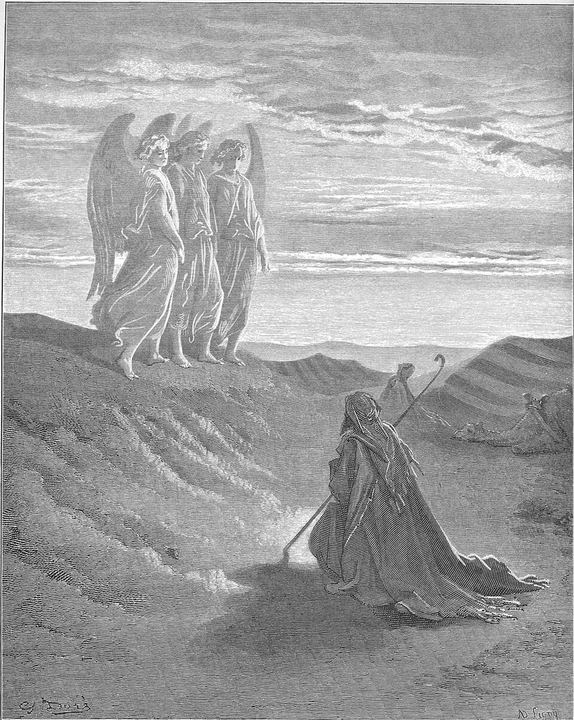
This is a short passage from the Letter to the Hebrews, a New Testament letter probably written in the second half of the 1st century AD by an unknown writer. It tells readers to welcome strangers, because some people have hosted angels without knowing it. Scholars say the line points back to the story of Abraham's three visitors.

ReferenceHebrews 13:2
Writtenc. 60–90 CE
SetTimeless
Be not forgetful to entertain strangers: for thereby some have entertained angels unawares.

Documented · Ancient text, c. 60–90 CE Translation: KJV

Read it literally

They walk among us and pass as human. The early church took this as a fact.

What scholars say

Points back to Abraham's three visitors.

Themes From the sky
People and places hereAbraham (Abram)

Questions people ask about Hebrews 13:2

Who wrote the Letter to the Hebrews?

Nobody knows for sure. The letter never names its author. Church tradition long credited Paul, and the King James Version titles it as his, but most modern scholars disagree because its Greek style and ideas differ from his known letters. Early guesses included Barnabas and Apollos, and the third-century writer Origen said only God knows who wrote it.

Which Bible stories show people hosting angels without knowing it?

Genesis 18 tells of Abraham feeding three travelers at Mamre, and in Genesis 19 Lot takes two angels into his home at Sodom. In Judges 13, Manoah offers a meal to a visitor he only later realizes is an angel. The Book of Tobit has the angel Raphael travel with Tobias under the human name Azarias.

How do Christians apply Hebrews 13:2 today?

Many churches read it as a call to welcome strangers, travelers and refugees. The same chapter goes on to ask readers to remember prisoners and people who are mistreated. Preachers often pair it with Matthew 25:35, where Jesus says, "I was a stranger, and ye took me in," treating kindness to a guest as kindness to God.

Where this comes from

EvidenceDocumented

Comes from The Letter to the Hebrews, Hebrews 13:2, read here in the King James Version. A New Testament letter, probably written in the second half of the 1st century AD; nobody knows who wrote it. It urges readers to welcome strangers, since some have 'entertained angels unawares'.

What this means

The text exists and is quoted from a published translation. What it describes is a separate question.

Primary records exist: an original document, a published text, an official file or a dated report. We link to them. This level says the record exists and what it says, not that every claim in it is true.

See all five labels

Sources

  1. The King James BibleThe English Bible made for King James I and first printed in 1611; the wording most people know comes from a 1769 update. It is out of copyright, which is why we quote it. The 1611 printing also had the Apocrypha, extra books kept in Catholic and Orthodox Bibles.King James Version (1611; standard 1769 text), with ApocryphaPrimary text Archived copy, 2026-10-03

Scholarly dates are rounded. The wording follows the named public-domain translation.

More from New Testament

Two more stories, and what each shares with Angels unawares.

Photo credits
RelatedThree men who eat lunchGenesis 18:1–8; 19:1–11

Three men appear to Abraham, and they eat a meal with him under a tree.

Also about Abraham (Abram)Same theme: From the sky
Photo credits
Next ›Angels who left their habitationJude 6, 14–15; 2 Peter 2:4

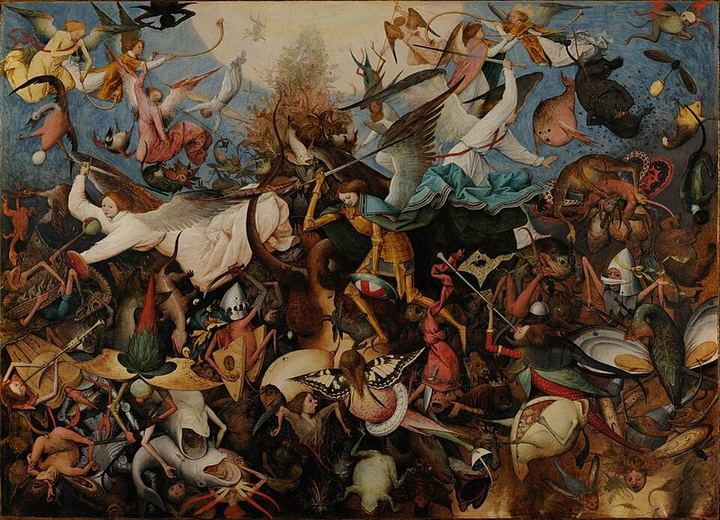
It says some angels left their proper home, and God keeps them in chains under darkness until a great day of judgment.

Same theme: From the sky

Updated

Discussion