












What is Sodom known for?
Sodom is one of the 'cities of the plain' in Genesis, near the Dead Sea. In Genesis 19, two angels visit Lot, Abraham's nephew. They look fully human and eat a meal, then strike a hostile crowd with blindness and lead Lot's family out. The LORD rains 'brimstone and fire' on Sodom and Gomorrah, and Lot's wife looks back and becomes a pillar of salt.
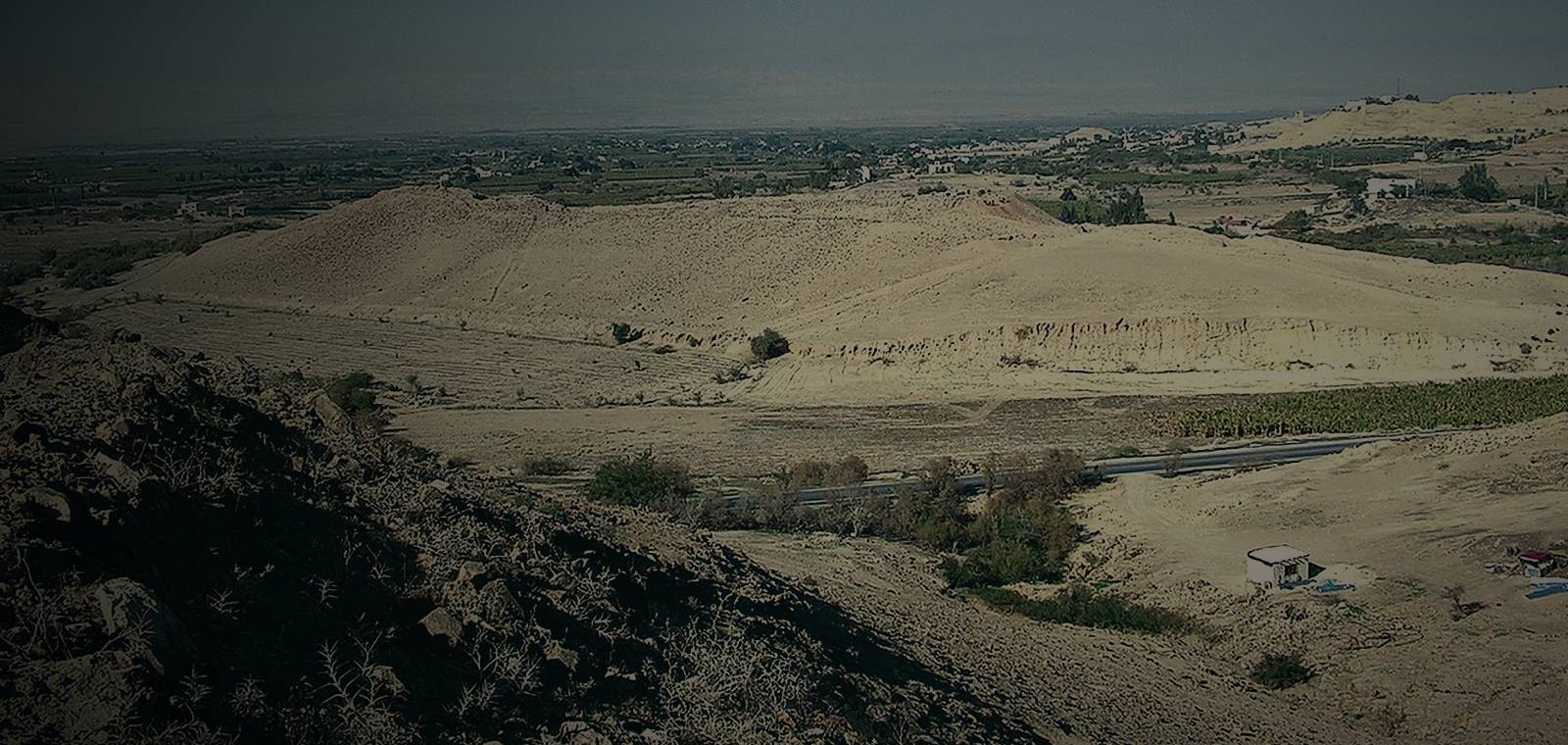
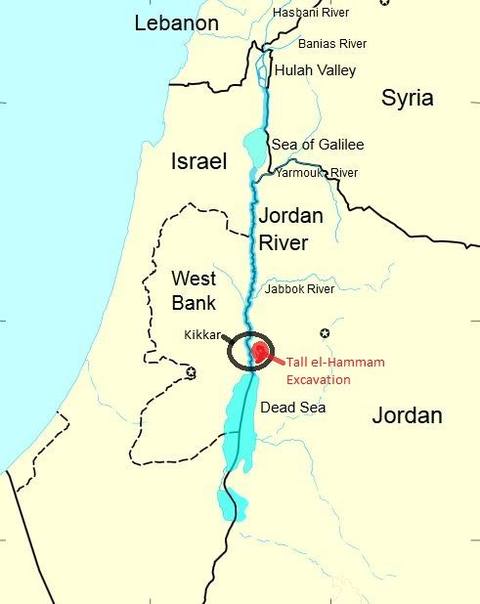
The story became a byword for divine judgment in Judaism, Christianity and Islam, where the Qur'an tells the story of Lut. The city's site has never been confirmed. Older proposals placed it near the southern end of the Dead Sea, including the Early Bronze Age sites of Bab edh-Dhra and Numeira. Excavators at Tall el-Hammam, northeast of the Dead Sea, argue for their site instead.
A 2021 paper claiming that a cosmic airburst destroyed Tall el-Hammam, and possibly inspired the Sodom story, was retracted in 2025. Mainstream scholars treat Sodom as a story of moral and religious meaning, whatever memories of real disasters may lie behind it.
Mentioned on these pages
Linked people and places
Where this comes from
Comes from Genesis 19 (KJV), Bible Gateway. The Book of Genesis: The first book of the Bible, telling of Creation, Adam and Eve, Noah's Flood and the families of Abraham, Isaac and Jacob. Scholars think it was written and edited over several centuries and finished by roughly 500 to 400 BC. The oldest surviving copies are pieces of the Dead Sea Scrolls.
What this means
A story or tradition. It is documented as a story; nothing independent shows it happened.
Sodom is known from stories, scripture or tradition. The texts are real and we quote them (for example Genesis 19 (KJV), Bible Gateway), but nothing outside those texts shows that Sodom was real as described.
The page covers something known from myths, scripture or tradition. The texts are real and we quote them, but no independent record shows the events or beings were real.
Sources
- The Book of GenesisThe first book of the Bible, telling of Creation, Adam and Eve, Noah's Flood and the families of Abraham, Isaac and Jacob. Scholars think it was written and edited over several centuries and finished by roughly 500 to 400 BC. The oldest surviving copies are pieces of the Dead Sea Scrolls.Genesis 19 (KJV), Bible Gateway Online copyPrimary text Archived copy, 2026-07-02
- Encyclopaedia BritannicaAn encyclopedia first published in Scotland in 1768 and now online. Its articles are written and checked by named experts and editors, which makes it a reliable source for basic facts.Encyclopaedia Britannica, 'Lot'Reference Archived copy, 2026-09-10
- WikipediaA free online encyclopedia written and edited by volunteers. It is a good starting point and usually lists its own sources, but anyone can change it, so we treat it as a guide to better sources, not the final word.Wikipedia, 'Sodom and Gomorrah'Reference Archived copy, 2026-09-30
No public-domain picture of this place yet. We do not show drawn or generated likenesses.