How the rabbit hole works. Start with anything that grabs you, say UFOs. Every person, place and document a page mentions links to its own page, so a UFO file leads to a witness, the witness leads to the people who investigated the case, and it keeps going.
The path you take shows in the bar under the top menu on every page, so you can step back any time or climb out and start again.
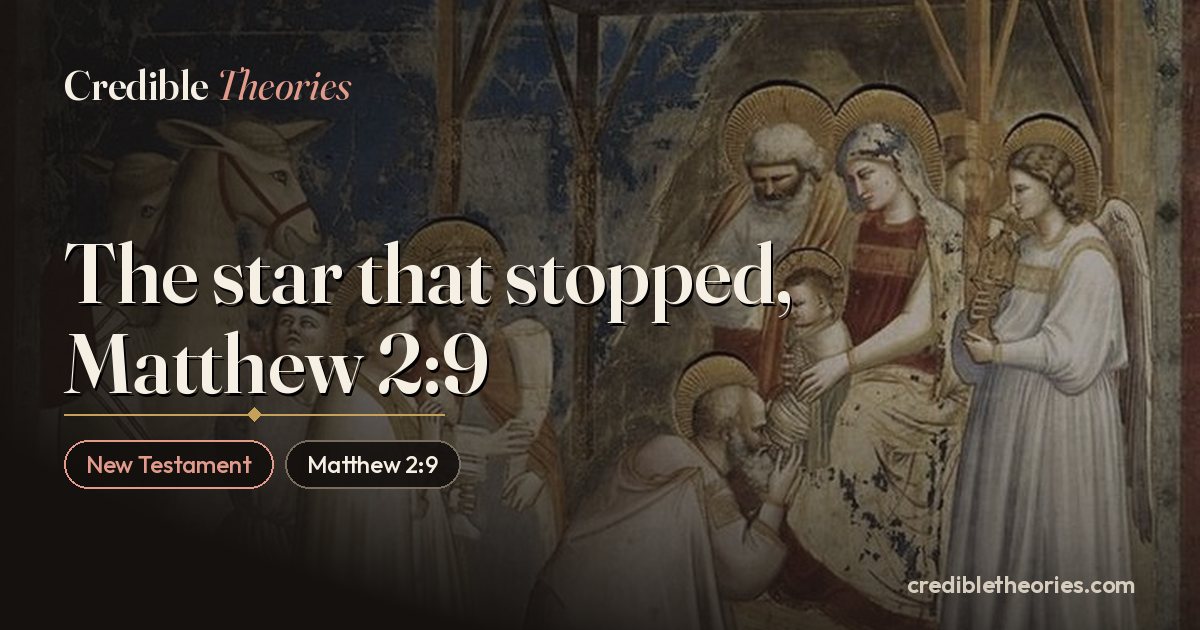
This is a short passage from Matthew, one of the four Gospels about the life of Jesus, written around 80 to 90 CE. In the story, a star the magi saw in the east goes ahead of them and then stops over the place where the young child is. Scholars have suggested it was a comet, a meeting of planets in the sky, or a literary sign.
ReferenceMatthew 2:9
Writtenc. 80–90 CE
Setc. 6–4 BCE
And, lo, the star, which they saw in the east, went before them, till it came and stood over where the young child was.
Documented · Ancient text, c. 80–90 CE Translation: KJV
AdvertisementAd space
Read it literally
Stars do not move ahead of travelers and stop over one house. Something guided the magi, who were Persian astronomers.
What scholars say
Proposed as a comet, a planetary conjunction, or a literary sign.
Themes From the sky
Questions people ask about Matthew 2:9
Who were the magi?
The Greek word magoi first named Persian priests and later anyone skilled in dream reading or stargazing. Matthew never says there were three or that they were kings. The number three comes from their three gifts of gold, frankincense and myrrh. Later Western tradition named them Caspar, Melchior and Balthasar.
What did Johannes Kepler think the star was?
The astronomer Johannes Kepler suggested a link to a triple conjunction of Jupiter and Saturn in 7 BCE, when the two planets passed close to each other three times in one year. Other proposals include a comet that Chinese astronomers recorded around 5 BCE. No single answer has won general agreement.
Is the star in the other gospels?
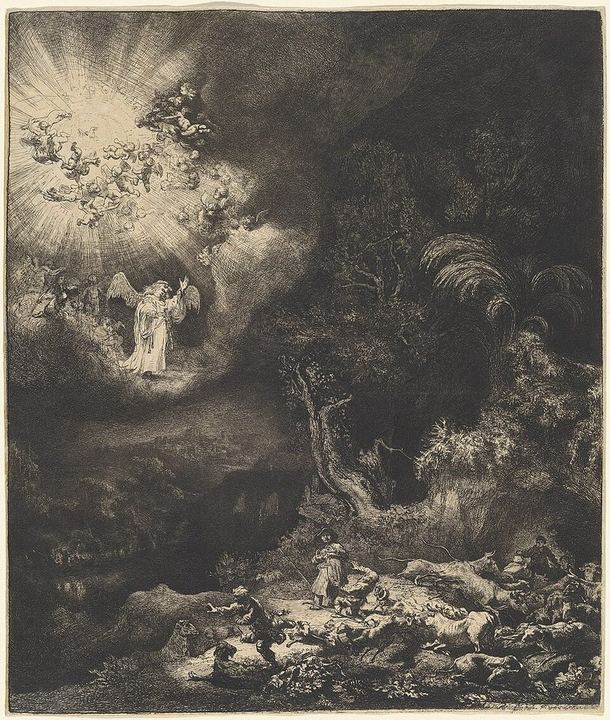
No. Only Matthew tells of the star and the magi. Luke's account of Jesus' birth has shepherds, angels and a manger instead, while Mark and John have no birth stories at all. Many scholars link Matthew's star to Numbers 24:17, where Balaam foresees a star rising out of Jacob.
Where this comes from
EvidenceDocumented
Comes fromThe Gospel of Matthew, Matthew 2:9, read here in the King James Version. One of the four Gospels, the books about the life of Jesus, and the first book of the New Testament. Scholars usually date it to about AD 80 to 90.
What this means
The text exists and is quoted from a published translation. What it describes is a separate question.
Primary records exist: an original document, a published text, an official file or a dated report. We link to them. This level says the record exists and what it says, not that every claim in it is true.
The King James BibleThe English Bible made for King James I and first printed in 1611; the wording most people know comes from a 1769 update. It is out of copyright, which is why we quote it. The 1611 printing also had the Apocrypha, extra books kept in Catholic and Orthodox Bibles.King James Version (1611; standard 1769 text), with ApocryphaPrimary textArchived copy, 2026-10-03
Scholarly dates are rounded. The wording follows the named public-domain translation.
More from New Testament
Two more stories, and what each shares with The star that stopped.