Credible Theories Sign in
Enoch, Jubilees and others · 1 Enoch 72–82

Uriel's astronomy lessons, 1 Enoch 72–82

Share

In plain words

This is a short passage from the Astronomical Book, the oldest part of the Book of Enoch, dated about 300 BC or earlier. The Book of Enoch is a set of Jewish writings about Noah's great-grandfather Enoch. Here Enoch introduces his account of how the lights in the sky move, as shown to him by Uriel, a holy angel who guides them.

Reference1 Enoch 72–82
WrittenAstronomical Book, c. 300 BCE or earlier
SetEnoch's journeys
The book of the courses of the luminaries of the heaven, the relations of each… which Uriel the holy angel, who was with me, who is their guide, showed me.

Documented · Ancient text, c. 300 BCE Translation: R. H. Charles, 1917

Read it literally

A 364-day calendar dictated by an angel, used by the Qumran community, which fought the Temple over it.

What scholars say

The oldest part of 1 Enoch; Qumran copies are longer than the Ethiopic.

Themes Looks like technology Taken up alive
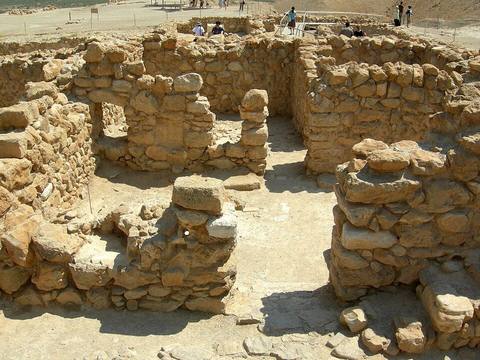
People and places hereQumran
The same story, told elsewhere

Shared story · Beginnings

Beings Who Taught Humanity the Arts

Fallen angels taught metalwork and makeup, a fish-man from the sea taught writing and law, Prometheus gave fire and numbers, and Thoth invented letters. Many cultures say civilization was a gift from outside.

1 Enoch, Book of the Watchers is one telling. The same story is told 6 more times, in 4 parts of the world. Follow it:

  1. GreekAthens · c. 460-430 BCE · Ancient text
  2. Greek, about EgyptAthens, telling an Egyptian story · c. 370 BCE · Ancient text
  3. ChineseChina · c. 4th to 3rd century BCE · Ancient text
  4. Jewish apocalyptic (Second Temple)Judea · c. 300-200 BCE · Ancient textTied to this page
  5. Babylonian, retold in GreekBabylon · c. 280 BCE · Ancient text
  6. Jewish (Second Temple)Judea · c. 160-150 BCE · Ancient text
  7. IslamArabia · 7th century CE · Medieval text

The open question: Did people credit outsiders for their own inventions, or is there a reason so many say they were taught? Join the debate

Questions people ask about 1 Enoch 72–82

What is special about the 364-day calendar?

A year of 364 days is exactly 52 weeks, so every date falls on the same day of the week each year. Festivals never land on the Sabbath by accident. The Book of Jubilees uses the same calendar. The Astronomical Book also describes a lunar year of 354 days and compares the two.

Who is the angel Uriel?

Uriel's name is usually explained as 'God is my light'. In 1 Enoch 20 he is one of the holy angels who watch over the world, and here he is the guide of the heavenly lights. In 2 Esdras, also called 4 Ezra, Uriel is the angel who answers Ezra's hard questions about suffering and justice.

Does Enoch's astronomy match Babylonian science?

Scholars such as Otto Neugebauer studied the Astronomical Book closely and found its scheme simple next to later Babylonian math. Others have noted parallels with the Babylonian star text MUL.APIN, such as a schematic 360-day year and a longest day twice as long as the shortest. Many think Jewish writers adapted ideas learned during or after the exile.

Used on these files

  • The Book of Enoch: What Is It, and Why Isn't It in Most Bibles? DocumentedA book quoted by name in the New Testament dropped out of nearly every Bible, yet stayed whole for over a thousand years in Ge'ez, the classical language of Ethiopia. Parts of it, written under Enoch's name, were later found among the Dead Sea Scrolls. It tells of fallen angels, giants and journeys through heaven. Why was it lost?
  • Uriel: Who Is the Angel Who Taught Enoch the Stars? Myth or legendThe oldest part of the Book of Enoch reads less like a prophecy than an astronomy textbook, and its teacher is an angel named Uriel. He explains a 364-day calendar, the gates the sun rises through, and the phases of the moon. Why would anyone give a calendar dispute an angel as the authority?

Where this comes from

EvidenceDocumented

Comes from The Book of Enoch (1 Enoch), 1 Enoch 72–82, read here in the R. H. Charles. Jewish writings about Enoch, Noah's great-grandfather, the oldest parts from about 300 to 200 BC. It tells of angels called Watchers who came down to earth. Full copies survived only in Ethiopia, whose church still counts it as scripture.

What this means

The text exists and is quoted from a published translation. What it describes is a separate question.

Primary records exist: an original document, a published text, an official file or a dated report. We link to them. This level says the record exists and what it says, not that every claim in it is true.

See all five labels

Sources

  1. The Book of Enoch (1 Enoch)Jewish writings about Enoch, Noah's great-grandfather, the oldest parts from about 300 to 200 BC. It tells of angels called Watchers who came down to earth. Full copies survived only in Ethiopia, whose church still counts it as scripture. Pieces in Aramaic were found among the Dead Sea Scrolls in 1952.R. H. Charles, The Book of Enoch (SPCK, 1917; first ed. 1912) Online copyPrimary text Archived copy, 2026-08-02
  2. The Book of Enoch (1 Enoch)The Book of Enoch, trans. R. H. Charles, The Book of Enoch (1917) Online copyPrimary text Archived copy, 2026-08-02
  3. The Book of Enoch (1 Enoch)1 Enoch 20; 72–82, trans. R. H. Charles, The Book of Enoch (1917) Online copyPrimary text Archived copy, 2026-08-02

Scholarly dates are rounded. The wording follows the named public-domain translation.

More from Enoch, Jubilees and others

The story before and after this one, and what each shares with Uriel's astronomy lessons.

Photo credits
‹ Before thisJourneys to the ends of the earth1 Enoch 17–36

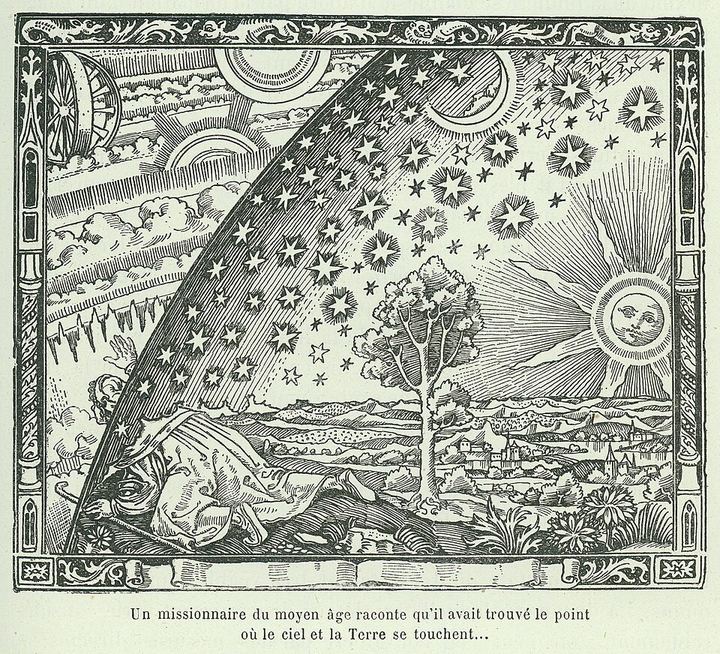
On his journeys, Enoch sees seven stars like great burning mountains.

Also about NoahSame theme: Taken up alive
Photo credits
Next ›Noah's strange birth1 Enoch 106:1–6

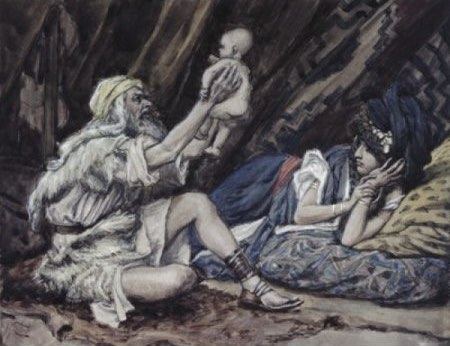
It describes baby Noah with hair white as wool and eyes that lit up the whole house like the sun.

Also about Noah

Updated

Discussion