Bevington's Walk and the Photograph
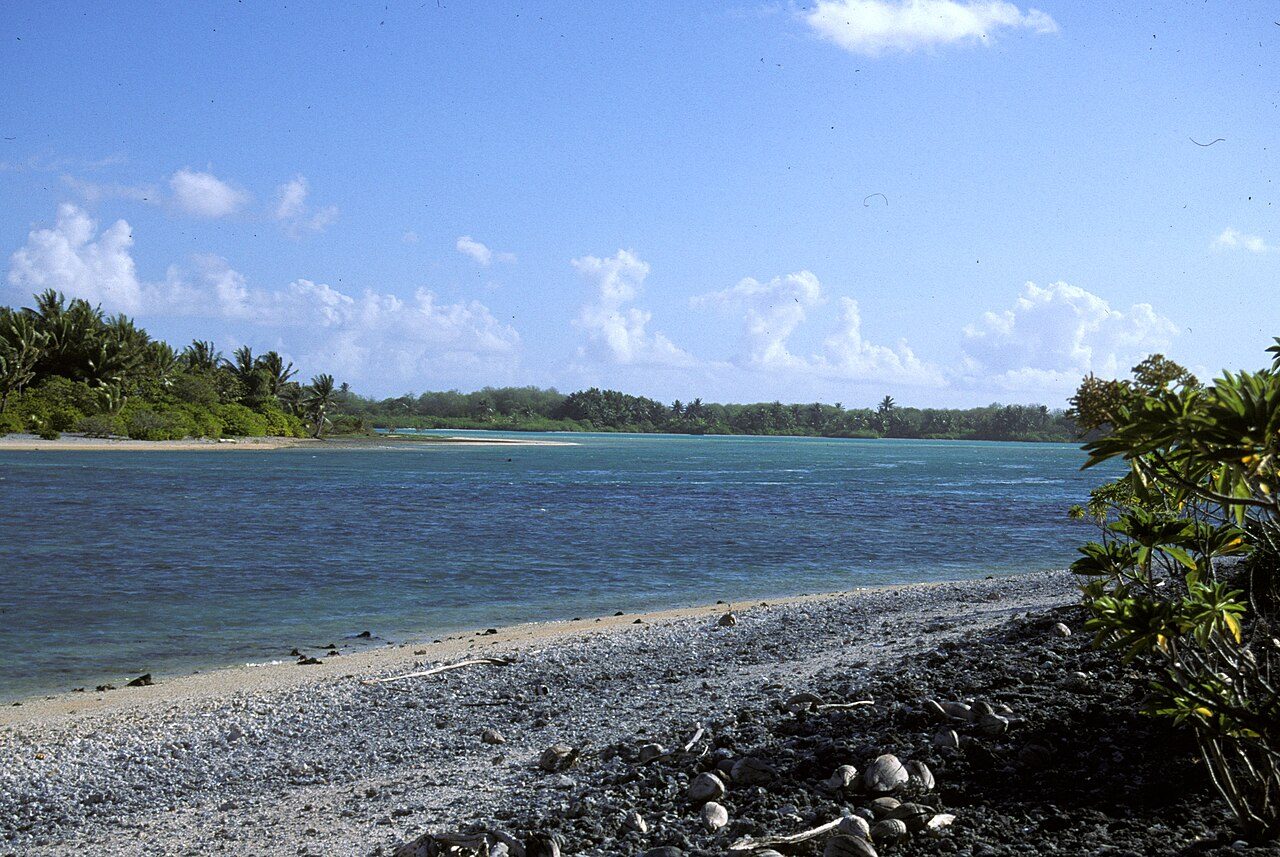
Angela K. Kepler. Public domain (released by the author). Picture source
Three months later a British party lands on Gardner Island to see if people could settle there, and a young officer takes a photograph of the shipwreck on the reef.
13 to 15 October 1937
The story
In October 1937 the ship Nimanoa reaches Gardner Island. On board are Harry Maude, the Lands Commissioner, his assistant Eric Bevington, a cadet officer, and a party of Gilbertese men looking for new land to settle.
Bevington walks right around the island in the hot sun with no water. He writes that it is much bigger than the chart shows. For the first time in his life, he says, he learns what thirst is.
The next day he and Maude cross the lagoon by canoe and find signs that people lived here before. He does not say what the signs were.
Bevington also takes a photograph of the wrecked steamer on the reef. Decades later, TIGHAR researchers say a small shape at the edge of that photo could be part of an airplane's landing gear. In this story, it is the last piece of the Electra, still caught in the coral.
What the record says
There was truly the most amazing romantic feeling – an uninhabited coral island.
Bevington's journal, 13 October 1937
For the first time in my life I learnt what thirst was; the temptation was terrific to drink the crystal clear lagoon water – one native did, a younger one.
Bevington's journal, 13 October 1937
We found many interesting things including signs of previous habitation.
Bevington's journal, 14 October 1937
Bevington's journal is a real diary of 13 to 15 October 1937 and says 'signs of previous habitation' without detail. TIGHAR's Ric Gillespie said the object in the photograph is 'smaller than a grain of rice' in the original print and was first noticed in 2010; TIGHAR itself writes that its reading 'by no means proves' the object is landing gear. Robert Ballard's 2019 search of the reef slopes found no sign of the plane. The prompt for this story dated the photograph to 1938, but Bevington's visit was in October 1937.