












Credible Theories Sign in

The record

The Black Knight story is a patchwork of unrelated events, as Space.com and others have traced. Believers point to radio signals Nikola Tesla reported in 1899, to long-delayed radio echoes heard in Norway in 1927, to 1954 newspaper stories about claims that the Air Force had detected two artificial satellites before any were launched, and to a 1960 report of a 'dark object' in orbit that turned out to be part of the American Discoverer 8 spy satellite.

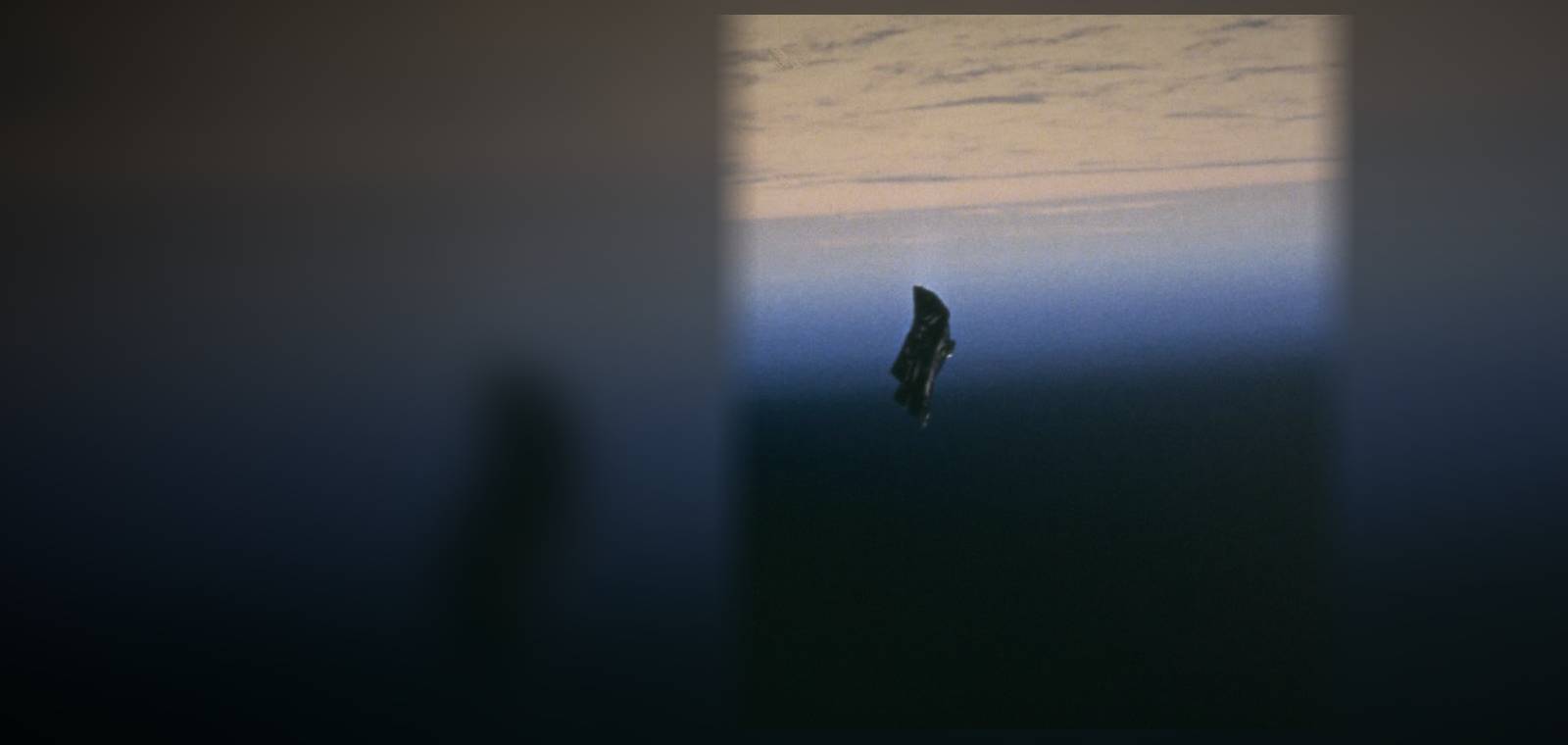
The pictures that made the legend famous came from STS-88 in December 1998, the first shuttle mission to assemble the International Space Station. They show a dark, twisted, wing-like object against the Earth. NASA's astronaut photo catalog lists frame STS088-724-66, taken on December 11, 1998, with the feature tag "SPACE DEBRIS."

During a spacewalk on that mission, astronaut Jerry Ross was installing thermal covers on the new Unity module when one came loose. Commander Robert Cabana told him, Jerry, one of the thermal covers got away from you. NASA's STS-88 mission summary lists a trunnion pin cover among items that floated away. The cover was tracked as debris and, according to fact-checkers, re-entered the atmosphere on December 14, 1998.

James Oberg, who worked on the STS-88 trajectory team and knows the astronauts involved, says the photographs show that lost blanket. A flexible blanket with a dark side and a shiny side, tumbling in harsh sunlight, changes shape from frame to frame, which is why the photos look so strange.
Questions people ask about The Black Knight satellite

What was the STS-88 mission doing when the photos were taken?

STS-88 was flown by the space shuttle Endeavour from December 4 to 15, 1998. Its crew attached the American-built Unity module to Zarya, a Russian module launched two weeks earlier, joining the first two pieces of the International Space Station. Three spacewalks were needed to connect cables and fit equipment, and the lost cover drifted off during that work.

What were the 1927 radio echoes that believers link to the Black Knight?

In 1927 Jorgen Hals, a Norwegian engineer and radio amateur near Oslo, heard his signals return seconds after he sent them. He reported it to physicist Carl Stormer, and Balthasar van der Pol helped study them. Later writers tied these long delayed echoes to Ronald Bracewell's idea of alien probes. Researchers today suspect natural effects in the charged upper atmosphere.

Did Nikola Tesla really pick up signals from space?

In 1899, working in his lab at Colorado Springs, Tesla recorded regular clicks on his receiver and later suggested they might come from Mars. He never proved the source. Historians and engineers have proposed natural radio noise, lightning effects or other transmitters of the time as more likely causes. Nothing ties his clicks to an object in orbit.

The open question

Still strange: During the spacewalk on that mission, the commander told an astronaut that one of the thermal covers had gotten away from him.

STS-48: the 'zig-zag' video →
  1. Step 1 of 3 · This fileThe Black Knight satellite
  2. Step 2 of 3 · Next fileSTS-48: the 'zig-zag' video
  3. Step 3 of 3 · Next fileGemini 4: McDivitt's cylinder
About these videos

Found by a YouTube search for this topic, not checked by us. The player loads from YouTube only when you press play.

Where this comes from

EvidenceMyth or legend

Comes from Astronaut Photo STS088-724-66, NASA Gateway to Astronaut Photography of Earth. A NASA database, run from the Johnson Space Center in Houston, of photos astronauts took from space, with the date and details of each.

What this means

The 1998 photos are real NASA records of a lost thermal cover; the ancient alien satellite they are said to show exists only as a story stitched together from unrelated events.

The Black Knight satellite is known from stories, scripture or tradition. The texts are real and we quote them (for example Astronaut Photo STS088-724-66, NASA Gateway to Astronaut Photography of Earth), but nothing outside those texts shows that The Black Knight satellite was real as described.

The page covers something known from myths, scripture or tradition. The texts are real and we quote them, but no independent record shows the events or beings were real.

See all five labels

Sources

  1. NASA Gateway to Astronaut Photography of EarthA NASA database, run from the Johnson Space Center in Houston, of photos astronauts took from space, with the date and details of each.Astronaut Photo STS088-724-66, NASA Gateway to Astronaut Photography of EarthPrimary text
  2. NASAThe official website of NASA, the US government's space agency, with mission histories, records and news releases.STS-88 mission page, NASAPrimary text
  3. Space.comA popular news website about space, astronomy and spaceflight, founded in 1999. Good for news and background; it is journalism, not an original record.'The Black Knight satellite: A 120-year-old conspiracy theory', Space.comReference
  4. Lead StoriesA US fact-checking website, founded in 2015, that checks claims spreading online and links its evidence.Fact Check: 'Black Knight Satellite' Is NOT 13,000-Year-Old Craft, It Was Thermal Cover Lost In Space, Lead Stories, May 24, 2024Reference

Quotations come from public-domain translations. A book in our Library links to its Library page; other links open the free online copy or the reference page.

Updated

Credible or not?

Tap one to see how other readers voted.

Discussion