Credible Theories Sign in

The record

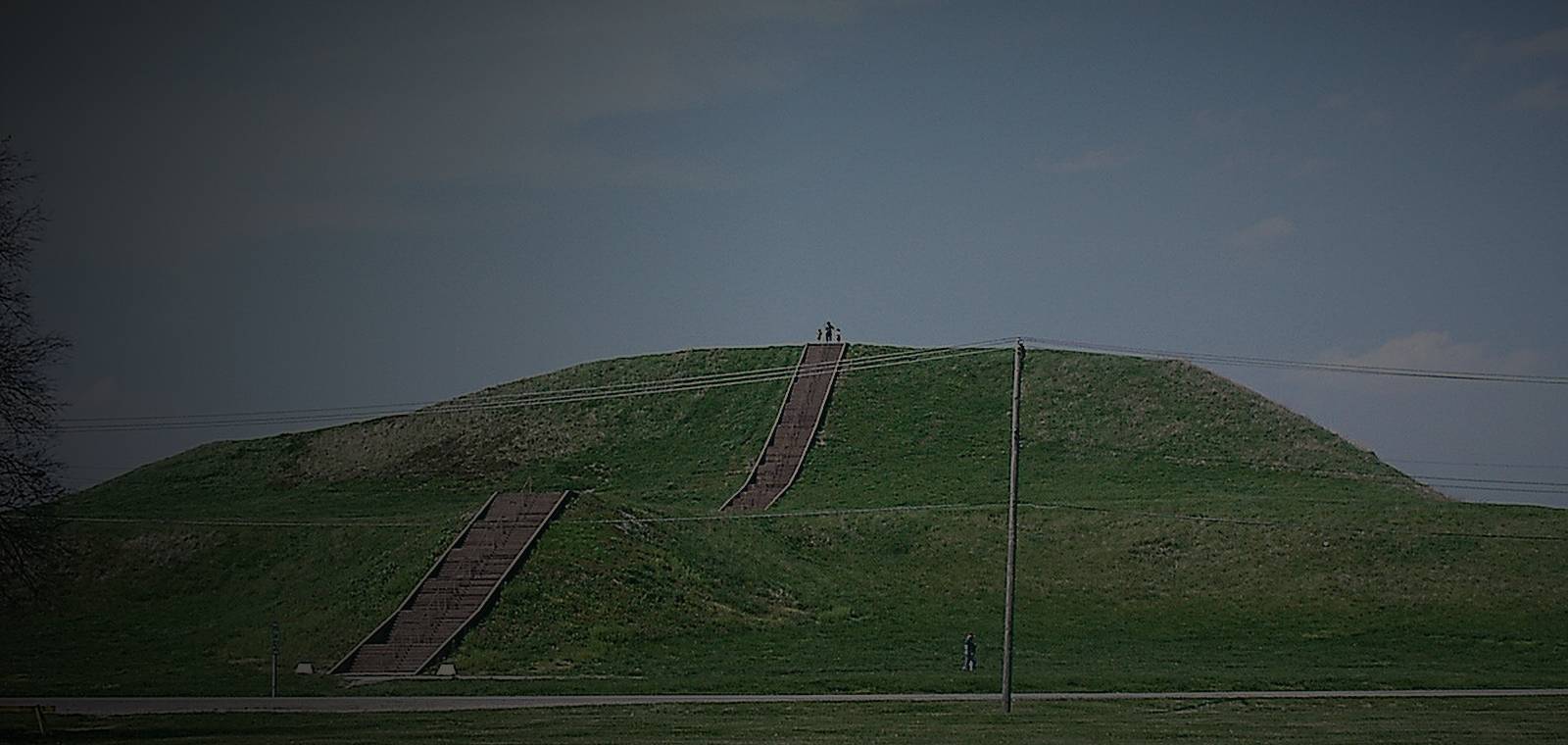
Cahokia is the remains of a large Native American town on the flat land east of the Mississippi River, across from St. Louis, in Illinois. UNESCO says it was lived in from about 800 to 1400, covers nearly 1,600 hectares and has some 120 mounds. At its height, between 1050 and 1150, it may have held 10,000 to 20,000 people. Its largest mound, Monks Mound, is in UNESCO's words the largest prehistoric earthwork in the Americas, covering over 5 ha and standing 30 m high.

In 1811 the American writer Henry Marie Brackenridge walked out to see it. When I reached the foot of the principal mound, he wrote in 1814, I was struck with a degree of astonishment, not unlike that which is experienced in contemplating the Egyptian pyramids. What a stupendous pile of earth! To heap up such a mass must have required years, and the labors of thousands. He counted forty-five mounds around him, and noted that the monks of La Trappe, living nearby, used a terrace of the great mound as a kitchen garden.

The site keeps turning up surprises. In the early 1960s the archaeologist Warren Wittry noticed that large post pits formed arcs of circles. The state historic site says there were as many as five of these "Woodhenges," built between 900 and 1100 from red cedar posts and lined up with the rising sun at certain times of year. Around 1100 the town's center was walled with a stockade about two miles long, rebuilt three times. Why Cahokia emptied by the 1400s is still debated.
Questions people ask about Cahokia, the city of mounds

How big did Brackenridge think Monks Mound was?

He paced around its base and put the distance at no less than 800 yards, and he guessed its height at about 90 feet. The top, he noted, had been sown with wheat.

How many posts stood in Cahokia's Woodhenges?

The state historic site says the circles grew over time: 24 posts, then 36, then 48 in a circle dated to about 1000 CE, then 60. The last one had only 12 or 13 posts along its eastern sunrise arc.

How much wood did the Cahokia stockade take?

The historic site says each building of the two-mile wall needed 15,000 to 20,000 logs, and it was built four times in all.

The open question

Still strange: An earthen pyramid in Illinois.

It stood at the heart of a town of up to 20,000 people, and an 1811 visitor could barely believe human hands had made it.

Serpent Mound →
  1. Step 1 of 4 · This fileCahokia, the city of mounds
  2. Step 2 of 4 · Next fileSerpent Mound
  3. Step 3 of 4 · Next fileGiant skeletons in old American mounds
  4. Step 4 of 4 · Next fileTeotihuacan, where the gods were made
About these videos

Found by a YouTube search for this topic, not checked by us. The player loads from YouTube only when you press play.

Where this comes from

EvidenceDocumented

Comes from H. M. Brackenridge, Views of Louisiana; together with a Journal of a Voyage up the…. Internet Archive: A nonprofit digital library in San Francisco, founded in 1996, that holds millions of scanned books, papers and recordings. A scan there shows the pages of a real printed book or document.

What this means

Records exist and are linked below. This page says what the records say.

For Cahokia, the city of mounds, the original record exists and is linked: H. M. Brackenridge, Views of Louisiana; together with a Journal of a Voyage up the…. That tells you the record is real and what it says. It does not mean every claim in it is true.

Primary records exist: an original document, a published text, an official file or a dated report. We link to them. This level says the record exists and what it says, not that every claim in it is true.

See all five labels

Sources

  1. Internet ArchiveA nonprofit digital library in San Francisco, founded in 1996, that holds millions of scanned books, papers and recordings. A scan there shows the pages of a real printed book or document.H. M. Brackenridge, Views of Louisiana; together with a Journal of a Voyage up the Missouri River, in 1811 (Pittsburgh, 1814)Primary text
  2. UNESCO World Heritage CentreThe official website of the World Heritage list kept by UNESCO, the United Nations agency for education, science and culture. Each place's page gives an expert-checked description of the site and why it matters.UNESCO World Heritage Centre, "Cahokia Mounds State Historic Site" (site 198)
  3. Cahokia Mounds State Historic Site, "Explore" (Woodhenge, stockade and mound gallery)

Quotations come from public-domain translations. A book in our Library links to its Library page; other links open the free online copy or the reference page.

Updated

Credible or not?

Tap one to see how other readers voted.

Discussion