How the rabbit hole works. Start with anything that grabs you, say UFOs. Every person, place and document a page mentions links to its own page, so a UFO file leads to a witness, the witness leads to the people who investigated the case, and it keeps going.
The path you take shows in the bar under the top menu on every page, so you can step back any time or climb out and start again.
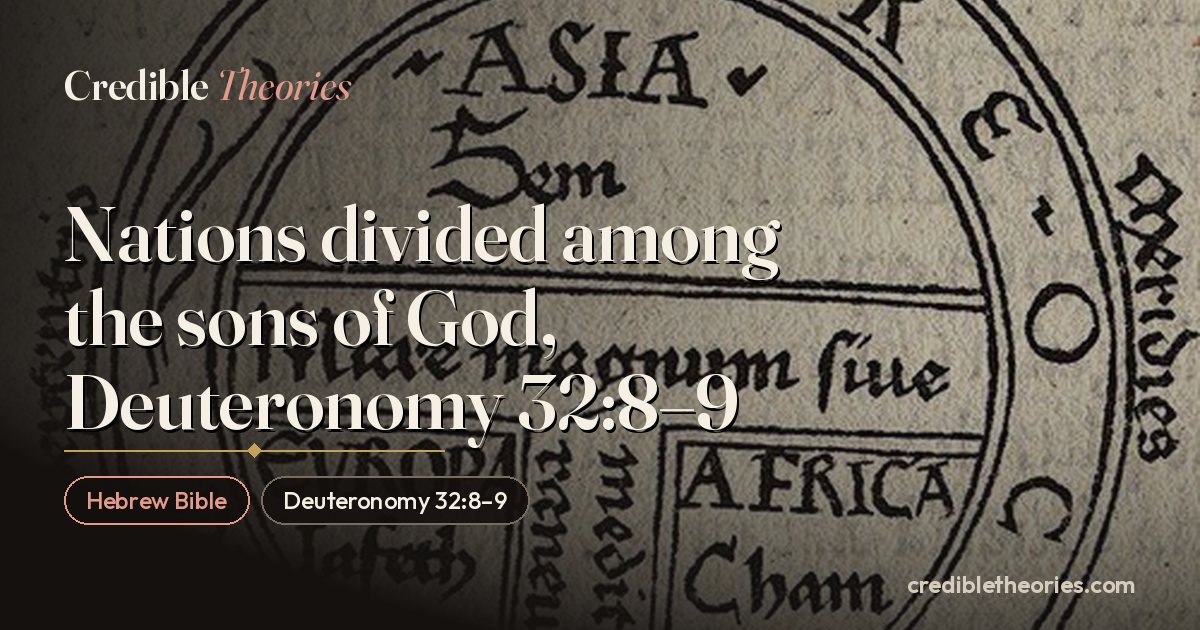
This is a short passage from Deuteronomy, the fifth book of the Bible, from an old poem likely written around 700 to 500 BCE. It says God divided the world's nations and set their borders. The King James Bible says by the number of "the children of Israel," but an older copy among the Dead Sea Scrolls says "sons of God," which most scholars think is original.
ReferenceDeuteronomy 32:8–9
Writtenc. 700–500 BCE (old poem)
SetAfter Babel
When the most High divided to the nations their inheritance, when he separated the sons of Adam, he set the bounds of the people according to the number of the children of Israel.
The oldest copy says each nation was handed to one of the sons of God to rule. This is why Daniel meets a 'prince of Persia'.
What scholars say
The KJV follows the later Hebrew text. The Dead Sea Scroll 4QDeut-j reads 'sons of God', and the Greek Bible reads 'angels of God'. Most scholars think 'sons of God' is original.
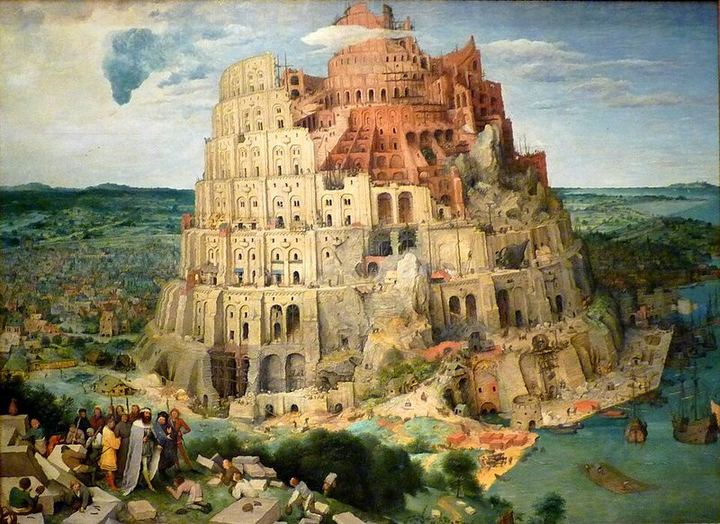
Babel is the famous one, but Babylonians, Greeks, the Quran, Mexico, China and the Zambezi all tell of people trying to build or climb their way up to the gods, and failing.
Genesis 11 (Babel) is one telling. The same story is told 7 more times, in 5 parts of the world. Follow it:
The open question: Is the tower story about one real building, about pride, or about why people speak different languages? Join the debate
Questions people ask about Deuteronomy 32:8–9
What is the Song of Moses?
Deuteronomy 32:1 to 43 is a long poem that Moses recites to Israel shortly before his death. In chapter 31 God tells him to write it down and teach it, so it will stand as a witness against the people if they turn away. Many scholars think the poem is older than most of Deuteronomy because of its old-fashioned Hebrew.
What is the divine council in the Bible?
It is the idea of God presiding over an assembly of heavenly beings. Psalm 82 opens with God standing in this assembly and judging the other gods. Texts from ancient Ugarit describe the god El with seventy sons. Many scholars connect that number with the seventy nations listed in Genesis 10, which Deuteronomy 32:8 may have in mind.
Who is the prince of Persia in Daniel?
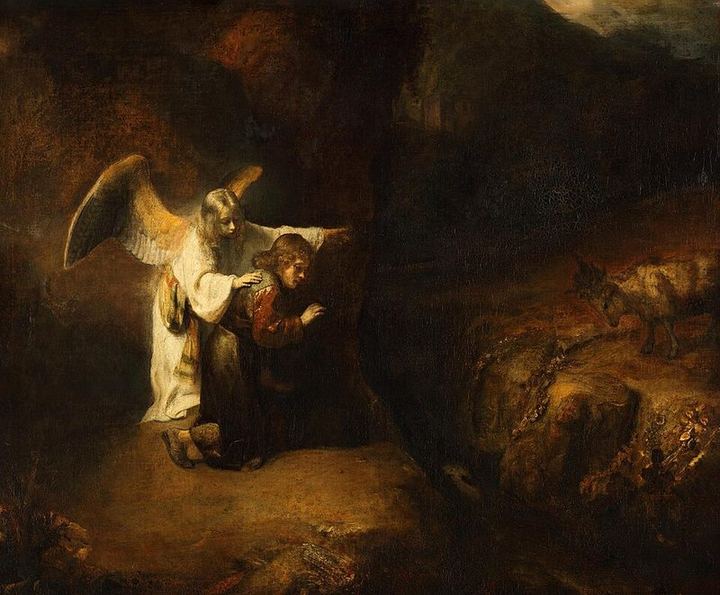
In Daniel 10, an angel tells Daniel he was held up for 21 days by the prince of the kingdom of Persia, until Michael, one of the chief princes, came to help. He adds that the prince of Greece will come next. Most readers take these princes as heavenly beings set over nations, which fits the older reading of Deuteronomy 32:8.
Used on these files
The Divine Council: Who Sat in God's Heavenly Assembly?Myth or legendIn Psalm 82, God stands in a heavenly assembly and sentences its members: "ye shall die like men." In Job, the sons of God come to present themselves, and an accuser walks in among them. The Hebrew Bible keeps glimpsing a divine court. Is it poetry about angels, or something older and stranger?
Where this comes from
EvidenceDocumented
Comes fromThe Book of Deuteronomy, Deuteronomy 32:8–9, read here in the King James Version. The fifth book of the Bible, set out as Moses' last speeches before Israel entered Canaan. It mentions giant peoples such as the Rephaim and the huge iron bed of King Og.
What this means
The text exists and is quoted from a published translation. What it describes is a separate question.
Primary records exist: an original document, a published text, an official file or a dated report. We link to them. This level says the record exists and what it says, not that every claim in it is true.
The King James BibleThe English Bible made for King James I and first printed in 1611; the wording most people know comes from a 1769 update. It is out of copyright, which is why we quote it. The 1611 printing also had the Apocrypha, extra books kept in Catholic and Orthodox Bibles.King James Version (1611; standard 1769 text), with ApocryphaPrimary textArchived copy, 2026-10-03
The Book of PsalmsA collection of 150 songs and prayers in the Bible, written over several centuries and long used in Jewish and Christian worship. Psalm 82 pictures God judging other 'gods' in a heavenly council. More copies of the Psalms were found among the Dead Sea Scrolls than of any other book.Psalm 82, King James VersionOnline copyPrimary textArchived copy, 2026-10-03
Scholarly dates are rounded. The wording follows the named public-domain translation.
More from Hebrew Bible
Two more stories, and what each shares with Nations divided among the sons of God.