Credible Theories Sign in

The record

From the text
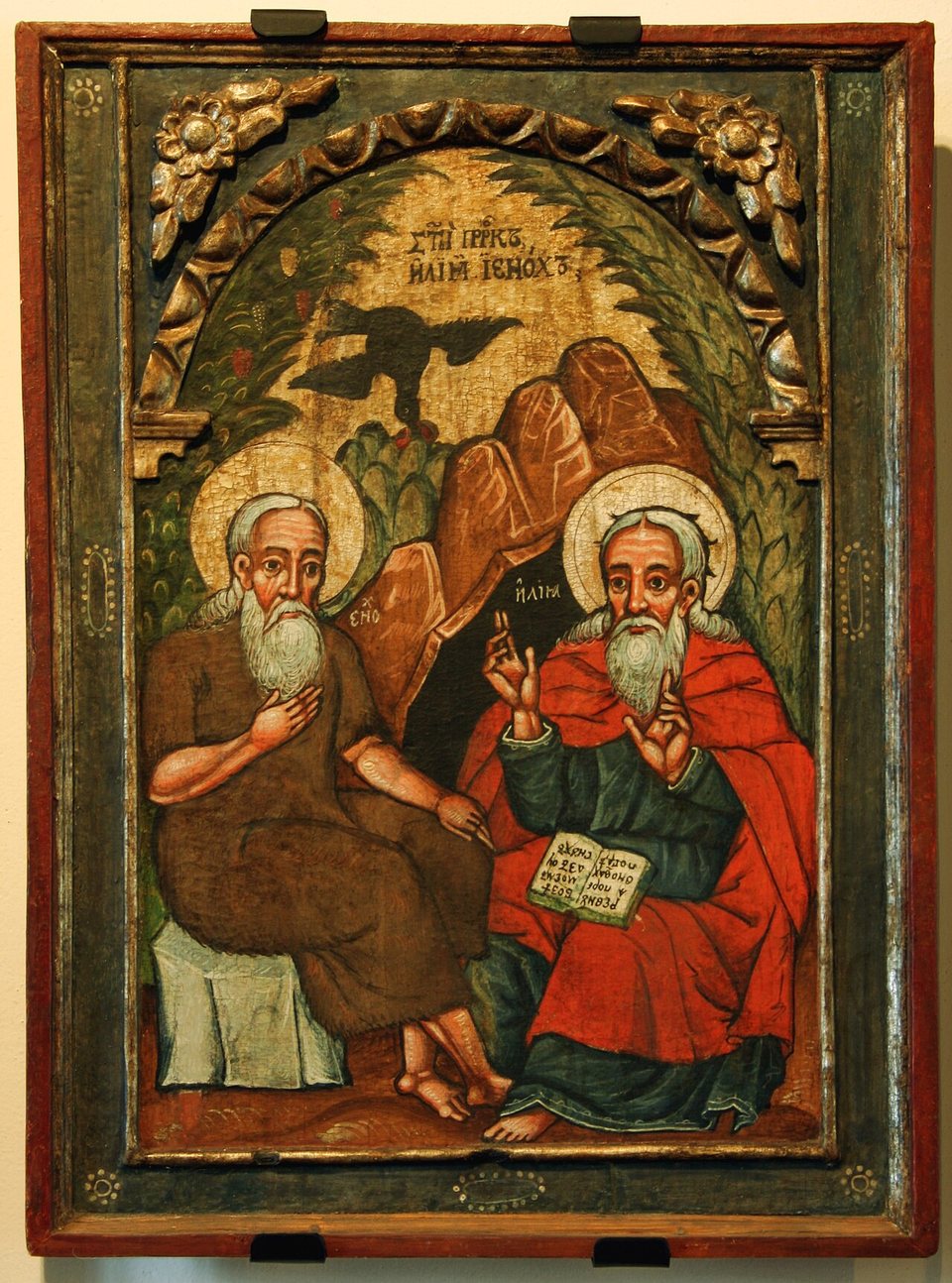
And the Lord said to Michael: 'Go and take Enoch from out his earthly garments, and anoint him with my sweet ointment, and put him into the garments of My glory.'… and I looked at myself, and was like one of his glorious ones.
Documented · Ancient text, c. 1st century CE
2 Enoch 22:8–10 · Enoch, Jubilees and others
Translation: W. R. Morfill and R. H. Charles, The Book of the Secrets of Enoch (1896) · Public domain

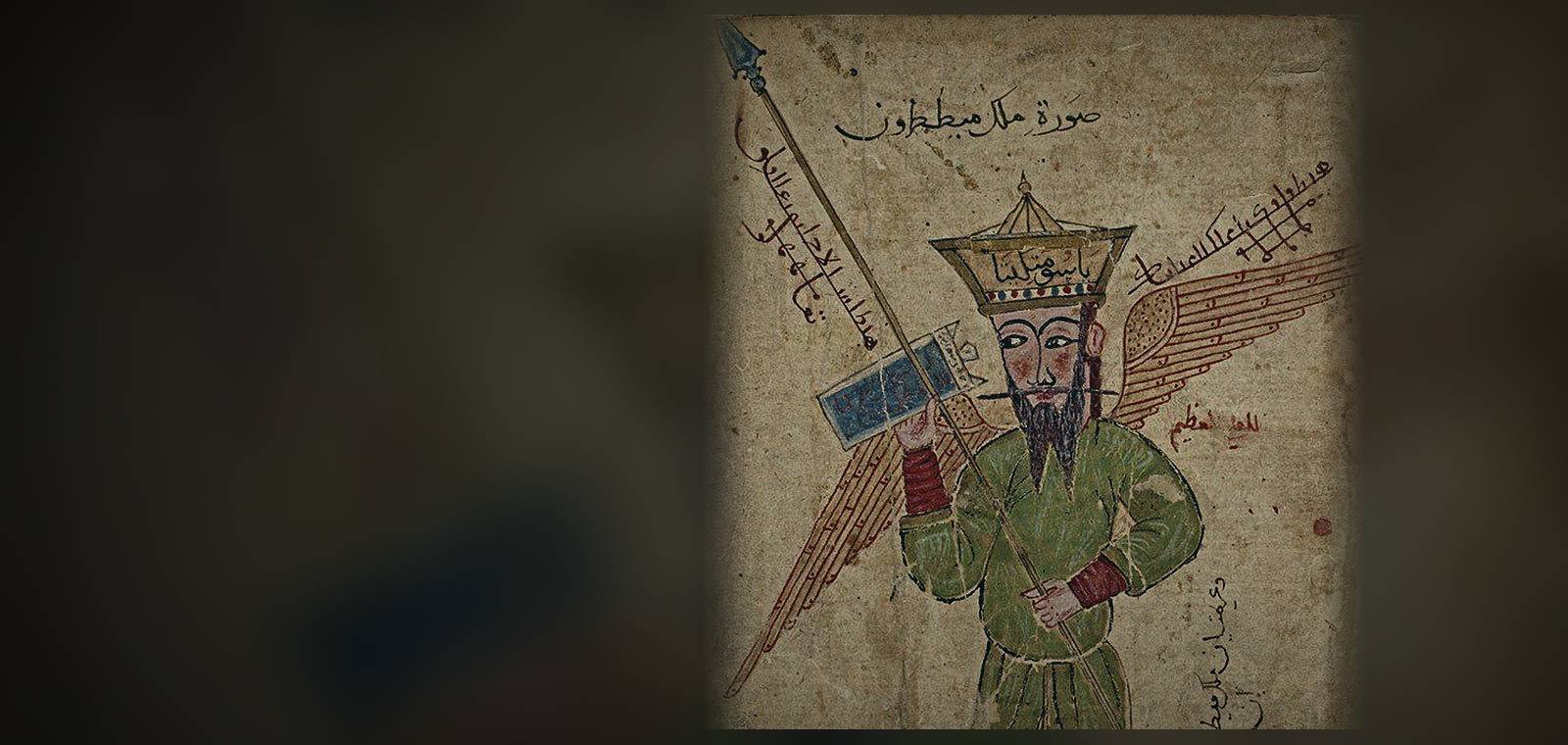
Metatron is the chief angel of the Hekhalot, or palace, literature of early Jewish mysticism. He is the Prince of the Presence, the scribe of heaven, and in 3 Enoch he reveals to Rabbi Ishmael that he was once Enoch son of Jared. God took him from the generation of the Flood and transformed him: his flesh became flame, his veins fire, his eyelashes lightning and his eyeballs torches. He was given a crown, a throne at the door of the seventh palace and the title the lesser YHWH.

The Babylonian Talmud mentions him in a famous and uncomfortable passage (Hagigah 15a). The rabbi Elisha ben Abuyah ascends to heaven, sees Metatron seated, and concludes there are perhaps two powers in heaven. To correct the error, Metatron is punished with sixty lashes of fire. Another passage (Sanhedrin 38b) explains that Metatron's name is like his Master's.

The name itself is a mystery. Suggestions include a Greek phrase meaning beside the throne, a Latin metator meaning a guide who marks out a route, or an invented mystical word. The link with Enoch is not in the Talmud and appears fully only in 3 Enoch and later texts. Metatron fascinates because he is a man who crossed over. A human being is remade into something else, becomes the highest-ranking figure after God, and is so exalted that the rabbis had to publicly discipline him.
Questions people ask about Metatron

Is Metatron in the Bible?

No. The name appears in no book of the Hebrew Bible, the New Testament or the Quran. It first shows up in rabbinic writings and mystical texts from late antiquity. The Talmud ties him to Exodus 23:21, where God speaks of an angel who carries 'my name' within him. That verse is the closest biblical anchor the rabbis found for him.

When was 3 Enoch written?

Scholars date it roughly to the 5th or 6th century CE, though parts may be older and editing went on later. It is written in Hebrew and is also called Sefer Hekhalot, the Book of Palaces. The name 3 Enoch comes from Hugo Odeberg, whose 1928 Cambridge edition and English translation made the text widely known. That edition is free to read online.

What is Metatron's Cube?

It is a modern figure from sacred geometry: thirteen circles joined by straight lines, which can be read as outlines of several three-dimensional solids. It is popular in New Age art and jewelry. Despite the name, it does not come from 3 Enoch, the Talmud or any other ancient Jewish source, which describe Metatron but no such shape.

The open question

Still strange: Nobody knows what the name Metatron means, and guesses range from a Greek phrase for beside the throne to a made-up mystical word.

Enoch: The Man Who Walked With God and Was Not →
  1. Step 1 of 4 · This fileMetatron
  2. Step 2 of 4 · The passageEnoch becomes one of them, 2 Enoch 22:8–10
  3. Step 3 of 4 · Next fileEnoch: The Man Who Walked With God and Was Not
  4. Step 4 of 4 · Next file3 Enoch: How Was Enoch Turned Into the Angel Metatron?
About these videos

Found by a YouTube search for this topic, not checked by us. The player loads from YouTube only when you press play.

Where it turns up

Where this comes from

EvidenceMyth or legend

Comes from 3 Enoch 3–15, trans. Hugo Odeberg, 3 Enoch or the Hebrew Book of Enoch (1928). 3 Enoch (the Hebrew Book of Enoch): A Hebrew book in which Rabbi Ishmael rises through the heavens and meets Metatron, a great angel who says he was once the man Enoch. Scholars disagree on its date; most place it in the AD 400s or later.

What this means

A story or tradition. It is documented as a story; nothing independent shows it happened.

Metatron is known from stories, scripture or tradition. The texts are real and we quote them (for example 3 Enoch 3–15, trans. Hugo Odeberg, 3 Enoch or the Hebrew Book of Enoch (1928)), but nothing outside those texts shows that Metatron was real as described.

The page covers something known from myths, scripture or tradition. The texts are real and we quote them, but no independent record shows the events or beings were real.

See all five labels

Sources

  1. 3 Enoch (the Hebrew Book of Enoch)A Hebrew book in which Rabbi Ishmael rises through the heavens and meets Metatron, a great angel who says he was once the man Enoch. Scholars disagree on its date; most place it in the AD 400s or later. It was kept among Jewish mystical writings, and Hugo Odeberg published the first English version in 1928.3 Enoch 3–15, trans. Hugo Odeberg, 3 Enoch or the Hebrew Book of Enoch (1928)Primary text
  2. The Jewish Encyclopedia (1901 to 1906)A 12-volume encyclopedia of Jewish history, religion and writings by leading scholars, published in New York from 1901 to 1906. It is still respected, but it is over 100 years old, so it misses later finds such as the Dead Sea Scrolls.Jewish Encyclopedia (1906), "Meṭaṭron"Reference Archived copy, 2026-07-10
  3. WikipediaA free online encyclopedia written and edited by volunteers. It is a good starting point and usually lists its own sources, but anyone can change it, so we treat it as a guide to better sources, not the final word.Wikipedia, "Metatron"Reference Archived copy, 2026-09-27

Quotations come from public-domain translations. A book in our Library links to its Library page; other links open the free online copy or the reference page.

Updated

Credible or not?

Tap one to see how other readers voted.

Discussion