












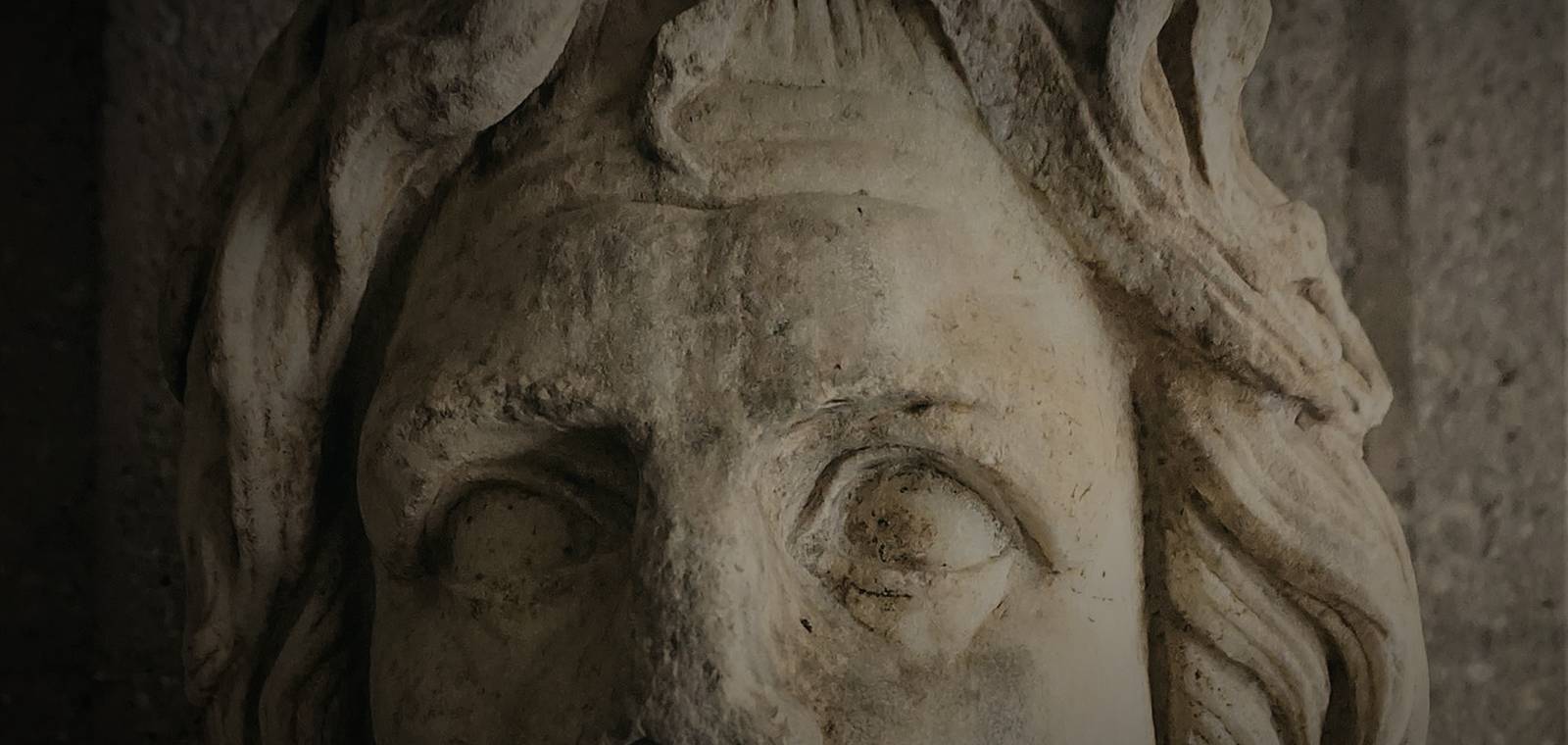
What is Zeus known for?
Zeus is the chief god of the Greeks, lord of the sky, weather and thunder. In Hesiod's Theogony his father Cronus swallows his children to keep power; Zeus escapes, frees his brothers and sisters, and wins a ten-year war against the Titans, who are locked away in Tartarus.
From Mount Olympus he rules gods and people, upholding oaths, guests and justice. The Cyclopes forge his thunderbolt. Many Greek heroes, among them Heracles and Perseus, are called his sons.
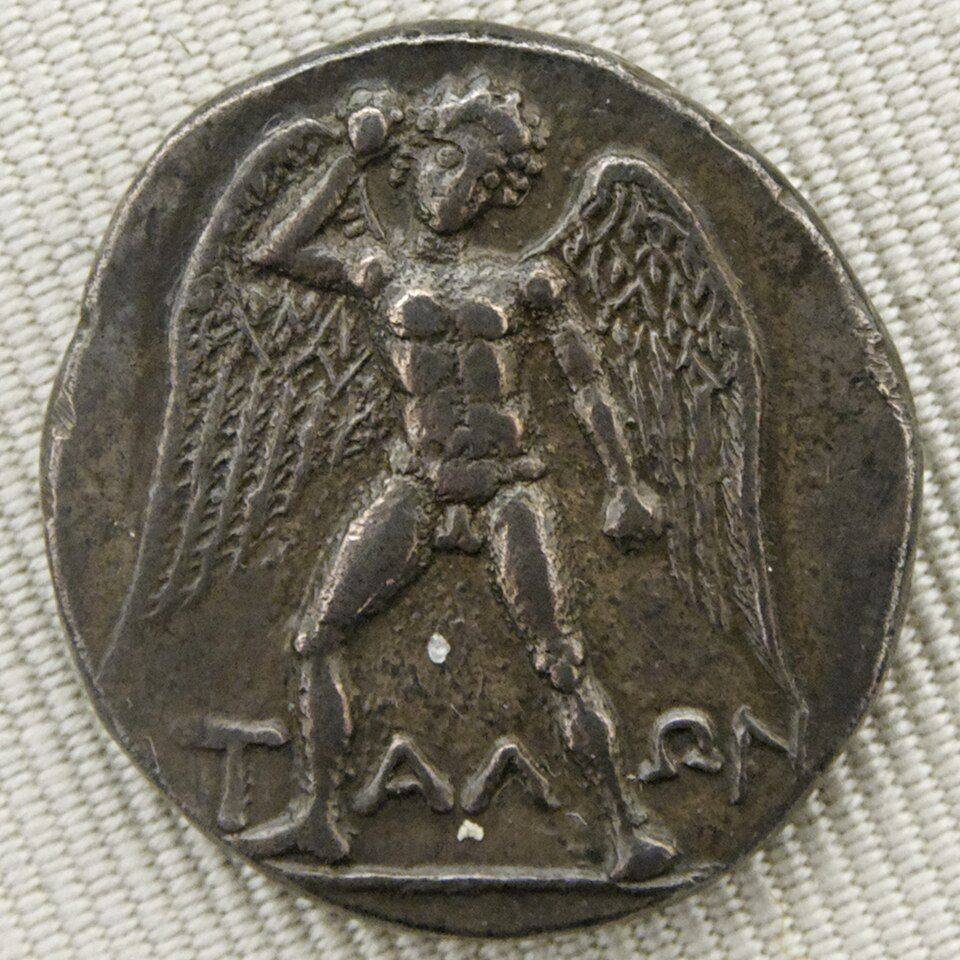
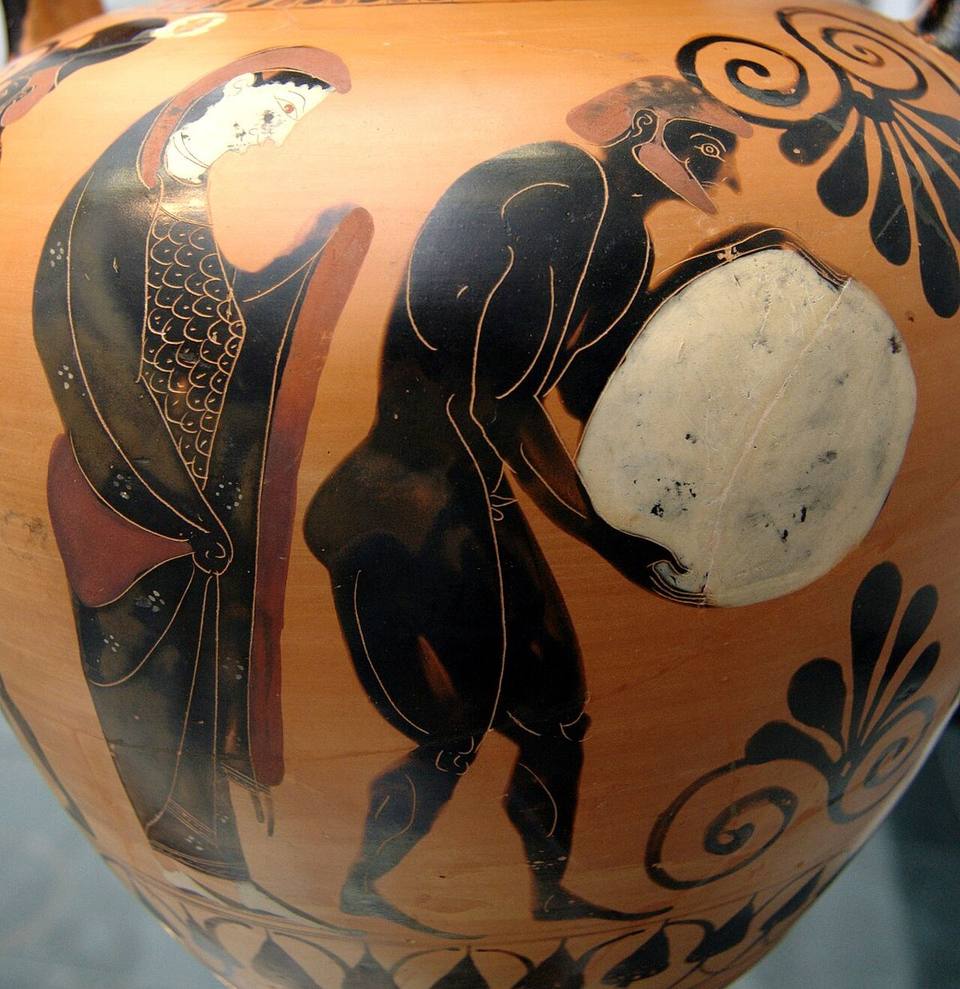
On this site he appears in Hesiod's ages of man, the war with the Titans and Tartarus, and the bronze giant Talos, a gift said to come from Zeus.
Titles and honors
- Titles
- King of the gods (in Greek myth)
The same story, told elsewhere
Shared story · Births
Saved From the Water: Sargon, Moses and Karna
A mother seals her baby in a basket, tars the lid and lets the river take him. A stranger pulls him out, and the child grows up to rule. The same story is told of a king in Iraq, a prophet in Egypt and a warrior in India.
Apollodorus, The Library (Danae and Perseus) is one telling. The same story is told 8 more times, in 6 parts of the world. Follow it:
- ChineseYellow River valley, China · c. 1000-700 BCE · Ancient text
- Akkadian (Mesopotamia)Mesopotamia · c. 8th-7th century BCE · Ancient text
- Hebrew BibleJudah / Babylon · c. 600-400 BCE · Ancient text
- Persian (told by a Greek)Media and Persia · c. 430 BCE · Ancient text
- Hindu (Mahabharata)Northern India · c. 400 BCE · Ancient text
- RomanRome, Italy · c. 27-25 BCE · Ancient text
- GreekGreece · 1st or 2nd century CE · Ancient textTied to this page
- WelshWales · c. 1550 CE · Early modern text
- Maori (New Zealand)New Zealand · 1840 · Recorded folklore
The open question: Did one old Near Eastern story travel from people to people, or does every great leader's story end up with the same rescue from the river? Join the debate
Shared story · Beginnings
Stealing Fire: Prometheus, Maui and the Water Spider
Fire was kept from people, hidden away by gods or guarded by jealous owners, until someone took it. A Greek god hides it in a hollow stalk, a Maori hero tricks it out of his grandmother, and a little Cherokee spider carries a coal home on her back.
Hesiod, Works and Days (Prometheus) is one telling. The same story is told 6 more times, in 6 parts of the world. Follow it:
- Vedic IndiaNorthwestern India · c. 1500-1000 BCE · Ancient text
- GreekBoeotia, Greece · c. 700 BCE · Ancient textTied to this page
- PersianIran · c. 1010 CE · Medieval text
- Maori (New Zealand)New Zealand · 1840 · Recorded folklore
- CherokeeSouthern Appalachians · 1887-1890 · Recorded folklore
- Aboriginal Australian (Noongahburrah)Northwestern New South Wales, Australia · 1896 · Recorded folklore
- Pacific Northwest (Native American)Columbia River country, Pacific Northwest, USA · 1910 · Retold in English
The open question: Are these stories a real memory of how precious and hard to get fire once was, or just a natural way for any people to explain where a useful thing came from? Join the debate
Shared story · Death and return
How Death Came: Eden, Adapa and the Chameleon
Again and again, people almost lived forever. A man refuses the food of life, a snake steals the plant of youth, a slow chameleon arrives too late, and a woman throws a stone that sinks. Each time, the chance was lost.
Hesiod, Works and Days (Pandora's jar) is one telling. The same story is told 8 more times, in 6 parts of the world. Follow it:
- Babylonian (Akkadian)Mesopotamia · c. 1400-1350 BCE · Ancient text
- Babylonian (Akkadian)Mesopotamia · c. 1200-1000 BCE · Ancient text
- Hebrew BibleJudah / Babylon · c. 900-500 BCE · Ancient text
- GreekBoeotia, Greece · c. 700 BCE · Ancient textTied to this page
- Japanese (Shinto)Japan · 712 CE · Medieval text
- Khoikhoi (South Africa / Namibia)Southern Africa · 1800 · Recorded folklore
- Maori (New Zealand)New Zealand · 1840 · Recorded folklore
- Zulu (South Africa)Natal · 1868-1870 · Recorded folklore
- Blackfoot (Plains)Northern Great Plains · 1892 · Recorded folklore
The open question: Do these stories share one ancient source, or does every people eventually ask why we die and arrive at the same kind of answer? Join the debate
Shared story · Heroes and trials
The Dragon Slayer: Marduk, Indra, Thor and Saint George
A god or a hero faces a giant serpent that blocks the waters, eats the young or threatens the whole world, and cuts it down. The same fight is told in Babylon, India, Greece, Egypt, Iceland, Japan and medieval Europe.
Hesiod, Theogony (Zeus and Typhoeus) is one telling. The same story is told 7 more times, in 6 parts of the world. Follow it:
- Vedic IndiaNorthwest India · c. 1500-1200 BCE · Ancient text
- Babylonian (Akkadian)Babylon · c. 1200-1100 BCE · Ancient text
- GreekBoeotia, Greece · c. 700 BCE · Ancient textTied to this page
- EgyptianThebes, Egypt · c. 312 BCE · Ancient text
- Hebrew BibleJudah · 24 to 27 BCE · Ancient text
- Japanese (Shinto)Izumo, Japan · 712 CE · Medieval text
- NorseIceland · c. 1220 CE · Medieval text
- Medieval Christian (Europe)Written in northern Italy · c. 1260 CE · Medieval text
The open question: Did one ancient story of a hero and a serpent spread across the world, or do people everywhere turn their fears into dragons on their own? Join the debate
Shared story · Beginnings
People Made From Clay: Adam, Nuwa, Prometheus and the Potter Gods
A god kneels in the mud, shapes a body with his hands and breathes it into life. That scene is told in Iraq, Israel, Egypt, Greece, China, Arabia, Guatemala, Sudan and New Zealand.
Apollodorus, The Library (Prometheus makes people) is one telling. The same story is told 8 more times, in 6 parts of the world. Follow it:
- Babylonian (Akkadian)Mesopotamia · c. 1700 BCE · Ancient text
- Ancient EgyptianEgypt · c. 1215 BCE · Ancient text
- Hebrew BibleJudah · c. 900-450 BCE · Ancient text
- GreekGreece · 1st or 2nd century CE · Ancient textTied to this page
- ChineseChina · c. 195 CE · Retold in English
- IslamArabia · 7th century CE · Medieval text
- K'iche' MayaHighland Guatemala · c. 1554-1558 · Retold in English
- Maori (New Zealand)Aotearoa · 19th century · Retold in English
- Shilluk (South Sudan)White Nile, South Sudan · 1911 · Retold in English
The open question: Did one old story about a potter god travel from people to people, or does anyone who works with clay end up imagining that we were made from it? Join the debate
Shared story · Signs and numbers
The Sun Stands Still: Joshua, Hezekiah, Athena and Maui
A general shouts at the sun to stop, and it stops. A goddess holds back the dawn, a hero lassoes the sun, and a wife's curse keeps it from rising at all.
Apollodorus, The Library (Zeus and Alcmena) is one telling. The same story is told 8 more times, in 7 parts of the world. Follow it:
- GreekIthaca · c. 750-650 BCE · Ancient text
- Hebrew BibleCanaan · c. 650-550 BCE · Ancient text
- Hebrew BibleJerusalem · c. 600-550 BCE · Ancient text
- Egyptian, reported in GreekEgypt · c. 430 BCE · Ancient text
- GreekThebes, Greece · 1st or 2nd century CE · Ancient textTied to this page
- ChineseChina · c. 80 CE · Ancient text
- Hindu (Puranic)India · c. 250-500 CE · Ancient text
- Ojibwe (North America)Great Lakes region, North America · 1820 · Recorded folklore
- Maori (New Zealand)Aotearoa · 1840 · Recorded folklore
The open question: When ancient writers say the sun stood still, are they remembering something people really saw in the sky, or using the boldest picture they could find for a god's power over time? Join the debate
Mentioned on these pages
- FileAtlantis
- FileHephaestus' golden maidens
- FileHesiod's five races of men
- FileKnossos, the palace of the Labyrinth
- FileTalos
- FileTartarus
- FileThe Cyclopes
- PersonHesiod
- PersonHomer
- PersonMinos
- PlaceCrete
- PlaceMount Olympus
Linked people and places
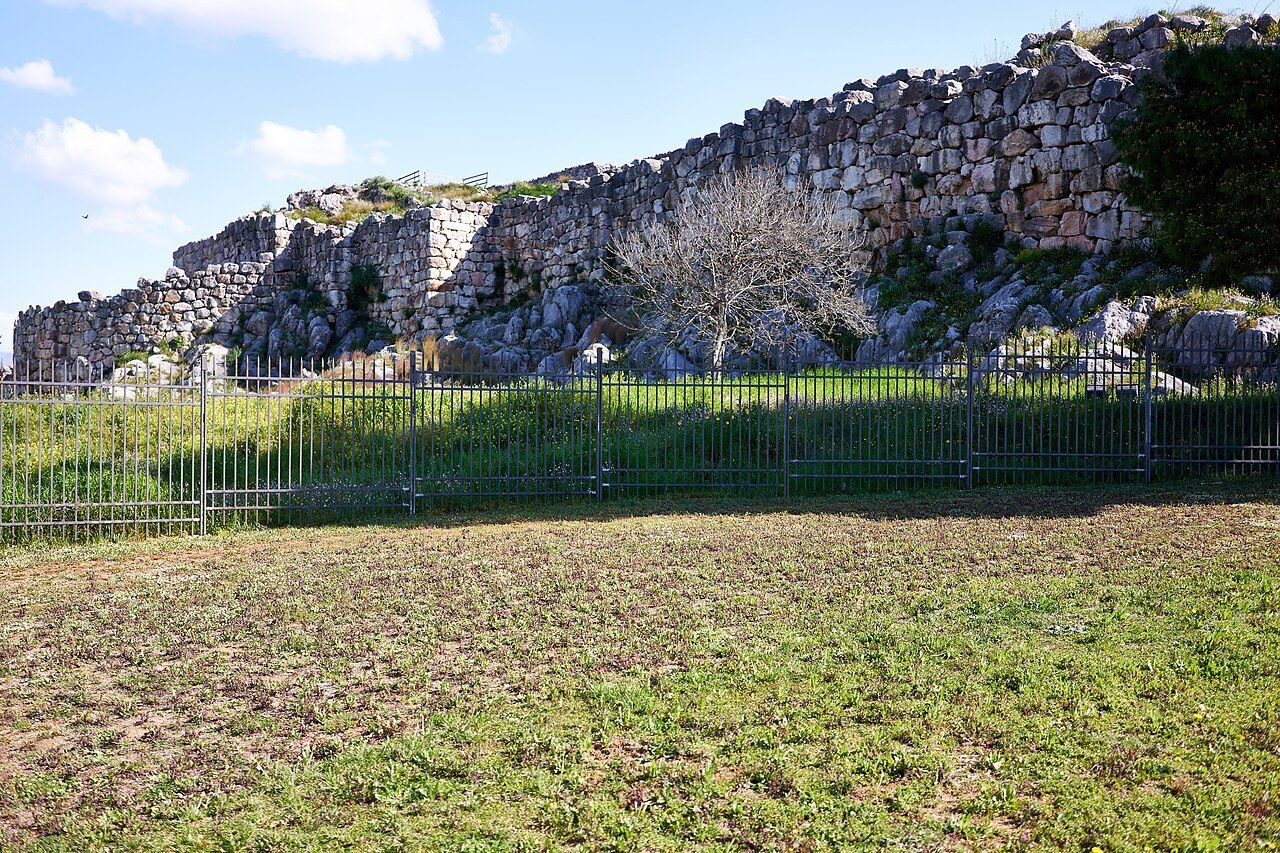
Where this comes from
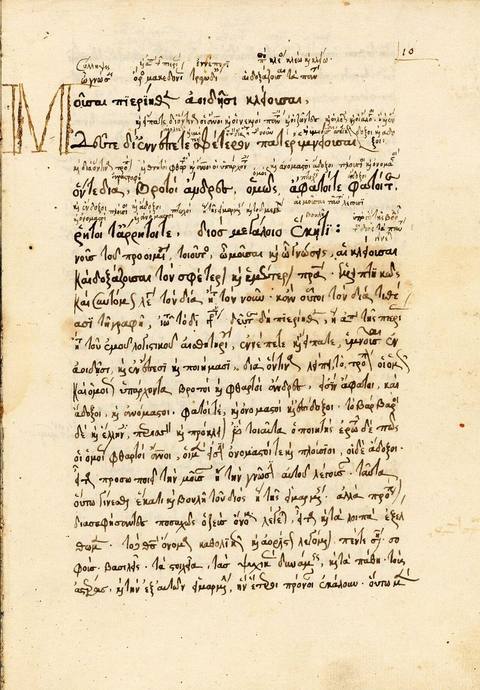
Comes from Hesiod, Theogony, trans. Hugh G. Evelyn-White (1914). Hesiod's Theogony: A Greek poem by Hesiod, a farmer and poet from central Greece, written about 700 BC. It tells how the world and the gods came to be, including the war in which Zeus and the Olympian gods threw the older Titans down into Tartarus.
What this means
A story or tradition. It is documented as a story; nothing independent shows it happened.
Zeus is known from stories, scripture or tradition. The texts are real and we quote them (for example Hesiod, Theogony, trans. Hugh G. Evelyn-White (1914)), but nothing outside those texts shows that Zeus was real as described.
The page covers something known from myths, scripture or tradition. The texts are real and we quote them, but no independent record shows the events or beings were real.
Sources
- Hesiod's TheogonyA Greek poem by Hesiod, a farmer and poet from central Greece, written about 700 BC. It tells how the world and the gods came to be, including the war in which Zeus and the Olympian gods threw the older Titans down into Tartarus.Hesiod, Theogony, trans. Hugh G. Evelyn-White (1914) Online copyPrimary text
- WikipediaA free online encyclopedia written and edited by volunteers. It is a good starting point and usually lists its own sources, but anyone can change it, so we treat it as a guide to better sources, not the final word.Wikipedia, 'Zeus'Reference
No public-domain picture of this person yet. We do not show drawn or generated likenesses.