How the rabbit hole works. Start with anything that grabs you, say UFOs. Every person, place and document a page mentions links to its own page, so a UFO file leads to a witness, the witness leads to the people who investigated the case, and it keeps going.
The path you take shows in the bar under the top menu on every page, so you can step back any time or climb out and start again.
This is a short passage from Plato's Timaeus, a Greek dialogue written around 360 BCE. In it, an Egyptian priest tells the Athenian lawmaker Solon that humans have been destroyed many times. He says the Greek myth of Phaethon, who burned up the earth, really describes objects in the sky shifting and causing great fires that come back after long gaps.
ReferencePlato, Timaeus 22b–d
Writtenc. 360 BCE
SetSolon in Egypt, c. 590 BCE
There have been, and will be again, many destructions of mankind arising out of many causes… once upon a time Phaethon, the son of Helios… burnt up all that was upon the earth, and was himself destroyed by a thunderbolt. Now this has the form of a myth, but really signifies a declination of the bodies moving in the heavens around the earth, and a great conflagration of things upon the earth, which recurs after long intervals.
An Egyptian priest says the myths are real disasters caused by objects in the sky, repeated over long cycles, and that Greeks forgot because their records were wiped each time.
What scholars say
Plato says the story came from Egyptian priests through Solon; historians doubt that chain.
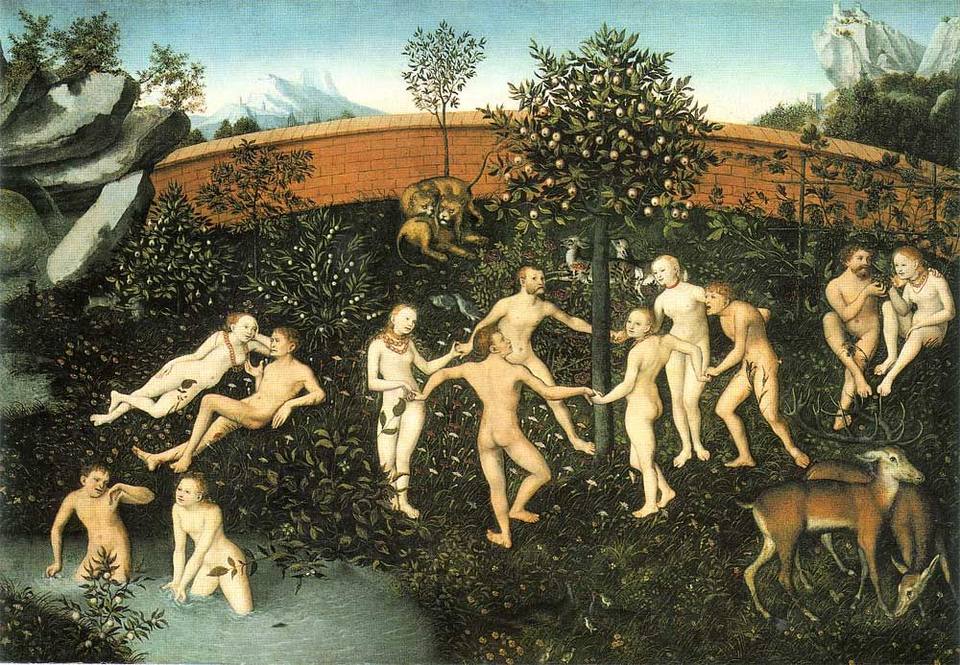
Gold, silver, bronze, iron: Greece, Persia and the Book of Daniel all count the ages of the world in metals, India counts four yugas, and the Norse and Maya see whole worlds destroyed and remade.
Plato, Timaeus (the priest of Sais) is one telling. The same story is told 9 more times, in 6 parts of the world. Follow it:
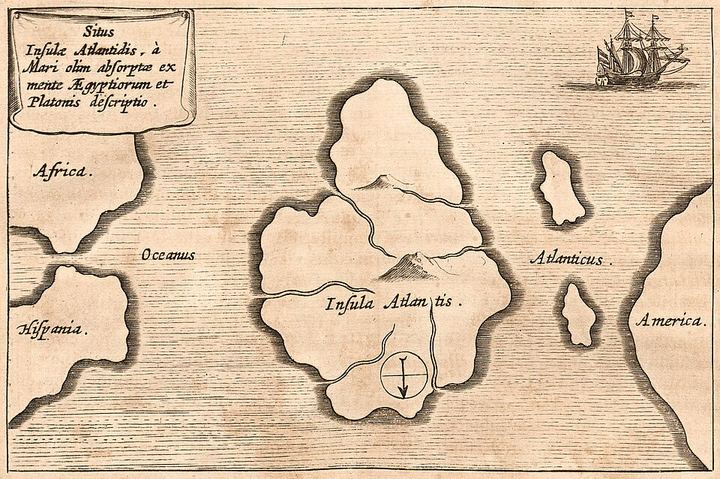
A rich city, a proud people and one terrible day when the sea comes in and never leaves. Greece, India, Egypt, Wales, Cornwall and Brittany all tell of a land that now lies under the waves.
Plato, Timaeus (Atlantis) is one telling. The same story is told 8 more times, in 4 parts of the world. Follow it:
The open question: Do these stories keep real memories of lost coastlines, or is a drowned city simply a story people tell to warn against pride? Join the debate
Questions people ask about Plato, Timaeus 22b–d
Who was Solon?
Solon was an Athenian statesman and poet who lived around 630 to 560 BCE. He is remembered for reforming Athens' laws, canceling debts that had made citizens into slaves. After his reforms he traveled for ten years, and Plato says he visited the Egyptian city of Sais, where a priest told him these stories.
Does the Timaeus mention Atlantis?
Yes. Right after this passage, the priest tells Solon about Atlantis, a great island power beyond the Pillars of Heracles that attacked Europe and Asia about 9,000 years before Solon. Ancient Athens defeated it, and then both were lost in a single day and night of earthquakes and floods. Plato continues the story in his Critias.
Who was Phaethon in Greek myth?
Phaethon was a son of the sun god Helios. He begged to drive his father's sun chariot for one day, lost control of the horses and set the earth on fire, until Zeus struck him down. He fell into the river Eridanus, and his grieving sisters were turned into poplar trees. Ovid tells the story in Metamorphoses Book 2.
Used on these files
Solon and the Priests of Sais: "You Greeks Are Children"Myth or legendAn aged Egyptian priest told the Athenian lawmaker Solon that Greeks are children with no old men among them. He said the world has been wrecked by fire and flood many times, and Egypt kept the records. Plato is the only source for this meeting. What did the priest say really happened to Phaethon?
Where this comes from
EvidenceDocumented
Comes fromPlato's Timaeus, Plato, Timaeus 22b–d, read here in the Benjamin Jowett. A dialogue written by the Greek philosopher Plato in Athens around 360 BC. It opens with the story of Atlantis, said to come from Egyptian priests by way of the Athenian lawmaker Solon, then explains how the world was made. It is the oldest source for Atlantis; no earlier writer mentions it.
What this means
The text exists and is quoted from a published translation. What it describes is a separate question.
Primary records exist: an original document, a published text, an official file or a dated report. We link to them. This level says the record exists and what it says, not that every claim in it is true.
Plato's TimaeusA dialogue written by the Greek philosopher Plato in Athens around 360 BC. It opens with the story of Atlantis, said to come from Egyptian priests by way of the Athenian lawmaker Solon, then explains how the world was made. It is the oldest source for Atlantis; no earlier writer mentions it.Plato, Timaeus 21e–25d, trans. Benjamin Jowett (1871)Primary textArchived copy, 2026-08-17
Scholarly dates are rounded. The wording follows the named public-domain translation.
More from Greece and Rome
The story before and after this one, and what each shares with 'You Hellenes are never anything but children'.













 Plato