How the rabbit hole works. Start with anything that grabs you, say UFOs. Every person, place and document a page mentions links to its own page, so a UFO file leads to a witness, the witness leads to the people who investigated the case, and it keeps going.
The path you take shows in the bar under the top menu on every page, so you can step back any time or climb out and start again.
This is a short passage from the Book of Baruch, a short book probably written in the 100s BC or after, along with related lines from the books of Wisdom and Sirach. It describes giants from long ago who were very tall and skilled at war. The text says God did not choose them or give them the way of knowledge.
ReferenceBaruch 3:26–28; Wisdom 14:6; Sirach 16:7
Writtenc. 200–50 BCE
SetLooking back to before the Flood
There were the giants famous from the beginning, that were of so great stature, and so expert in war. Those did not the Lord choose, neither gave he the way of knowledge unto them.
Documented · Ancient text, c. 200–50 BCE Translation: KJV Apocrypha
AdvertisementAd space
Read it literally
The giants were skilled soldiers but were denied 'the way of knowledge'. The visitors held back the most important thing from their own children.
What scholars say
Three separate books that all treat the giants as known history.
Themes Giants and hybrids
Questions people ask about Baruch 3:26–28
Who wrote the Book of Baruch?
The book is credited to Baruch son of Neriah, the scribe who wrote down Jeremiah's words in Jeremiah 36. Most scholars think it was written much later by more than one author. Catholic and Orthodox Christians count it as scripture. In Catholic Bibles its sixth chapter is the Letter of Jeremiah.
What do Wisdom 14:6 and Sirach 16:7 say about the giants?
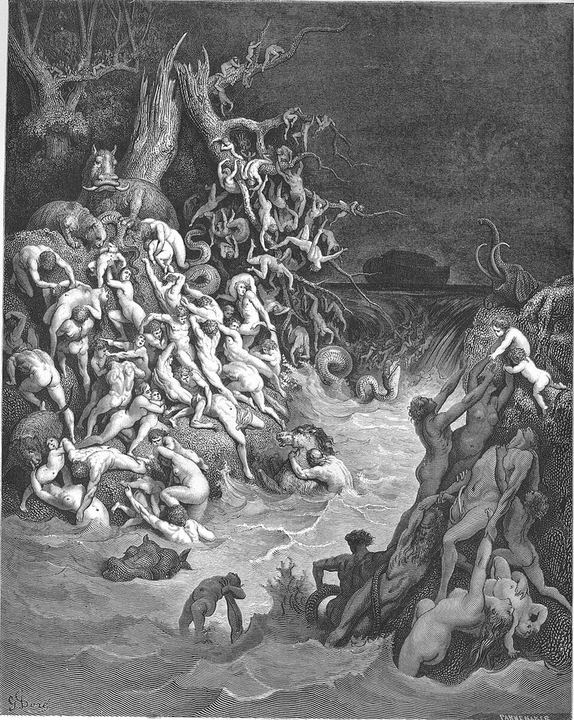
Wisdom 14:6 says that when the proud giants perished, the hope of the world escaped on a boat, meaning Noah's ark. Sirach 16:7 says God did not forgive the ancient giants who rebelled trusting in their own strength. Sirach was written in Hebrew around 180 BCE by Jesus ben Sira and translated into Greek by his grandson.
What does Baruch say next about wisdom?
After the giants, Baruch asks who has gone up to heaven to fetch wisdom or crossed the sea to find it. His answer is that only God knows the way, and God gave wisdom to Jacob and Israel. Chapter 4 opens by naming that wisdom as the book of God's commandments, the law that lasts forever.
Where this comes from
EvidenceDocumented
Comes fromThe Book of Baruch, Baruch 3:26–28; Wisdom 14:6; Sirach 16:7, read here in the King James Version. A short book named after Baruch, the scribe of the prophet Jeremiah, though scholars think it was written much later, probably in the 100s BC or after. It is in Catholic and Orthodox Bibles, not Jewish or most Protestant ones.
What this means
The text exists and is quoted from a published translation. What it describes is a separate question.
Primary records exist: an original document, a published text, an official file or a dated report. We link to them. This level says the record exists and what it says, not that every claim in it is true.
The King James BibleThe English Bible made for King James I and first printed in 1611; the wording most people know comes from a 1769 update. It is out of copyright, which is why we quote it. The 1611 printing also had the Apocrypha, extra books kept in Catholic and Orthodox Bibles.King James Version (1611; standard 1769 text), with ApocryphaPrimary textArchived copy, 2026-10-03
Scholarly dates are rounded. The wording follows the named public-domain translation.
More from Apocrypha
Two more stories, and what each shares with The giants famous from the beginning.