Credible Theories Sign in
Quran · Surah 27:38–44

The throne moved in the blink of an eye, Surah 27:38–44

Share

In plain words

This is a short passage from the Quran, the holy book of Islam, which Muslims believe God revealed to the Prophet Muhammad from 610 to 632 CE. In the story of Solomon and the Queen of Sheba, a jinn offers to fetch her throne quickly. A man with knowledge of the Scripture says he can do it faster, in the blink of an eye, and the throne appears before Solomon.

ReferenceSurah 27:38–44
Written610–632 CE
SetSolomon and the Queen of Sheba
One with whom was knowledge of the Scripture said: I will bring it thee before thy gaze returneth unto thee. And when he saw it set in his presence, (Solomon) said: This is of the bounty of my Lord.

Documented · Medieval text, 610–632 CE Translation: Pickthall, 1930 · About the translator

Read it literally

A jinn offers to fetch the throne before Solomon stands up; a man 'with knowledge of the Book' does it faster. Teleportation by knowledge, not magic. Then the Queen walks onto a floor of glass she thinks is water.

What scholars say

Links to the Kebra Nagast and Jewish legend.

Themes Looks like technology Spirits and jinn
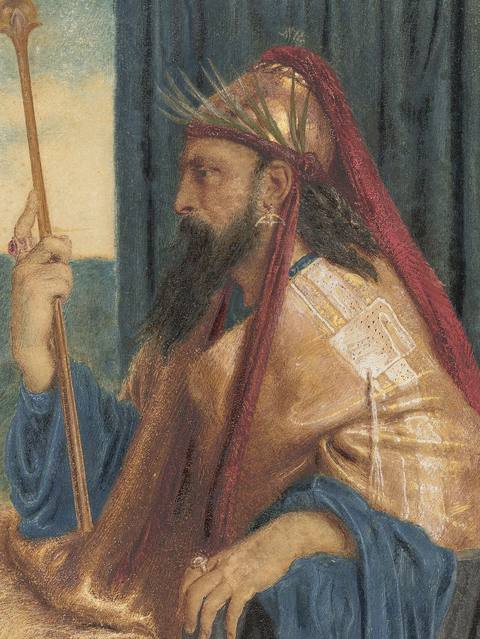
People and places hereSolomon
Questions people ask about Surah 27:38–44

Who was the man 'with knowledge of the Scripture'?

The Quran does not name him. Many classical commentators identify him as Asaf ibn Barkhiya, said to be Solomon's minister or scribe, who knew a great name of God. Others suggested the angel Gabriel, or Solomon himself. The verse contrasts him with a powerful jinn who could only promise to bring the throne before Solomon stood up.

Who is the Queen of Sheba in Islam?

The Quran does not name her, but Muslim tradition calls her Bilqis. Her story in Surah 27 begins when a hoopoe bird tells Solomon about a woman ruling the people of Saba who worship the sun. Solomon sends her a letter calling her to God. At the end of the account she submits to God along with Solomon.

Is the glass floor story also in Jewish tradition?

Yes. The Targum Sheni to Esther, an Aramaic Jewish retelling, includes both the hoopoe that carries Solomon's letter and the queen mistaking a glass floor for water. Scholars debate whether it draws on the Quran or on shared older legends. The Ethiopian Kebra Nagast tells a different version of the queen's visit.

Used on these files

  • Jinn: What Does the Quran Say About Beings of Smokeless Fire? Myth or legendA second species, made of smokeless fire and hidden from sight, shares the world with us, the Quran says. They eat, marry, die and choose whether to believe; one chapter claims they once sat in listening posts in heaven, until meteors drove them off. What were they trying to overhear?
  • Kebra Nagast: How Did the Ark Reach Ethiopia? DocumentedEthiopia's emperors claimed descent from Solomon and the Queen of Sheba for seven centuries, until 1974, and this one book is where that claim comes from. It says the sons of Solomon's nobles stole the Ark of the Covenant from the Temple and left a copy behind. What happened on the road home?

Where this comes from

EvidenceDocumented

Comes from The Quran, Surah 27:38–44, read here in the Marmaduke Pickthall. The holy book of Islam, which Muslims believe God revealed to the Prophet Muhammad from about AD 610 to 632. Its chapters are called surahs.

What this means

The text exists and is quoted from a published translation. What it describes is a separate question.

Primary records exist: an original document, a published text, an official file or a dated report. We link to them. This level says the record exists and what it says, not that every claim in it is true.

See all five labels

Sources

  1. The QuranThe holy book of Islam, which Muslims believe God revealed to the Prophet Muhammad from about AD 610 to 632. Its chapters are called surahs. Marmaduke Pickthall's 1930 English version is quoted here; Muslims hold that only the Arabic original is the Quran itself.Marmaduke Pickthall, The Meaning of the Glorious Koran (1930) Online copyPrimary text Archived copy, 2026-10-03
  2. The QuranQuran 55:14–15; also 72:1–9 and 37:6–10, trans. Marmaduke Pickthall, The Meaning of the Glorious Koran (1930) Online copyPrimary text Archived copy, 2026-10-03
  3. The Kebra Nagast (The Glory of the Kings)A book from Ethiopia telling how the Queen of Sheba visited King Solomon and how their son, Menelik, brought the Ark of the Covenant to Ethiopia. It was put together in Ge'ez, Ethiopia's old church language, by the 1300s AD from older stories. E. A. Wallis Budge published it in English in 1922.The Kebra Nagast, trans. E. A. Wallis Budge, The Queen of Sheba and her Only Son Menyelek (1922; 2nd ed. 1932)Primary text Archived copy, 2026-04-24

Scholarly dates are rounded. The wording follows the named public-domain translation.

More from Quran

The story before and after this one, and what each shares with The throne moved in the blink of an eye.

‹ Before thisSolomon's wind and his jinn workforceSurah 34:12–14; 21:81–82

It says God gave King Solomon the wind, which could carry him a month's journey in a morning and another in an evening.

Also about MuhammadSame theme: Looks like technology
Photo credits
Next ›Harut and Marut at BabylonSurah 2:102

It names Harut and Marut, two angels in Babylon who were given knowledge to teach.

Also about MuhammadSame theme: Looks like technology

Updated

Discussion