How the rabbit hole works. Start with anything that grabs you, say UFOs. Every person, place and document a page mentions links to its own page, so a UFO file leads to a witness, the witness leads to the people who investigated the case, and it keeps going.
The path you take shows in the bar under the top menu on every page, so you can step back any time or climb out and start again.
This is a short passage from the Quran, the holy book of Islam, which Muslims believe God revealed to the Prophet Muhammad from 610 to 632 CE. It names Harut and Marut, two angels in Babylon who were given knowledge to teach. The text says they warned everyone first that they were only a test. Later commentators tell a story of two angels sent to earth who fell into sin.
ReferenceSurah 2:102
Written610–632 CE
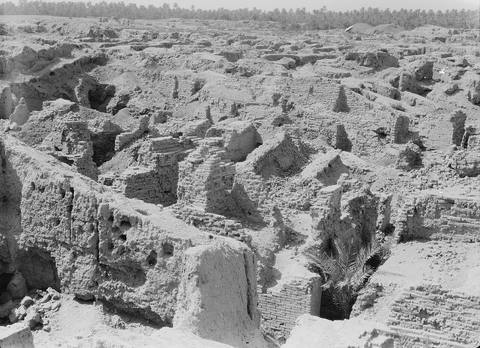
SetBabylon, ancient times
And that which was revealed to the two angels in Babel, Harut and Marut. Nor did they (the two angels) teach it to anyone till they had said: We are only a temptation, therefore disbelieve not.
Fallen angels taught metalwork and makeup, a fish-man from the sea taught writing and law, Prometheus gave fire and numbers, and Thoth invented letters. Many cultures say civilization was a gift from outside.
Quran, Surah al-Baqarah (Harut and Marut) is one telling. The same story is told 6 more times, in 4 parts of the world. Follow it:
The open question: Did people credit outsiders for their own inventions, or is there a reason so many say they were taught? Join the debate
Questions people ask about Surah 2:102
What is Surah 2:102 about in context?
The verse comes from a passage criticizing people who followed what devils taught in the reign of Solomon. It insists Solomon himself did not disbelieve and was not a sorcerer. It says people learned from the two angels a kind of magic that could split a husband from his wife, but could harm no one except by God's permission.
What is the story of Harut and Marut in Islamic tradition?
Later reports say the angels mocked human sinfulness, so God gave two of them human desires and sent them to earth. A beautiful woman, often named Zuhra and linked with the planet Venus, led them into sin, and they were punished by hanging in a well in Babylon until Judgment Day. Scholars such as Ibn Kathir doubted these reports and traced them to Jewish sources.
Is there a Jewish version of the Harut and Marut story?
Many scholars compare it with a medieval Jewish midrash about two angels, Shemhazai and Azael. They come down to earth to prove they can resist temptation better than humans, but fail. In one version a young woman named Istahar tricks one of them into revealing God's secret name and rises to heaven as a star, much like Zuhra.
Used on these files
Harut and Marut: Who Were the Two Angels of Babylon?Myth or legendTwo angels taught magic in Babylon, but only after warning every student, "We are only a temptation." The Quran's verse is short; later commentators added a woman who tricked them, and in one legend she used a secret word to fly to heaven and became the planet Venus. Which parts are scripture?
The Watchers: Who Were the Fallen Angels of Enoch?Myth or legendThe story says some angels who never sleep came down to a real mountain summit, picked up human wives, and taught people metalworking, spells and astronomy. Their leaders are named, each in charge of ten others. The same word shows up in the Book of Daniel as a heavenly council. So who exactly were the Watchers?
Where this comes from
EvidenceDocumented
Comes fromThe Quran, Surah 2:102, read here in the Marmaduke Pickthall. The holy book of Islam, which Muslims believe God revealed to the Prophet Muhammad from about AD 610 to 632. Its chapters are called surahs.
What this means
The text exists and is quoted from a published translation. What it describes is a separate question.
Primary records exist: an original document, a published text, an official file or a dated report. We link to them. This level says the record exists and what it says, not that every claim in it is true.
The Book of Enoch (1 Enoch)Jewish writings about Enoch, Noah's great-grandfather, the oldest parts from about 300 to 200 BC. It tells of angels called Watchers who came down to earth. Full copies survived only in Ethiopia, whose church still counts it as scripture. Pieces in Aramaic were found among the Dead Sea Scrolls in 1952.1 Enoch 6–8, trans. R. H. Charles, The Book of Enoch (1917)Online copyPrimary textArchived copy, 2026-09-03
Scholarly dates are rounded. The wording follows the named public-domain translation.
More from Quran
The story before and after this one, and what each shares with Harut and Marut at Babylon.